Every major newsroom in Washington fell for the exact same trap this week.
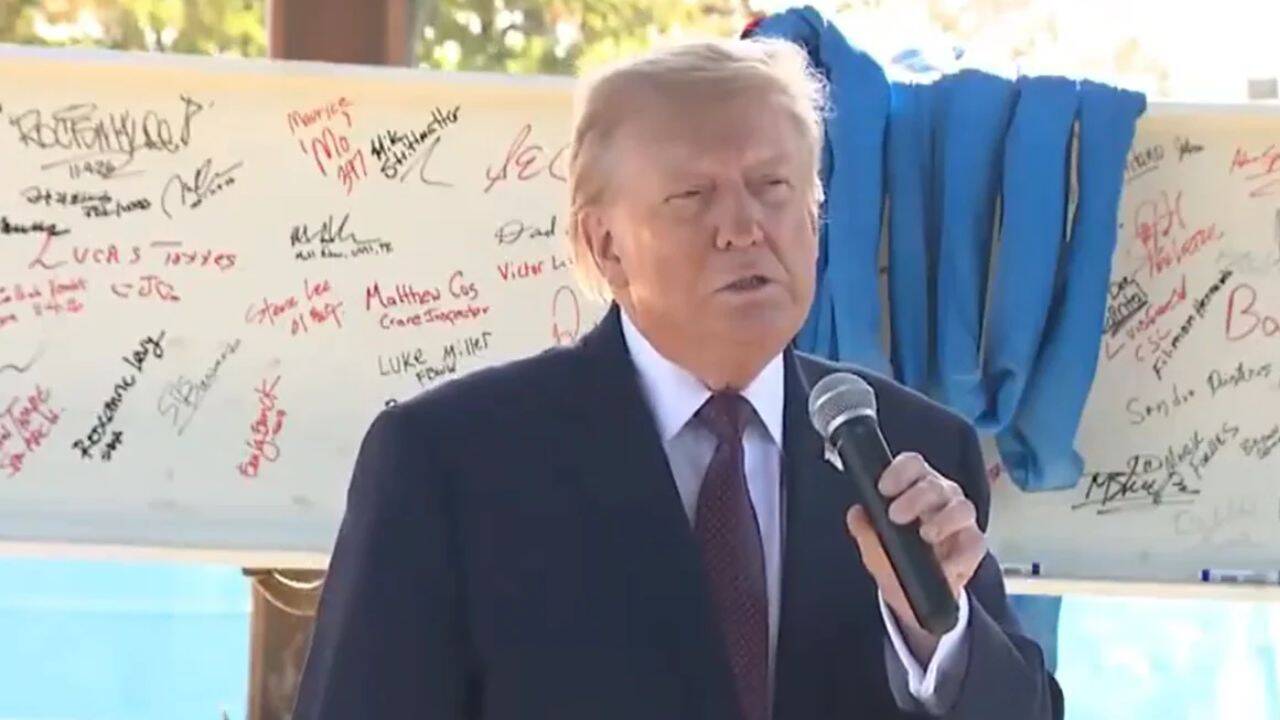
They watched Donald Trump step up to a microphone in the aftermath of a brutal Republican midterm showing, start bragging about gold leaf, chandeliers, and a massive White House ballroom expansion, and immediately went to work on their favorite copy-and-paste template. Look how out of touch he is. Look at the Nero-fiddling-while-Rome-burns optics. Look at the distraction.
It is the laziest consensus in political journalism. And it completely misunderstands how power, attention, and institutional permanence actually work in Washington.
If you spent the last forty-eight hours nodding along to cable panels dissecting the "bad optics" of a billionaire president talking about square footage while his party nurses electoral bruises, you missed the entire play. You analyzed a real estate developer through the lens of a traditional political consultant. That is a fatal analytical error.
The Optics Trap Is Built for Consultants, Not Power Brokers
Traditional political communications operate on a rigid, defensive rulebook: when you take a loss, you show humility. You put on a rolled-up-sleeves persona, talk about "listening to the voters," promise a course correction, and disappear from the cameras for a week to let the bad news cycle burn itself out.
Media outlets love this script because it allows them to grade politicians on a predictable rubric. When a leader refuses to play along, pundits default to calling it a "gaffe" or a "tone-deaf tangent."
Here is the reality from two decades inside high-stakes communications and public affairs: apologizing for a loss in public only cements the narrative that you are weak.
I have watched dozens of political operatives and corporate executives torpedo their own leverage by holding "listening tours" after a bad quarter or a rough election night. The moment you validate the press corps’ framing that you are on the ropes, every single reporter, donor, and rival faction smells blood. Your legislative agenda stalls. Your donors close their checkbooks. Your allies start quietly taking meetings with your replacements.
Trump did the exact opposite. By refusing to acknowledge the political funeral the media wanted him to attend, and instead pivoting straight to a multi-million-dollar physical alteration of the executive mansion, he accomplished three things simultaneously:
- He denied the press a vulnerability soundbite. You cannot run a 24-hour loop of a president looking defeated if he never gives you the footage.
- He forced his critics to argue about architecture instead of policy. Every minute an opposition strategist spends tweeting about ballroom flooring is a minute they are not hammering economic anxiety or healthcare costs.
- He projected uninterrupted permanence. You do not build a massive addition to a house you plan on vacating quietly.
Architecture Has Always Been Political Theater in Washington
The pearl-clutching over a president obsessing over White House renovations ignores the entire history of 1600 Pennsylvania Avenue.
Critics love to pretend the White House is a sacred, untouched museum that only crass modern politicians dare to alter. That is pure historical fiction. Every transformative—or deeply insecure—president in American history has used construction crews to project authority when their political standing was under fire.
- Theodore Roosevelt tore out the Victorian greenhouses and built the West Wing in 1902, permanently reshaping the executive branch’s footprint while facing fierce pushback from congressional traditionalists.
- Harry Truman gutted the entire interior of the White House down to its exterior stone walls between 1948 and 1952. His approval ratings were scraping rock bottom, the Korean War was stalemated, and critics hammered him over the staggering cost of rebuilding the mansion while everyday Americans faced inflation. Truman didn't care. He knew the building had to project imperial stability to the world, regardless of his domestic polling.
- Jacqueline Kennedy turned the 1961 White House restoration into a masterclass in soft power, using televised tours and historic acquisitions to project Camelot’s cultural dominance even as the administration stumbled through the Bay of Pigs disaster.
- Richard Nixon paved over the outdoor swimming pool to build the modern press briefing room—a literal concrete slab poured over leisure space to trap reporters in a controlled environment.
When a president talks about building a grand ballroom—a feature the White House has genuinely lacked for decades, forcing administrations to pitch giant outdoor tents on the South Lawn for major state dinners—they aren't just talking about party planning. They are talking about carving their signature into limestone and marble.
Why the "Distraction" Theory Is Backwards
Ask yourself a simple question: Who is actually distracted?
When mainstream outlets run headlines framing the ballroom remarks as a "bizarre detour" or a "desperate distraction from midterm losses," they are telling on themselves. A distraction only works if the target takes the bait. The political media takes the bait every single time, and then blames the fisherman for throwing the line.
Let’s look at the mechanics of modern political attention:
| What Pundits Think Happens | What Actually Happens in the Attention Economy |
|---|---|
| Voters see a tone-deaf speech and turn against the president. | Core supporters see a leader who refuses to grovel to hostile media. |
| Talking about renovations erases the midterm results from the news cycle. | The midterm results are already baked in; controlling the next 48 hours dictates momentum. |
| Talking about luxury alienates working-class voters. | Populist voters have long separated Trump’s personal gilded aesthetic from his political messaging. |
The flaw in the "People Also Ask" style questioning dominating search engines right now—queries like "Why is Trump talking about a ballroom after losing the midterms?"—is the assumption that political speech is meant to persuade undecided voters in swing districts.
Post-election remarks are rarely aimed at swing voters. They are aimed at internal stakeholders: donors, party leaders, cabinet officials, and primary voters.
After a midterm setback, the biggest threat to any president is a splintering coalition. Ambition takes over. Governors start eyeing the next presidential cycle. House and Senate leaders start distancing themselves from the White House to save their own skins.
By standing at a podium and talking grandly about building permanent infrastructure at the White House, the message to the Republican Party is unmistakable: I am not going anywhere, I am not scaling back, and if you want a seat at the table for the next two years, you are coming to my room.
The Real Downside Nobody Is Talking About
To be clear, this strategy is not bulletproof. Calling the media’s coverage lazy does not mean the ballroom flex comes without real, measurable political costs.
When you govern through dominance and spectacle rather than coalition-building, you burn through institutional goodwill at an alarming rate. Specifically, this approach creates three dangerous blind spots:
1. The Legislative Friction Cost
Even when a president dominates the news cycle, bills still have to pass through Congress. After a midterm loss, the margin for error in the House and Senate shrinks to zero. Vulnerable incumbents in purple districts do not care about White House event space; they care about whether the top of the ticket is going to drag them under in two years. Brushing past their electoral pain to boast about construction projects breeds quiet resentment on Capitol Hill—the kind that shows up six months later when a key committee chair suddenly slow-walks a White House priority.
2. The Donor Fatigue Factor
Mega-donors fund campaigns to buy policy outcomes and legislative majorities, not architectural legacies. While high-dollar contributors love an invitation to a gilded state dinner, watching a president pivot straight to aesthetic upgrades immediately after a rough election cycle can trigger quiet frustration among the financiers who just wrote eight-figure checks to hold congressional seats.
3. The "Lame Duck" Acceleration Risk
There is a razor-thin line between projecting permanence and looking insulated from reality. Historical precedent cuts both ways. When leaders retreat into physical building projects during their second terms, historians often look back at it as the moment their focus shifted from governing to legacy-polishing. Once Washington decides a president is more interested in monuments than legislation, power quietly migrates down Pennsylvania Avenue to Congress.
How to Actually Read Political Theater
If you want to stop getting whipsawed by daily political outrage cycles, stop listening to the adjectives in cable news chyrons and start tracking structural incentives.
Imagine a scenario where a CEO watches their company miss quarterly earnings by 15 percent. Wall Street analysts expect the CEO to get on the earnings call, apologize for the miss, announce cost-cutting measures, and promise humility. Instead, the CEO gets on the call, barely mentions the quarter, and spends twenty minutes talking about the massive new global headquarters they are breaking ground on next month.
Wall Street reporters would call the CEO delusional. Competitors would call them arrogant.
But inside the company, every vice president eyeing the CEO’s job just got the message that the boss isn't stepping down, the board isn't forcing an exit, and the long-term capital allocation is locked in.
That is what happened at the podium this week.
It wasn't a senior moment. It wasn't an accidental tangent. And it certainly wasn't a sign that anyone in the West Wing forgot what happened at the ballot box. It was a calculated refusal to play defense on turf chosen by political opponents.
Stop grading unconventional power plays with a 1990s communications textbook. Watch who controls the room, watch who controls the calendar, and watch who gets to decide what the next fight is about.