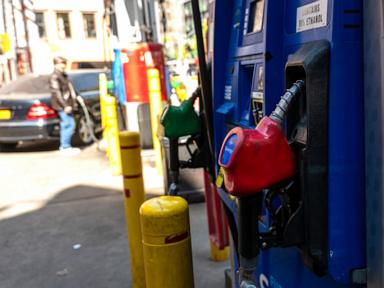
Stop whining about four-year highs at the pump. The obsession with "affordable" gasoline is a financial hallucination that ignores the basic mechanics of energy density, currency devaluation, and the actual cost of a mile driven. While mainstream media outlets scream about a crisis, they fail to mention that, adjusted for inflation and engine efficiency, you are actually getting a bargain.
The headlines are lazy. They track the nominal price—the "sticker price"—while ignoring the purchasing power of the dollar. If the price of everything from eggs to healthcare has surged 20% in three years, why would gasoline remain frozen in 2020? It wouldn’t. It shouldn’t. If you liked this article, you might want to read: this related article.
The Efficiency Paradox
Mainstream analysts love to talk about the "pain at the pump." They treat every cent increase like a direct tax on the soul of the American worker. What they miss is the radical shift in how much work we get out of a single gallon.
In 2004, the average fuel economy for a light-duty vehicle was roughly 19.3 mpg. Today, we are pushing toward 27 mpg. When you buy a gallon of gas today, you are buying roughly 40% more distance than you were twenty years ago. For another look on this development, refer to the recent update from Forbes.
If you pay $4.00 today for a gallon that takes you 30 miles, you are far better off than the person who paid $2.00 in 1998 for a gallon that took them 12 miles in a gas-guzzling sedan. We aren't paying for liquid; we are paying for kinetic energy. On a per-mile basis, gasoline remains one of the cheapest commodities on the planet.
Why High Prices Are Actually a Signal of Strength
Low gas prices are usually a symptom of a dying economy. Look at 2008. Look at 2020. Prices cratered because nobody was going anywhere. Demand vanished because the world was terrified.
When gas prices hit four-year highs, it means people are moving. It means logistics chains are humming. It means the velocity of money is high enough to support the bid. A high price is a signal of a functioning, high-demand economy. Wishing for $2.00 gas is essentially wishing for a recession. Be careful what you wish for.
I have spent years watching traders sweat over inventory reports from the Energy Information Administration (EIA). The "consensus" usually misses the mark because they view gasoline as an isolated variable. It isn't. It is the blood of the global market. When the price rises, it’s often because the dollar is weakening or global industrial output is surging.
The Refinement Bottleneck Myth
The media loves to blame "big oil" or "refinery maintenance." It’s a convenient villain for a complex problem. The reality is that we haven't built a major new refinery in the United States since the 1970s. We are running a 21st-century economy on a 20th-century backbone.
Environmental regulations and "Not In My Backyard" (NIMBY) politics have made it nearly impossible to expand capacity. So, we run our existing refineries at 95% capacity. Any hiccup—a hurricane in the Gulf, a pipe leak in Ohio—sends prices soaring.
This isn't a conspiracy. It’s math. We have capped our own supply while demanding more mobility. You cannot demand "green energy transition" and "cheap gas" simultaneously. Those two goals are in direct conflict. Every regulation that makes it harder to drill or refine adds a "compliance tax" to your tank. Own it.
Your Commute Is an Asset Bubble
For decades, cheap energy subsidized the suburban sprawl. It allowed people to live 50 miles from their workplace because the cost of transport was negligible. That era is over.
The current "high" prices are a market correction for a lifestyle that was never sustainable. If your entire financial stability rests on whether gas is $3.50 or $4.20, you aren't a victim of the oil companies; you are a victim of bad geography.
We see this in the commercial sector constantly. Companies that built massive, centralized distribution hubs based on the assumption of permanent $2.00 diesel are now getting crushed. The ones that localized their supply chains are winning. Higher gas prices force efficiency. They force innovation. They kill off the "lazy" business models that only survive on cheap fuel.
The Hidden Subsidy of Stability
Compare US prices to Europe. In the UK or Norway, you’d be paying nearly double what you pay at a California Chevron. Why? Because they tax the external costs of carbon and infrastructure.
In the US, we treat cheap gas as a birthright. We ignore the fact that the US military effectively secures the global sea lanes to ensure that tankers keep moving. If we actually priced in the cost of the "protection" required to keep the global oil market stable, gas would be $15.00 a gallon.
You are living on a subsidized high. The four-year high we are seeing now isn't an "outrage." It's a tiny step toward the actual market value of the most dense, portable energy source humans have ever discovered.
Addressing the "Price Gouging" Distraction
Every time prices rise, politicians call for investigations into price gouging. It is theatre. It is a distraction for people who don't understand the difference between a high price and a high margin.
Oil is a global commodity traded on the NYMEX and ICE. ExxonMobil doesn't set the price of a barrel of West Texas Intermediate (WTI); the market does. In fact, when prices are high, it often hurts the retail stations (the ones you actually visit) because their margins get squeezed between the rising wholesale cost and the consumer's breaking point.
If you want to find the real "gougers," look at the tax line. In many states, the government takes more per gallon than the oil company makes in profit. But nobody holds a press conference to investigate the state's gas tax.
Stop Waiting for the Drop
The "wait and see" strategy is for losers.
I've seen transportation firms go bust waiting for "seasonal dips" that never came. They hedged their bets on hope rather than reality. The reality is that the era of surplus energy is being traded for an era of managed scarcity.
Whether it’s ESG mandates or geopolitical instability in the Middle East, the upward pressure is structural. It isn't a "spike." It’s a new floor.
Actionable Strategy for a High-Fuel World
If you want to stop being a victim of the price cycle, you have to change your relationship with energy.
- Stop buying based on monthly payments. Buy based on Total Cost of Ownership (TCO). If your "cheap" truck costs you $600 a month in gas, it’s a luxury item, not a utility vehicle.
- Hedge your own life. If you drive 20,000 miles a year, you are short oil. You are literally betting that oil prices stay low. To balance that, you should be long energy in your portfolio. If gas goes up, your energy stocks go up. It’s a natural hedge that 99% of people ignore because they’d rather complain than calculate.
- Audit your logistics. For businesses, this means moving toward "Last Mile" efficiency. If you are still running a hub-and-spoke model designed in 1995, you are bleeding cash.
The four-year high isn't a crisis. It's a wake-up call. It's a reminder that energy is a finite, precious resource that we have treated like cheap water for too long. The market is finally telling you the truth.
Stop looking at the sign on the corner and start looking at the balance sheet. Gasoline isn't expensive. Your lifestyle is just poorly hedged.