George de Mestral was not looking for a fortune. He was looking for a break. It was 1941, and the Swiss engineer had just returned from a bracing hike through the Alps with his Irish Pointer. The air was crisp, the scenery was sublime, and the aftermath was a nightmare. Both man and dog were covered in small, stubborn burrs from the burdock plant.
Most of us know this irritation. You spend ten minutes picking the prickly hitchhikers off your socks, muttering under your breath about the design flaws of the natural world, and then you move on with your life. You throw the burrs in the trash. You forget them.
De Mestral couldn't forget.
He found himself standing in his workspace, tweezers in hand, staring at a single, tiny seed pod. Why was it so hard to pull away? Why did it feel like the fabric of his trousers was fighting to keep hold of the plant? He wasn't just annoyed anymore. He was curious. That curiosity is the thin line between a frustrated hiker and a man who changes how the world stays together.
He put the burr under a microscope.
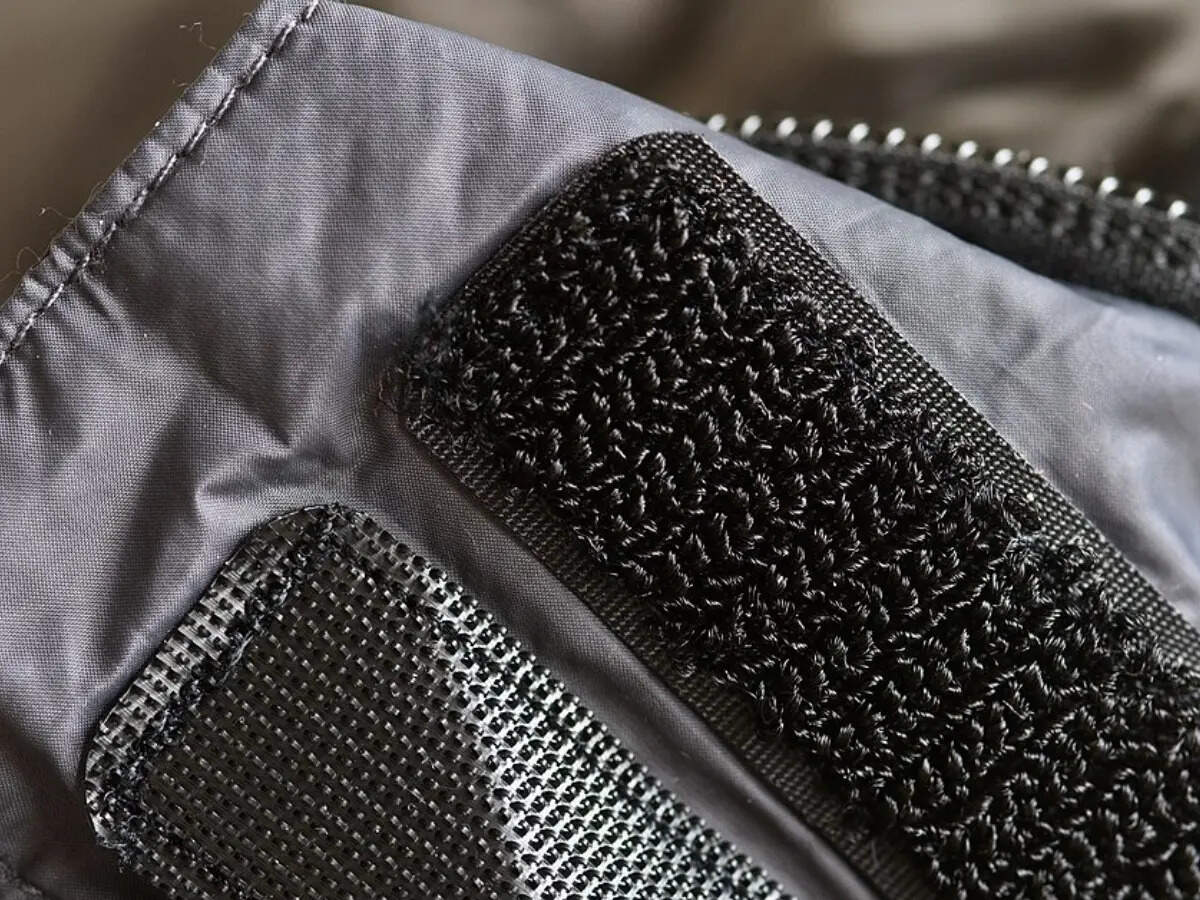
What he saw wasn't a flat surface or a simple sticky residue. It was a sophisticated system of hundreds of tiny, organic hooks. These hooks were flexible yet resilient. When they brushed against the looped threads of his wool pants, they didn't just touch; they locked. They were nature's own tiny mountaineers, gripping tight and refusing to let go until a significant force was applied.
He realized in that moment that nature had solved a problem humans hadn't even properly defined yet. We had buttons that popped off. We had zippers that jammed or caught the skin. We had laces that came untied at the worst possible moments. We were living in a world of mechanical fasteners that were prone to failure. Nature, meanwhile, was using a hook-and-loop system that was simple, reusable, and nearly indestructible.
De Mestral decided to build a version of it himself.
People thought he was insane. When he took his idea to the weaving capital of the world—Lyon, France—the experts laughed him out of their shops. They told him it was impossible to replicate those tiny hooks on a mass scale. They saw a toy, a gimmick, a child’s obsession. They didn't see a revolution.
Only one weaver, working in a small plant in Switzerland, decided to take a chance on the "madman." Together, they began a grueling process of trial and error.
Consider the technical wall they hit: To make the system work, you need two distinct sides. One side must be a forest of flexible loops. The other must be a field of stiff hooks. If the hooks are too soft, they don't hold. If they are too rigid, they snap. If the loops are too loose, the bond is weak. If they are too tight, the hooks can’t find a home.
They started with cotton. It was a disaster. The cotton fibers were too weak; they frayed and fell apart after just a few uses. De Mestral was burning through his savings, his reputation, and his patience. He needed something synthetic. He needed something that could be molded and cut with precision.
He found his answer in nylon.
By accident—or perhaps by the kind of inspired desperation that looks like accident—he discovered that nylon, when woven under infrared light, formed stiff, durable loops. He then realized he could snip the tops of those loops to create the hooks he needed. It was a painstaking process. He had to invent the machinery to do it. He had to design the looms, the cutters, and the heat-treating processes.
It took ten years.
A decade of his life was poured into a strip of fabric that made a "rrip" sound when you pulled it apart. In 1951, he finally submitted his patent. He named his invention Velcro—a portmanteau of "velour" (velvet) and "crochet" (hook).
But the world wasn't ready to buy it.
When Velcro first hit the market in the late 1950s, it was a commercial flop. High-end fashion designers looked at it and saw something ugly. It looked like plastic. It felt industrial. It lacked the elegance of a polished brass zipper or the tradition of a silk-covered button. It was relegated to the world of cheap athletic gear and specialty equipment. De Mestral had built the perfect fastener, but he hadn't yet found a reason for people to want it.
Then came the Space Race.
NASA was facing a unique set of problems in the 1960s. In zero gravity, everything is a projectile. A pencil, a bag of food, or a loose tool can become a hazard. Astronauts needed a way to secure items to the walls of their capsules, but they couldn't be fiddling with complicated latches while wearing bulky pressurized gloves.
They looked at de Mestral’s "ugly" plastic strips and saw a godsend.
Velcro became the invisible backbone of the Apollo missions. It lined the walls of the lunar modules. It held the food pouches in place. It was inside the helmets so astronauts could scratch their noses. Suddenly, the "gimmick" from the Swiss Alps was the height of space-age technology. If it was good enough for the moon, it was good enough for the suburban hallway.
The floodgates opened.
By the late 1960s, Velcro was everywhere. It was on the shoes of toddlers who hadn't learned to tie laces. It was on the blood pressure cuffs in every hospital, replacing the clumsy metal buckles that pinched the skin. It was in the upholstery of cars, the flaps of military uniforms, and the pockets of winter jackets.
De Mestral’s company was soon churning out over sixty million yards of the material every year. The man who had been mocked by the master weavers of Lyon was now the head of a global empire.
Yet, there is a quiet tragedy in the success of Velcro. Because the design was so simple and the application so universal, the name became a victim of its own success. "Velcro" is a brand name, but to the average person, it is the thing itself. The company has spent decades and millions of dollars in legal fees trying to remind the public that they manufacture "hook-and-loop fasteners," not "Velcro." They fear losing their trademark to "genericide"—the same fate that befell Aspirin, Escallator, and Thermos.
They are fighting to keep a name that has become a synonym for "easy."
George de Mestral passed away in 1990. He lived long enough to see his invention become a fundamental part of the human experience, though he remained a modest man, often retreating to the quiet of the mountains where the whole story began.
He understood something that many innovators forget: the most profound solutions are usually hiding in plain sight, stuck to the bottom of our trousers or tangled in our hair. We spend our lives trying to force the world to bend to our complicated machines, while nature has already perfected the mechanics.
Next time you hear that distinctive tearing sound—that sharp, rhythmic crackle of nylon hooks releasing their grip—think of a man standing in a mud-room in 1941, refusing to look away from a nuisance. Think of the ten years of failure that it took to make something look this easy.
The burr didn't change. We did. We finally learned how to listen to what the plants were trying to tell us.
A tiny, hooked seed once hitched a ride on a dog’s fur, hoping to find a patch of soil to grow. Instead, it found a microscope, an engineer, and a path to the stars.