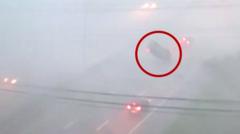
Severe weather doesn't always give you a warning. On a Tuesday morning in August 2026, motorists on Interstate 71 in Columbus, Ohio, faced a terrifying reminder of how fast nature can turn violent. Heavy rain rapidly escalated into near white-out conditions, and sudden high winds caught drivers completely unprepared.
Traffic cameras operated by the Ohio Department of Transportation captured a sedan getting knocked right onto its side near Weber Road around 10:08 a.m. When a storm hits this fast, standard driving habits stop working. You have to react instantly.
What Actually Happened on Interstate 71
The morning commute started normally enough. Light rain began falling over north Columbus, prompting drivers to tap their brakes and turn on their wipers. Minutes later, the weather flipped.
Winds intensified rapidly, pushing rain sideways and dropping visibility to almost zero. Traffic slowed to a crawl. Then, a powerful gust caught a moving sedan squarely, flipping it over on the freeway.
Central Ohio quickly plunged into chaos. Flash flooding swamped local roads, emergency crews scrambled to handle water rescues, and tornado warnings lit up phones across the region. Downed tree branches blocked suburban streets, turning simple morning routines into dangerous obstacles.
Why Sudden Wind Gusts Flip Vehicles
Physics dictates that high-profile vehicles like semi-trucks and SUVs are vulnerable to wind. But a standard sedan getting tipped over points to an extreme localized phenomenon, often associated with microbursts or severe straight-line winds embedded in a fast-moving squall line.
When air rushes downward from a collapsing storm cloud and hits the ground, it spreads out violently in all directions. If you're driving perpendicular to that sudden outflow, your car acts like a sail.
How to Survive Flash Floods and High Winds on the Highway
Most drivers make critical mistakes when severe weather strikes mid-trip. They keep driving at highway speeds through blinding rain or pull over blindly onto dangerous soft shoulders.
If you get caught in a sudden storm like the one that hit Columbus, follow these steps immediately:
- Exit the highway safely: If visibility drops to zero, don't stop in an active lane or on the shoulder where other cars might rear-end you. Take the nearest exit and find a protected parking lot.
- Turn on your lights: Make sure your headlights and hazard lights are fully active so others can see you slowing down.
- Avoid standing water: Just six inches of moving water can knock you off your feet, and a foot of water will float most cars. Turn around, don't drown.
- Stay away from trees: Park away from large branches or power lines that could snap in high winds.
Weather patterns are growing more volatile, and flash storms can materialize in minutes. Keep a close eye on local radar before heading out, and never assume a morning commute will stay calm just because it started that way. Stay alert, slow down early, and prioritize getting off the road when the sky opens up.