Geopolitics often feels abstract until a single violent crime shatters the diplomatic varnish. When a U.S. Marine stationed in Okinawa was arrested on suspicion of killing a local resident, it didn't just trigger a localized police investigation. It immediately resurrected decades of bitter resentment regarding the heavy American military footprint on Japan's southernmost island chain.
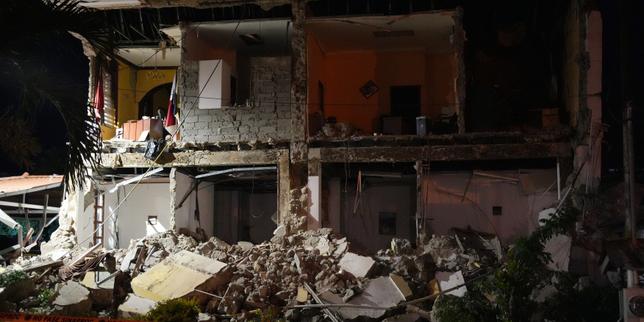
Japanese Defense Minister Shinjiro Koizumi didn't mince words when he lodged a formal, furious protest with U.S. Indo-Pacific Command chief Admiral Samuel Paparo. Tokyo's stance was uncompromising: absolute cooperation with the local investigation, immediate tightening of base discipline, and verifiable measures to stop service members from terrorizing the local population. Meanwhile, you can read similar stories here: When the Ground Gave Way Beneath Panama.
The Breaking Point in Naha
The incident centers on the October arrest of 20-year-old U.S. Marine Lance Cpl. Devin Jacob Ballard by Okinawa Prefectural Police. Authorities detained Ballard following the tragic death of 39-year-old Anna Yagi at a hotel in Naha, alongside allegations that her wallet and backpack were stolen. Security footage placed the suspect entering the establishment with the victim and leaving alone.
For Okinawans, this wasn't treated as an isolated aberration. It hit a raw, infected nerve. Okinawan Governor Genta Koja quickly summoned both U.S. and Japanese officials to demand answers, reflecting an exhausted local populace that has long shouldered the friction, noise pollution, and occasional crimes tied to foreign bases. To understand the full picture, we recommend the excellent analysis by NBC News.
The Anatomy of a Patchwork Response
In an attempt to quell the immediate PR firestorm, the U.S. military instituted some of its broadest operational restrictions in years. Lt. Gen. Benjamin Watson, commander of the III Marine Expeditionary Force, ordered a 48-hour operational pause that banned off-base liberty entirely and enforced a strict alcohol prohibition across all commands.
Commander-ordered stand-downs and mandatory conduct training are standard institutional playbooks whenever a service member commits a high-profile offense abroad. Yet, residents and local politicians view these temporary clamps with profound cynicism. Dry laws and curfews inevitably expire, liberty returns, and the underlying structural grievances remain completely unchanged.
Why Okinawa Bears the Brunt
Okinawa makes up a tiny fraction of Japan's total landmass, yet it hosts the vast majority of U.S. military facilities in the country. This strategic concentration is a legacy of World War II and the subsequent Cold War architecture. To Washington and Tokyo's defense planners, the island is an indispensable unsinkable aircraft carrier crucial for regional deterrence against shared security threats in East Asia.
To the people living right outside the razor-wire fences, however, that strategic necessity translates into an everyday burden. Statistics from local prefectural police show that arrests involving U.S. service members and their dependents regularly surpass 100 cases annually. Even minor offenses compound over decades, feeding a deep-seated local movement demanding a radical reduction of the base burden.
The Fragile Alliance Paradox
The core dilemma of the U.S.-Japan security treaty lies in a harsh contradiction. Prime ministers and defense chiefs in Tokyo rely heavily on American military might to guarantee national survival in an increasingly volatile neighborhood. At the same time, every time a tragedy occurs in Naha or surrounding towns, those same leaders are forced into an awkward balancing act—appeasing an outraged domestic electorate without fracturing the cornerstone of their foreign policy.
Admiral Paparo listened to Koizumi's reprimand behind closed doors, with both sides later offering standard boilerplate affirmations about keeping the alliance strong. But handshakes in Tokyo do little to repair the broken trust in Okinawa. Until Washington addresses the systemic behavioral and disciplinary issues plaguing young troops stationed overseas, these diplomatic reprimands will remain a grim, repetitive cycle.