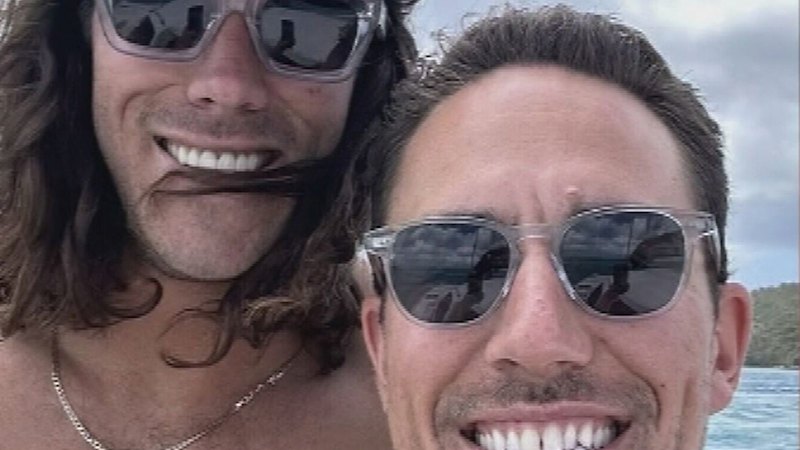
Salt dries on the skin like fine chalk after a long afternoon in the Pacific, leaving a tight, papery crust across knuckles and collarbones that only a fresh rinse can erase. For two brothers from Australia chasing clean swell down the rugged coast of Baja California, that salt would have felt like earned proof of a good trip. A truck. A tent. Cold water rolling over rocky points with nobody else around.
Instead, the story ended at the bottom of a deep well near Punta Santo Tomás, south of Ensenada, and in a courtroom years later where a judge read out a sentence that stretches across generations: 158 years in prison.
Numbers like 158 have a strange way of numbing the mind. They sound like a clock ticking past the end of every life in the room, a heavy mathematical gavel meant to satisfy grief with sheer scale. Yet a sentence that long does not bring back two young men who went looking for waves and camping spots. Nor does it erase the quiet, terrifying arithmetic of coastal crime, where a desire for a pickup truck or a piece of gear can turn an ordinary stretch of dirt road into a trap.
The Weight of a Number That Outlives Everyone in the Courtroom
When a court hands down a century and a half of prison time, the figure functions like a monument rather than a calendar. Nobody serves 158 years in a single human life. In legal systems that stack charges for aggravated kidnapping, robbery, and homicide, the number piles up quickly, brick by brick, until it towers over the docket.
To understand what that verdict means for people sitting at home reading a wire brief, it helps to strip away the legal jargon and look at what the sentence actually measures. A single lifetime is roughly seventy or eighty years, a fragile arc of mornings, shared meals, mistakes, and recovery. Stacking two full lifespans on top of one another turns punishment into a statement of permanent exclusion. Society is saying: you crossed a line so far beyond repair that your presence outside a cell is unthinkable for as long as human memory can project.
Still, grief rarely moves in straight lines with sentencing charts. A parent mourning two sons does not wake up on year 159 and feel whole. The verdict marks the close of a legal chapter, not the end of an absence.
What Happens When Remote Beauty Meets Desperation
To see why travelers get pulled into danger along isolated stretches of coastline, consider a hypothetical scenario. Imagine two friends driving a late-model pickup truck down a rutted coastal track in Baja California just as dusk settles over the scrubland. The air cools fast. Cell service drops out behind a low ridge. Up ahead, a couple of men stand near a battered sedan parked across the dirt—maybe pretending to have mechanical trouble, maybe waiting to see who has gear worth taking.
This scenario is hypothetical, built to show the mechanics of roadside vulnerability rather than to invent facts about a specific encounter. Yet the pattern is familiar to anyone who has ever driven a lonely highway after sundown. Remote beauty creates a false sense of freedom. Empty beaches look peaceful in daylight photographs, all turquoise water and empty sand. At night, that same isolation strips away witnesses, cell towers, and quick exits.
In many violent incidents involving travelers in rural or coastal zones, the motive starts small and ugly: property. A truck that can haul cargo or cross rough terrain. Phones, wallets, camping equipment, cash. When confrontation escalates—whether out of panic, pride, or cold calculation—a theft turns into something irreversible.
A pickup truck parked by a cliffside camp is more than transportation for a surf trip; in a place with high unemployment and fierce local turf, a reliable vehicle can look like instant currency.
I have stood on quiet coastal bluffs at twilight when the wind shifts off the ocean and turns every distant engine sound into a question mark. You feel the sudden drop in temperature and the sharp awareness of how far you are from help. Anyone who has traveled through unfamiliar backcountry knows that mixture of exhilaration and unease. You tell yourself to stay alert, lock the doors, keep moving before dark, and trust that good sense is enough. Most of the time, it is. When it fails, the margin between an inconvenience and a tragedy can vanish in seconds.
Why Travelers Ask About Safety, Cartels, and Justice
Whenever news breaks of foreign visitors killed in Mexico, the same questions ripple across travel forums, family group chats, and news feeds. People want clear, simple answers to complicated realities.
Is Baja California safe for tourists and surfers?
Millions of visitors travel to Baja California every year without incident, drawn by whale watching, desert trails, world-class surf breaks, and warm hospitality. Safety is rarely a binary switch; it is a patchwork of geography, timing, and local dynamics. Tourist corridors, established towns, and well-traveled routes feel worlds apart from remote, unmonitored tracks far from assistance. Even experienced travelers who know the roads well adjust their habits when conditions shift, avoiding night driving on secondary roads and staying aware of local advisories.
Were organized cartels behind the killings, or local opportunists?
People often assume every violent crime in Mexico belongs to a massive cartel war. In reality, crime on the ground frequently involves smaller local actors, opportunistic robbery, or street-level crews operating in areas where enforcement is thin. Regardless of the label on the perpetrators, the result for victims is identical. A criminal with a weapon does not need a global syndicate to end a life; he only needs opportunity and a lack of interference.
Does a harsh prison sentence deter future attacks?
Harsh sentences are a metaphor for moral outrage—a way of placing a massive weight on the scale of justice to match the weight of the loss. Deterrence, though, is messy. Someone planning a quick roadside robbery rarely stops to calculate whether they will serve 80 years or 158 years if caught; their gamble rests on not getting caught at all. Real prevention depends on steady policing, faster investigations, economic opportunity, and community safety long before a crime occurs.
The Invisible Stakes Behind the Headlines
Admittedly, untangling foreign justice systems and coastal security can feel overwhelming, even scary, when you picture yourself or someone you love miles from home. It is easy to swing between two extremes: either treating every border crossing like a war zone, or brushing off warnings with a shrug because nothing bad has happened to you yet. Both reactions miss the quieter truth.
There is a human cost on every side of a tragedy like this, even when blame is clear. Two Australian brothers lost their futures on a trip meant to be full of sun and ocean air. Their family back home was thrown into a grueling ordeal of international grief, waiting, and bureaucratic pain. At the same time, the conviction of the men responsible highlights a deeper social fracture—young men drawn into violent crime in a region where easy money and lawlessness have corroded lives for years.
Think of coastal security like a weather forecast rather than a locked door. You cannot control the storm systems forming out over the Pacific, and pretending clouds do not exist will not keep you dry. Checking conditions, traveling smart, staying connected, and respecting local realities do not guarantee immunity, yet they shift the odds in your favor.
What Lingers After the Gavel Falls
Courtrooms eventually empty. Security guards clear the benches, files get stamped, and the public eye moves on to the next headline. A sentence of 158 years sits on paper like an iron anchor dropped into deep water.
Out on the coast, the tide keeps coming in anyway. Waves curl over the reef, hiss across the pebbles, and pull back toward the open sea, indifferent to verdicts, borders, and the fragile plans of anyone standing on the shore.