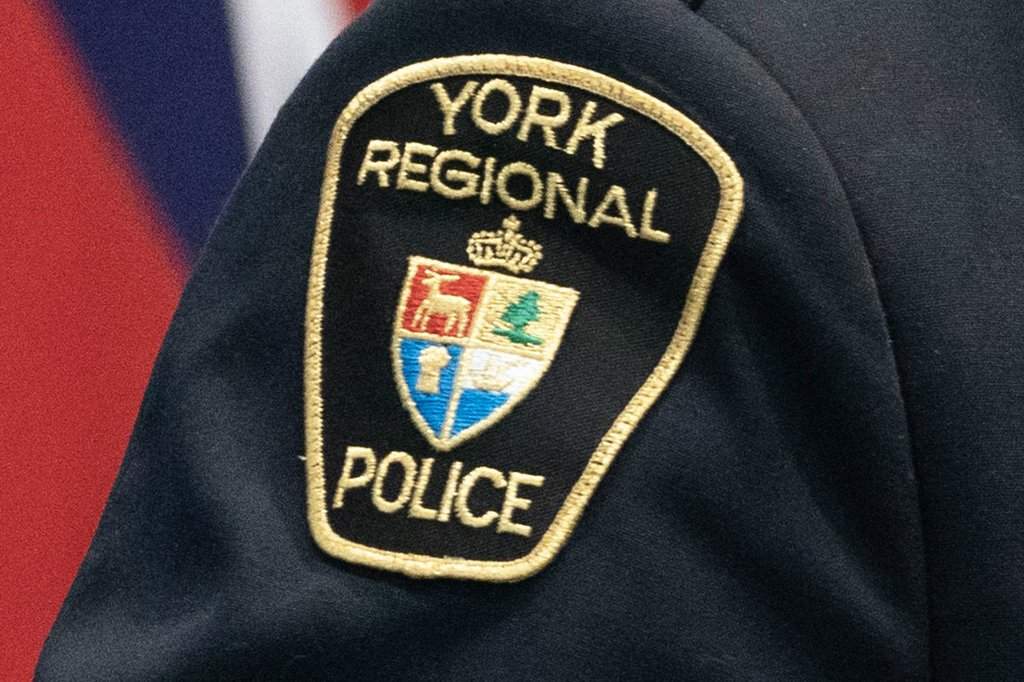
When an Ontario police officer is hit with seven criminal charges following a multi-jurisdictional investigation, the public gets a sanitized press release and a temporary suspension notice. What rarely makes the initial headlines is the grinding machinery required to police the police—a complex web of overlapping jurisdictions, statutory oversight bodies, and union-backed employment protections that dictate whether accountability actually sticks. Without a specific case file or named defendant provided in the initial brief, examining the structural reality of how multi-agency probes unfold across Ontario reveals why these cases take months to surface, why multiple forces get involved, and what the charges really mean for public trust.
Anatomy of a Multi-Jurisdictional Police Probe
Local police services do not investigate their own officers for serious criminal misconduct. That rule exists for an obvious reason. Bias is inevitable when detectives are asked to build a case against someone they share a locker room with, or someone who backed them up on a violent call three months ago.
When allegations cross municipal boundaries or involve misconduct committed while off duty in another city, a multi-jurisdictional investigation becomes mandatory. In Ontario, policing is fragmented across municipal forces—like Toronto, Peel, York, and Ottawa—and the Ontario Provincial Police (OPP), which polices rural areas, highways, and contracted municipalities. If an officer employed by one municipal service is accused of committing offenses in a neighboring jurisdiction, or if digital evidence spans multiple regions, two or more agencies must coordinate.
Usually, one force takes the lead while another provides technical support, surveillance, or forensic accounting. Sometimes, the Special Investigations Unit (SIU) steps in, though the SIU’s mandate is strictly limited to incidents involving death, serious injury, the discharge of a firearm at a person, or allegations of sexual assault. When a case falls outside those four specific triggers—such as fraud, breach of trust, unauthorized database access, theft, or obstruction of justice—the investigation stays within traditional police ranks, handled by an outside service’s Professional Standards Bureau or major crime unit.
Seven charges rarely stem from a single, isolated lapse in judgment. Prosecutors and major crime detectives typically stack charges when an investigation uncovers a pattern of behavior or a primary offense accompanied by cover-up attempts. A hypothetical example illustrates how this happens in practice. Suppose an officer improperly accesses the Canadian Police Information Centre (CPIC) database to look up an acquaintance, passes that confidential information to a third party, and then lies to internal investigators about the query. That single sequence of events quickly fractures into multiple distinct Criminal Code offenses—unauthorized use of a computer, breach of trust by a public officer, and obstructing a peace officer. Add separate dates or multiple victims to the timeline, and the charge sheet hits seven counts before the Crown attorney even finishes reviewing the disclosure package.
Why Seven Charges Carry Distinct Legal Weight
The number seven isn't arbitrary. In Canadian criminal law, every count on an information—the formal charging document sworn before a justice of the peace—represents a specific statutory threshold the Crown must prove beyond a reasonable doubt.
For a sworn peace officer, criminal charges carry a dual jeopardy that civilians never face. First comes the criminal court process, where the officer is presumed innocent and enjoys the exact same Charter protections as any other citizen. Second runs the parallel track under Ontario’s Community Safety and Policing Act (CSPA), which replaced the outdated Police Services Act in 2024.
The Criminal Code Baseline
When a multi-agency task force lays multiple charges against an officer, specific sections of the Criminal Code of Canada tend to appear repeatedly. Section 122 (Breach of Trust by Public Officer) is the heavy hitter. Unlike standard theft or assault charges, breach of trust targets the abuse of the badge itself. To secure a conviction, the Crown must prove the officer acted intentionally to use their official position for a purpose other than the public good—whether for financial gain, personal vengeance, or helping an associate evade detection.
Other frequent components of a multi-count indictment include:
- Obstruction of Justice (Section 139) when an officer tips off a suspect, alters notes, or interferes with an active inquiry.
- Unauthorized Use of Computer (Section 342.1) whenever restricted police intelligence systems are queried without a legitimate investigative purpose.
- Fraud or Forgery in cases involving falsified overtime claims, manipulated evidence logs, or insurance schemes.
- Assault or Uttering Threats when off-duty domestic disputes or altercations cross into criminal territory.
The Parallel Disciplinary Track
Criminal court moves slowly. A complex multi-jurisdictional case can easily take eighteen to twenty-four months to reach trial, bogged down by disclosure motions, Charter challenges regarding search warrants, and crowded court dockets.
While the criminal case crawls forward, the officer’s employment status enters a bureaucratic holding pattern. Under the Community Safety and Policing Act, a chief of police has expanded powers compared to the old regime—specifically the ability to suspend an officer without pay in narrow, severe circumstances, such as when an officer is charged with a serious off-duty offense that carries a high likelihood of conviction and imprisonment, or if the officer is held in custody.
Yet in the vast majority of cases, even when facing seven charges, the officer is suspended with pay initially. Police associations—the unions representing rank-and-file officers—fight fiercely to preserve paid suspension until a criminal conviction is registered. Their argument rests on a foundational legal principle: if an officer is stripped of income before a verdict and later acquitted, the financial ruin cannot be undone. Critics, including municipal mayors and taxpayer watchdogs, argue that paying a six-figure salary for two years to someone accused of abusing public trust erodes the legitimacy of the entire force.
The Friction Between Police Services During Joint Probes
Collaboration between police forces looks clean on a press release. In the trenches, it is notoriously messy.
Every police service operates with its own institutional culture, digital infrastructure, and chain of command. When detectives from Force A investigate an officer from Force B, jurisdictional friction is almost guaranteed. Access to internal records—duty rosters, GPS logs from cruisers, body-worn camera footage, and encrypted radio transmissions—requires formal production orders or strict memoranda of understanding.
Information silos create massive delays. Police services are hyper-protective of their intelligence databases because a single leak can compromise ongoing undercover operations or expose confidential informants. Consequently, when an outside agency asks for full access to an officer’s digital footprint, the home service’s legal counsel scrubs every file before turning it over.
There is also the human element that nobody in policing likes to admit publicly. Investigators working in Professional Standards or external major crime units often face subtle ostracization from peers. Investigating a fellow cop—even one from another city—violates an unwritten tribal code that persists despite decades of modernization. Detectives assigned to these files know their work will be scrutinized not just by defense lawyers, but by every rank-and-file member watching the case unfold. They have to build an airtight, unassailable evidentiary chain because any procedural sloppiness will be weaponized in court to argue institutional bias or a witch hunt.
What Public Statements Leave Out
Read enough police media releases announcing charges against an officer and you will notice a rigid, clinical formula. The release states the officer’s rank, years of service, the date of arrest, the list of charges, and a standard closing line confirming the officer has been suspended in accordance with provincial legislation.
What is missing from that text is almost always the origin of the tip.
Multi-jurisdictional investigations rarely start because a routine audit caught a discrepancy. They usually begin in one of three ways. First, a civilian files a formal complaint with the Law Enforcement Complaints Agency (LECA), formerly the OIPRD, providing documented proof that forces the agency to refer the matter to an outside service. Second, an officer’s name surfaces unexpectedly during an unrelated wiretap or drug investigation—a nightmare scenario for police leadership where a routine surveillance operation captures an active-duty cop communicating with a target. Third, a whistleblower inside the force quietly flags erratic behavior or suspicious database queries to a trusted supervisor, triggering a covert internal check before another police service is brought in to take over.
Notice also how the release frames the officer's status. Words like "assigned to administrative duties" versus "suspended" signal completely different risk assessments by the Chief of Police. Administrative duty means the chief believes the officer can still safely perform non-public desk work without jeopardizing ongoing investigations or public safety. Immediate suspension signals that the alleged conduct strikes at the core of the officer's integrity, making any continued presence in a police facility untenable.
The Crown Attorney’s Burden in Police Prosecutions
Once the handcuffs go on and the seven charges are sworn, the investigators step back and hand the file to the Ministry of the Attorney General. In Ontario, prosecutions of police officers are typically handled by specialized Crown attorneys—often from the Crown Law Office - Criminal—rather than local prosecutors who work daily with the accused officer’s colleagues.
This firewall is essential. You cannot ask a local assistant Crown attorney to prosecute an officer on Monday and then rely on that same officer’s unit to testify in a homicide trial on Tuesday.
Even with an independent prosecutor, convicting a police officer on charges like breach of trust or obstruction is notoriously difficult. Defense attorneys funded by police association legal plans are among the sharpest litigators in the province. They know police procedure inside and out, and they know exactly how to exploit gray areas in training, departmental policy, and split-second decision-making.
A skilled defense counsel will often separate sloppy policing from criminal intent. In Canadian law, incompetence, poor judgment, or violating an internal policy manual is not a crime. To convict on breach of trust, the Crown must prove a marked departure from the standards expected of a reasonable person in that position, paired with a guilty mind. If the defense can raise a reasonable doubt that the officer believed they were acting within the scope of their duties—even mistakenly—the criminal charges collapse, leaving only internal Police Act discipline to pick up the pieces.
The Long Tail of Accountability
The real test of Ontario's oversight system doesn't happen on the day the seven charges are announced. It happens two years later in a quiet courtroom or an administrative tribunal room long after the television cameras have moved on to the next scandal.
Even if a criminal trial results in an acquittal on six of the seven counts, or a plea bargain drops the most severe charges in exchange for a guilty plea to a lesser offense, the internal disciplinary hearing still awaits. The burden of proof in a Police Act tribunal is lower than in criminal court—clear and convincing evidence rather than beyond a reasonable doubt. An officer can beat the criminal rap and still lose their badge if the hearing officer finds their conduct discredited the reputation of the police service.
Yet the delays carry a steep hidden cost. Every month a charged officer remains on paid suspension drains municipal budgets that are already stretched thin. Worse, prolonged silence between the initial arrest and the final disposition breeds public cynicism. Residents see an announcement of seven serious charges, hear nothing for eighteen months, and assume the system quietly buried the matter behind closed doors. Transparency in Ontario policing has improved on paper through legislative overhauls, but until the gap between arrest and resolution shrinks from years to months, every multi-jurisdictional investigation will remain a slow-motion stress test for public trust.