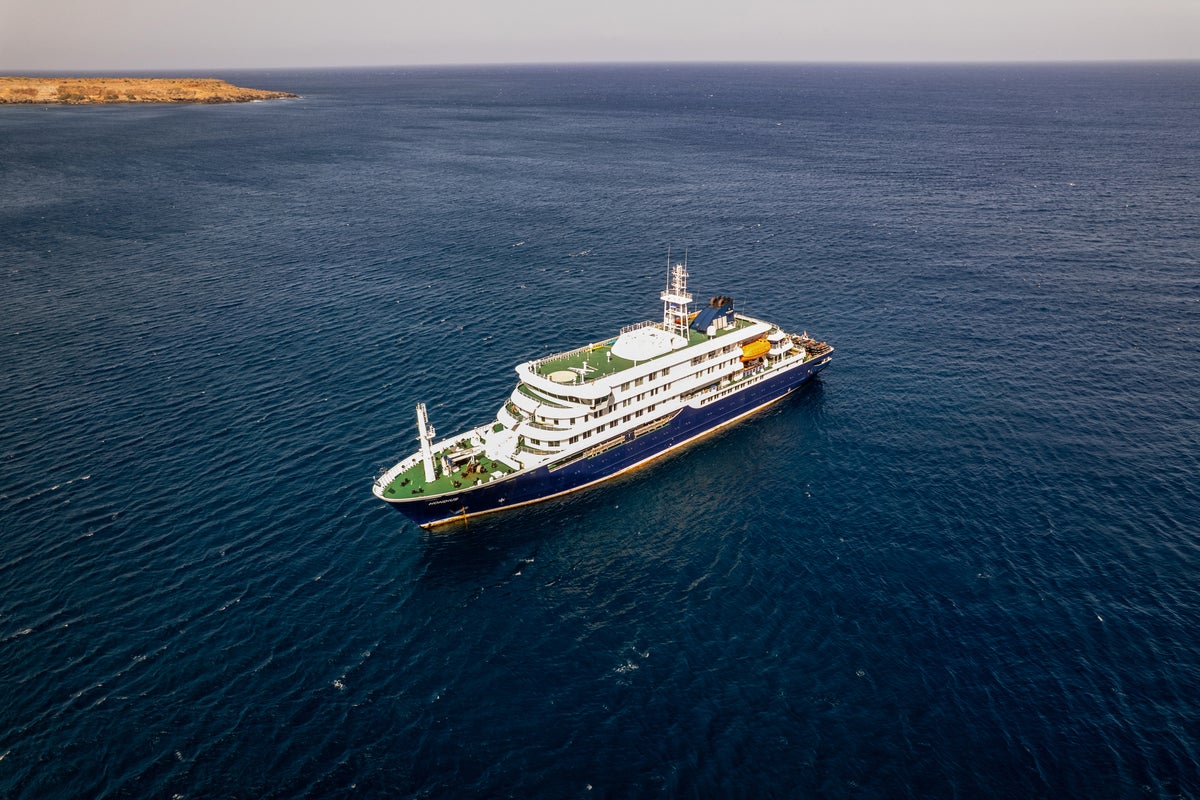
The evacuation of a cruise ship following a confirmed hantavirus outbreak is not merely a logistical challenge; it is a high-stakes exercise in bio-containment boundary management. When the first plane carrying passengers departed Tenerife, it marked the transition from a localized maritime quarantine to a distributed international risk profile. Success in such an operation depends on the integrity of the "sterile corridor"—a series of controlled environments designed to prevent the viral shedding of asymptomatic carriers from reaching the general population.
The complexity of this specific event stems from the atypical nature of hantavirus in a maritime environment. While usually associated with terrestrial rodent exposure, the confinement of a cruise ship transforms the vessel into a closed-loop transmission system.
The Triad of Viral Dispersion Risk
To analyze the effectiveness of the Tenerife evacuation, one must evaluate the three primary variables that dictate the probability of a secondary outbreak:
- The Incubation Latency Window: Hantavirus typically manifests within one to eight weeks post-exposure. This creates a "silent phase" where passengers appear healthy but may be harboring the pathogen.
- Environmental Transmission Mechanics: Unlike influenza, hantavirus is primarily contracted through the inhalation of aerosolized viral particles from rodent excreta. On a cruise ship, the HVAC (Heating, Ventilation, and Air Conditioning) system acts as the primary vector, potentially distributing particles across different decks and cabins.
- Cross-Jurisdictional Protocol Friction: Moving passengers from a Spanish port (Tenerife) to their respective home countries involves a handoff between multiple health agencies, each with varying thresholds for "acceptable risk."
The Mechanics of the Sterile Air Bridge
The departure of the evacuation flight represents a critical failure point if not handled with surgical precision. The "Air Bridge" protocol requires that the passenger journey from the ship’s gangway to the aircraft cabin be entirely decoupled from public infrastructure.
The Vehicle-to-Vessel Interface
The first stage involves the use of dedicated shuttles with isolated ventilation. Any breakdown in this segment—such as using standard airport buses without HEPA filtration—negates the previous shipboard quarantine. The goal is to maintain a negative pressure environment relative to the outside world, ensuring that any airborne particles are trapped within the containment unit.
Manifest Segmentation
The flight manifest must be segmented based on "Exposure Proximity." Passengers who occupied cabins adjacent to the initial outbreak site represent a higher tier of risk than those on distant decks. In a rigorous epidemiological model, these tiers would be seated in separate zones of the aircraft, with the highest-risk individuals positioned near the rear to minimize airflow contact with the rest of the cabin as air moves toward the outflow valves.
Hantavirus Pathophysiology in Confined Spaces
Understanding the threat requires a technical grasp of Hantavirus Pulmonary Syndrome (HPS). This is not a common cold; it is a severe respiratory disease with a case fatality rate that can exceed 35%.
- Vascular Leakage: The virus targets the endothelial cells lining the blood vessels. This leads to a massive leakage of fluid into the lungs (pulmonary edema).
- Cytokine Storm: The body’s immune response often overreacts, causing systemic inflammation that leads to organ failure.
In the context of a cruise ship, the density of the population accelerates the "viral load" present in common areas. Even if a passenger did not have direct contact with a rodent, the dusting and cleaning of contaminated surfaces can kick particles into the air, where they remain viable for several hours depending on the humidity and temperature of the ship's interior.
Structural Deficiencies in Maritime Health Safety
The Tenerife incident exposes a fundamental flaw in modern cruise ship design: the prioritization of energy efficiency over bio-security. Most vessels recirculate a significant percentage of cabin air to reduce the load on cooling systems.
The HVAC Bottleneck
In a standard commercial building, air exchange rates are high. On a ship, the "air turn" in a cabin might be lower than required to flush out viral aerosols. If hantavirus particles enter the return air ducts, they can theoretically bypass standard filters, which are often designed for dust and large allergens rather than microscopic viral units.
The Diagnostic Gap
Current maritime medical facilities are equipped for cardiac emergencies and minor trauma, but they lack the molecular diagnostic tools (like real-time PCR) needed to identify hantavirus quickly. This delay between the first "flu-like" symptom and a confirmed hantavirus diagnosis is the period of maximum risk. By the time the ship docked in Tenerife, the window for effective early-stage isolation had likely already closed for dozens of passengers.
The Economic Cost Function of Quarantine
The decision to evacuate via air rather than maintain shipboard quarantine is driven by a complex cost-benefit analysis.
- Vessel Deadweight Loss: Every day the ship sits in port, the operator loses millions in ticket revenue, port fees, and crew wages.
- Reputational Decay: The "plague ship" narrative is more damaging than the cost of chartered flights.
- Legal Liability: Keeping passengers on a contaminated vessel after the risk is known creates an indefensible legal position.
The evacuation flight is, therefore, a risk-transfer mechanism. By moving passengers to land-based facilities in their home countries, the cruise line transfers the duty of care to national health systems, effectively capping its own liability.
Quantifying the Probability of Secondary Transmission
The likelihood of a passenger on the Tenerife flight infecting a member of the public upon arrival is low, but the probability of "fomite" transmission—touching a contaminated surface—remains a variable that most airlines are ill-equipped to handle.
- Surface Stability: Hantavirus can survive on hard surfaces for up to several days in the right conditions.
- Excreta Persistence: If a passenger's luggage was stored in a contaminated area of the ship, the suitcase itself becomes a transport vector for the virus into a new geographic region.
Standard cleaning protocols used by commercial airlines are insufficient for hemorrhagic fever viruses. A rigorous approach requires the use of specialized disinfectants such as 10% bleach solutions or 70% ethanol, which can damage aircraft interiors, creating a tension between safety and asset preservation.
Strategic Operational Requirements for Future Incidents
The Tenerife evacuation serves as a blueprint for what must become a standardized maritime bio-response.
The first requirement is the implementation of Dynamic Isolation Zones. Modern ships must be engineered with the ability to "island" their HVAC systems. In the event of an outbreak, the affected deck should be immediately switched to a 100% fresh air intake mode, with exhaust air passed through UV-C sterilization units before being vented overboard.
The second requirement is the Pre-Positioning of Rapid Diagnostic Kits. Cruise lines must move beyond symptom-based screening. Access to rapid antigen tests or portable genetic sequencers would allow medical staff to differentiate between a common cold and a high-consequence pathogen within hours, rather than days.
The final strategic move involves the Standardization of International Health Passports for evacuated passengers. Following the Tenerife flight, those individuals should be entered into a centralized tracking database shared between the WHO and national health ministries. This ensures that if a passenger develops symptoms three weeks later in a different city, the local medical provider is immediately alerted to the specific viral risk, preventing a misdiagnosis that could lead to a localized outbreak.
The departure of the plane from Tenerife was not the end of the crisis; it was the beginning of a distributed surveillance phase. The focus now shifts from the ship to the individual nodes of the global travel network. Any failure to monitor these nodes with the same rigor applied to the initial evacuation will inevitably lead to the very geographic spread that the quarantine was intended to prevent. Carriers must now prioritize the "Bio-Security Audit" as a core component of their operational strategy, treating viral threats with the same structural gravity as mechanical failures or navigational hazards.