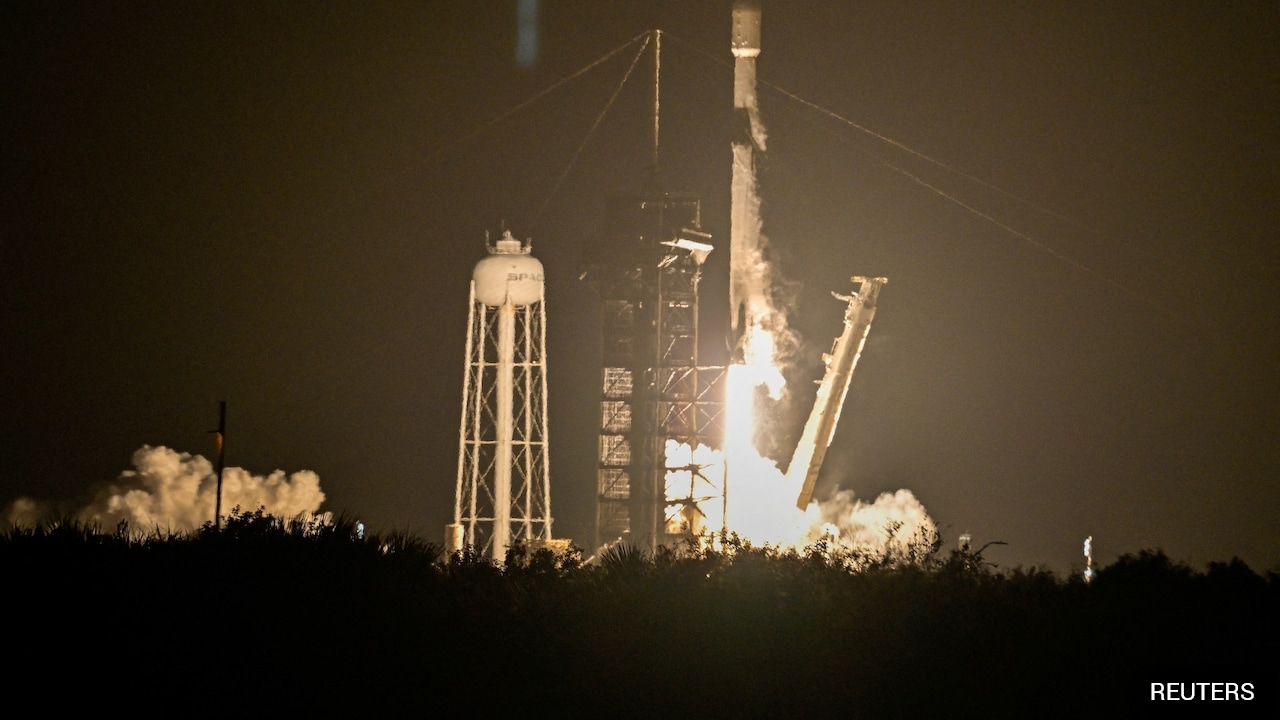
When an abandoned Falcon 9 booster stage collided with the lunar surface in March 2015, it marked a distinct inflection point in orbital debris management. Long after propellant depletion and attitude control exhaustion, the second-stage booster of a mission launched in February 2015 executing the DSCOVR (Deep Space Climate Observatory) payload drifted into an unstable chaotic orbit. This trajectory eventually intersected the Moon.
Understanding this event requires stripping away sensationalized headlines and examining the precise mechanical parameters governing high-apogee space debris. Orbital decay in deep space does not follow the familiar friction-driven patterns of Low Earth Orbit. Instead, it is dictated by multi-body gravitational perturbations, solar radiation pressure, and the chaotic nature of the Earth-Moon-Sun system.
The Three Phases of Deep Space Orbital Decay
The trajectory of the Falcon 9 second stage from burnout to impact can be segmented into three distinct mechanical phases. Each phase features unique physical drivers that dictate velocity, vector changes, and final destination probabilities.
Phase One: The Injection and High-Apogee Equilibrium
Following the primary mission objective—delivering the DSCOVR spacecraft to the L1 Lagrange point—the Falcon 9 second stage retained excess velocity. Because the launch required a high-energy escape trajectory, the booster was left in a highly elliptical orbit with an apogee extending far beyond geosynchronous altitude, reaching toward the distance of the Moon.
In this regime, atmospheric drag is essentially zero. The primary forces acting on the 4-metric-ton spent metal cylinder are Earth's dominant gravity, solar gravitational tides, and radiation pressure acting on its large surface area relative to its mass. The booster settled into an orbit with a period lasting many days, spending the vast majority of its cycle near its apogee where orbital velocity drops to mere meters per second.
Phase Two: The Lunar Perturbation Regime
As the orbit evolved over years, the line of apsides rotated due to the gravitational influence of the Sun and Moon. This precession altered the perigee and apogee radii. More critically, the booster's apogee repeatedly crossed the lunar orbit.
In orbital mechanics, passing near a massive body like the Moon without a capture event results in gravitational scattering. Small variations in position during a close lunar approach translate into massive divergence in subsequent trajectories. The Moon acted as a gravitational flipper, repeatedly modifying the booster's orbital energy.
Phase Three: The Terminal Descent Vector
By late 2021 and early 2022, independent astronomers tracking uncatalogued deep-space objects realized that the booster's path had converged on a collision course with the lunar nearside. Unlike objects entering Earth's atmosphere, which disintegrate due to thermal and aerodynamic stress, the booster retained its structural integrity until direct surface contact.
The impact occurred at approximately 2.58 kilometers per second. At this velocity, kinetic energy conversion is instantaneous, vaporizing a portion of the dry aluminum-lithium alloy structure and excavating a double crater near the Hertzsprung basin on the lunar far side.
The Mechanical Variables Governing Uncontrolled Deep Space Objects
Tracking objects like the 2015 Falcon 9 stage exposes significant blind spots in current space situational awareness architectures. Low Earth Orbit objects are catalogued meticulously by military radar and optical tracking networks. Deep space objects, however, operate under a different set of observational constraints.
- Area-to-Mass Ratio (AMR): The empty second stage has a high surface area relative to its low mass. This makes it highly susceptible to solar radiation pressure, which perturbs the orbit unpredictably over long durations.
- Gravitational Resonance: High-eccentricity orbits that cross multiple orbital planes encounter periodic resonances with Earth and the Moon, accelerating chaotic behavior.
- Lack of Active Tracking Telemetry: Once batteries die and passivation is complete, the object becomes a passive optical target, viewable only when sunlight reflects off its metallic body at specific angles.
Observational windows for deep-space debris are narrow. An object near apogee moves too slowly to register against background stars using standard streak-detection algorithms, yet it is too distant for ground-based radar to ping effectively. Consequently, the identification of the 2015 booster relied heavily on amateur astronomers performing astrometric measurements rather than institutional space traffic management databases.
Environmental and Scientific Implications of Uncontrolled Lunar Impacts
While the public discourse often centers on the geopolitical or liability aspects of space junk, the physical reality involves planetary protection, material science, and seismic data acquisition.
The kinetic impact of a four-ton metal cylinder traveling at hypervelocity generates a localized seismic event. Modern lunar exploration strategies rely on understanding the internal structure of the Moon. While intentional impacts—such as the S-IVB booster strikes during the Apollo program—were heavily instrumented to calibrate seismometers left behind by astronauts, an uninstrumented impact provides opportunistic data. Seismometers operating on the lunar surface can register the shockwaves, providing clues about the regolith depth and upper crustal composition.
Simultaneously, the event underscores the necessity of fuel passivation protocols. Modern upper stages are routinely commanded to vent remaining propellants and deplete internal battery reserves to prevent explosions (orbit fragmentation). However, passivation prevents internal kinetic fracturing; it does not alter orbital decay. Once an object is placed on an escape trajectory or high-energy Earth orbit without a targeted de-orbit burn, its ultimate fate is dictated entirely by celestial mechanics over decades or centuries.
Strategic Mitigation and Future Orbital Architecture
Managing the space environment beyond geostationary orbit requires a shift from passive tracking to active end-of-life disposal design. The Falcon 9 second stage involved in the 2015 impact operated under the standards of its era, where deep-space upper stages were routinely abandoned after primary mission completion due to mass margins and Delta-v budget constraints.
Future missions heading toward Lagrange points or high-energy escape trajectories must integrate disposal accounting directly into the mission design baseline. Three primary engineering controls dictate feasible remediation:
- Heliocentric Insertion Burns: Expending remaining propellant to place the upper stage into a stable heliocentric orbit that avoids intersecting both Earth and lunar gravitational spheres of influence.
- Controlled Earth Return: Executing a retrograde burn to lower perigee back into Earth's atmosphere, ensuring complete thermal ablation during re-entry.
- Material Tracking Beacons: Equipping high-apogee upper stages with low-power, long-duration passive or active transponders to maintain continuous astrometric baselines.
The intersection of the 2015 booster with the lunar surface is not an isolated anomaly, but a mathematical certainty within an unmanaged orbital regime. As commercial and scientific traffic to cis-lunar space scales exponentially, the absence of strict end-of-life disposal protocols for high-energy stages will multiply the density of unpredictable deep-space debris. Transitioning from reactive astrometric identification to proactive trajectory sterilization remains the primary operational requirement for maintaining cis-lunar orbital integrity.