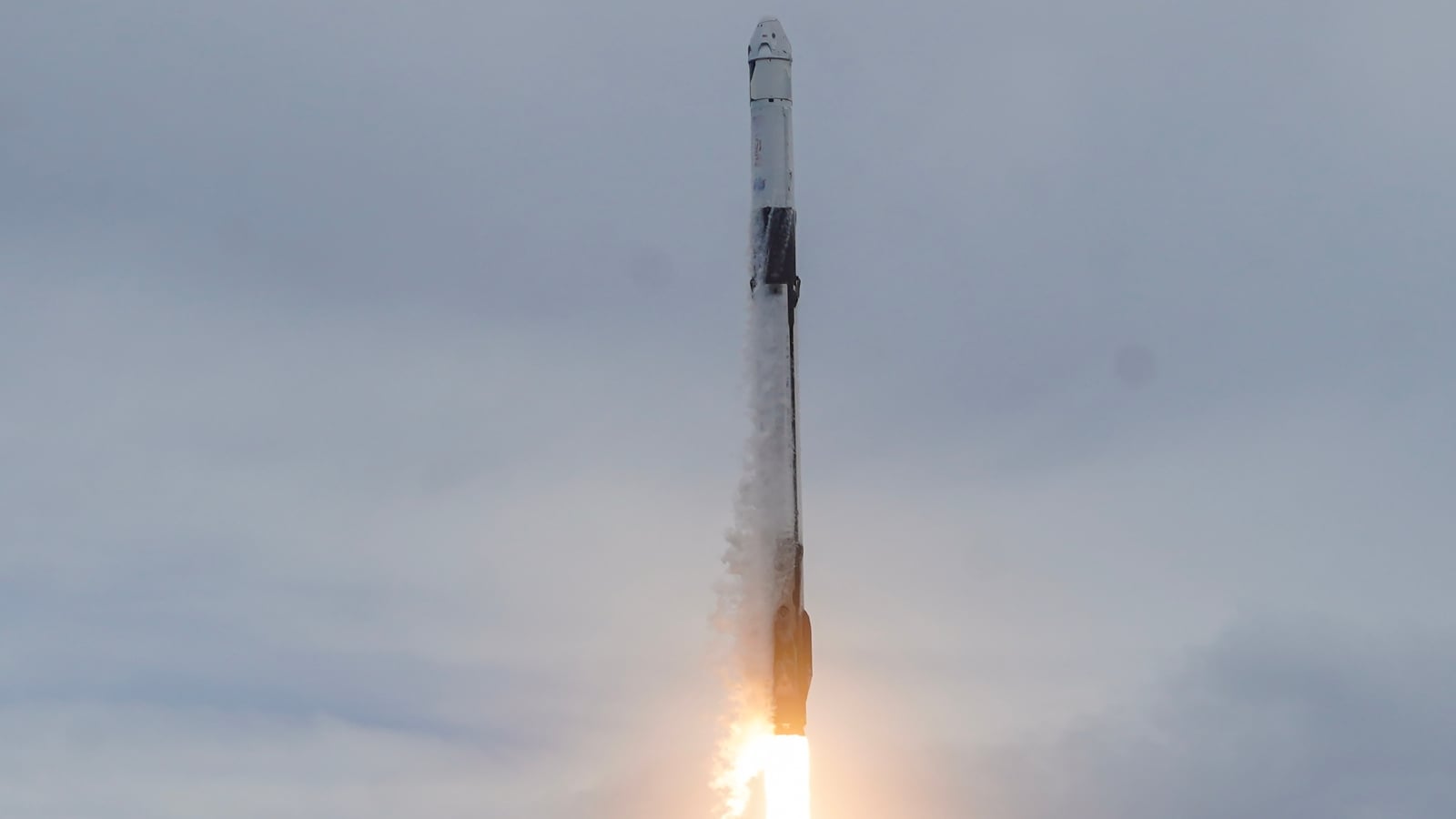
The operational efficiency of human spaceflight depends on minimizing transit latency between terrestrial launch and orbital integration. When crew transport missions transition from multi-day orbital rendezvous profiles to rapid-insertion trajectories, the fundamental parameters of orbital mechanics, spacecraft thermal management, and life support system endurance shift dramatically. Analyzing the mechanics behind expedited crew rotations reveals how precise orbital insertion geometry, advanced propulsion scheduling, and reduced phase angles alter the cost and safety functions of human space transport.
The Orbital Mechanics of Compressed Transit Windows
Traditional rendezvous profiles to the International Space Station often utilize a multi-day phasing strategy. This approach allows ground controllers and onboard navigation systems to execute multiple small orbital adjustments, compensating for minor uncertainties in launch vehicle performance and orbit injection accuracy. While this conserves propellant and minimizes immediate thermal loads on spacecraft avionics, it introduces prolonged exposure to radiation and extended metabolic consumption within compact crew quarters.
Accelerated transit windows compress this timeline through direct insertion dynamics. By matching the orbital plane and altitude of the target destination within a single or few orbital revolutions, the spacecraft bypasses prolonged phasing orbits.
Standard Phasing: Launch -> Multi-day Orbit Raising -> Terminal Rendezvous
Rapid Insertion:  Launch -> Direct Plane Alignment -> Terminal Rendezvous
This compression demands extreme precision from the launch vehicle. The margin for error in velocity vector and insertion altitude shrinks from meters per second to centimeters per second. Any deviation requires immediate mid-course correction burns, which consume precious RCS (Reaction Control System) propellant reserves budgeted for docking maneuvers.
Thermal and Structural Constraints During High-Energy Ascents
Executing a rapid orbital catch-up requires aggressive propellant utilization, translating to higher thermal dissipation requirements during the initial ascent phase. As aerodynamic pressure peaks and the spacecraft accelerates toward orbital velocity, kinetic energy conversion rates test the limits of thermal protection system (TPS) configurations.
Furthermore, spacecraft life support architectures face a distinct challenge during compressed profiles. Environmental Control and Life Support Systems (ECLSS) must transition rapidly from launch-configured stowed states to fully operational human-rated environments without the buffer of a multi-day cruise phase. Carbon dioxide scrubbing beds, humidity control assemblies, and waste management loops must stabilize instantly under high-vibration conditions.
The operational risk shifts from slow, predictable system degradation during long transits to acute, high-stress validation of redundant systems immediately following main engine cutoff. Flight crews operating under these constraints experience compressed adaptation windows, transitioning directly from high-G launch profiles to intricate manual or automated docking sequences within hours.
Mission Architecture and Leadership Implications
Operational leadership during high-tempo spaceflight operations requires a shift from reactive troubleshooting to preemptive procedural automation. When Jessica Watkins and the flight crew executed an expedited transit profile, the mission profile demanded rigorous reliance on automated guidance systems coupled with strict human-in-the-loop verification gates.
The primary operational variable in rapid transit is the reduction of decision cycles. In a standard two-day rendezvous, flight controllers have hours to analyze orbital telemetry, recalculate burn vectors, and verify system integrity. In a compressed flight, telemetry must be processed in real-time, requiring onboard flight software to handle trajectory optimization autonomously.
The Trade-off Matrix of Rapid Orbital Insertion
Optimizing spaceflight logistics involves navigating a strict trade-off matrix between propellant mass fractions, payload capacity, and crew physiological endurance.
- Propellant Mass Penalty: Direct-insertion profiles require higher delta-V margins, reducing the payload mass available for scientific equipment or cargo resupply.
- Avionics Redundancy: Shorter timelines leave no margin for system resets or secondary troubleshooting; hardware must be fault-tolerant from ignition.
- Human Performance Factors: Eliminating the multi-day transition period compresses the psychological and physiological adaptation to microgravity, increasing the risk of space motion sickness during critical docking phases.
Mission planners must weigh these factors against the operational benefits of reducing cumulative radiation exposure and preserving consumables. As commercial crew transportation systems mature, the standardization of rapid-insertion protocols will redefine baseline expectations for orbital logistics, establishing speed as a primary metric of spacecraft reliability and mission efficiency.