Outrage Over Squatting Stickers Misses the Real Threat in Australia
A sticker goes up on a lamppost. Someone snaps a photo. Within hours, the lazy consensus kicks in.
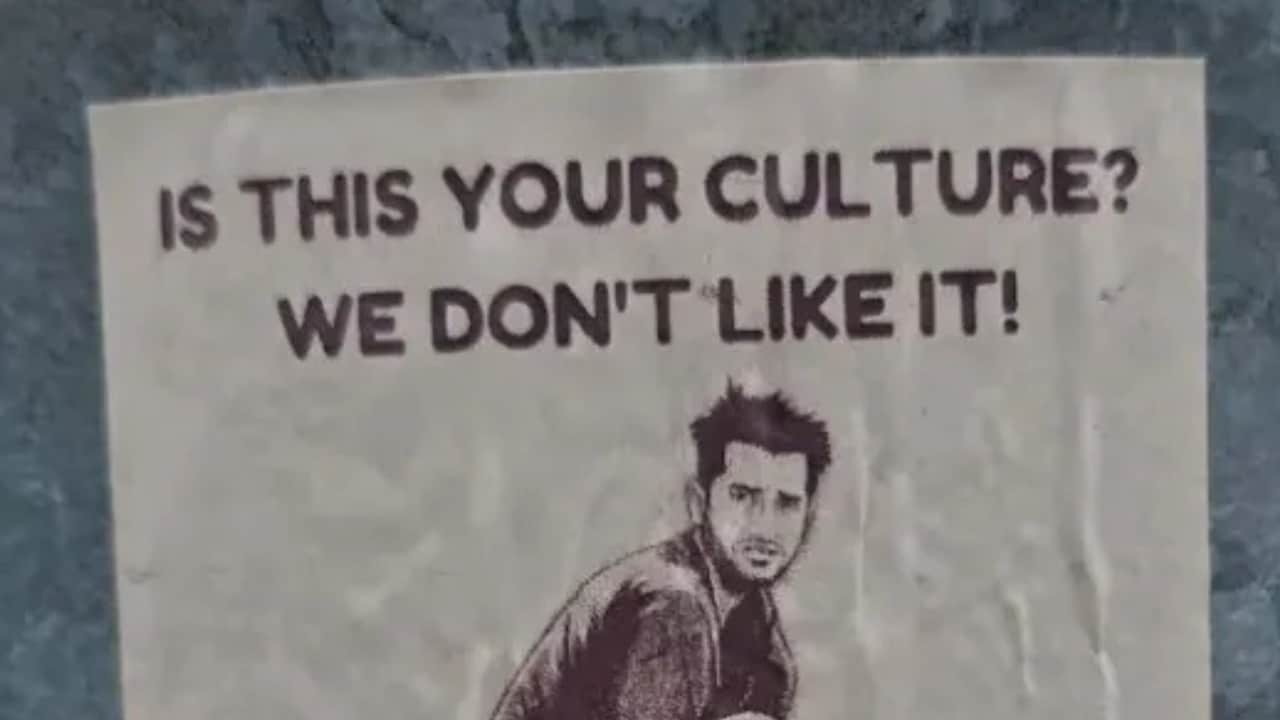
"Racist stickers in Australia show an Indian man squatting with the caption Is This Your Culture?." That headline tells you everything about how modern outrage works and almost nothing about why xenophobic provocation actually sticks.
Let's be blunt. Calling a crude sticker racist is easy. It requires zero analytical heavy lifting. It lets commentators post a predictable condemnation, collect moral points, and move on before dinner.
It also leaves the actual mechanics of anti-immigrant hostility untouched.
When coverage treats a cheap street sticker as a self-explanatory moral cartoon, it misses the real danger. The danger isn't merely that someone printed an insulting image. The danger is how an image of a resting posture—the deep squat—gets weaponized to turn everyday bodily habits and housing pressures into tribal warfare.
You don't beat a psychological weapon by reading the label on the box. You beat it by taking the mechanism apart.
The Lazy Consensus Around Street Provocations
Standard media coverage of anti-Indian or anti-immigrant stickers in Australia follows a rigid script. Identify the target group. Document the offensive phrasing. Quote community leaders expressing hurt and dismay. Add a line from officials saying hate has no place in the country.
Nothing in that script is false. Racist harassment is real, and Indian Australians have faced rising hostility alongside rapid population growth and acute cost-of-living strain.
Yet treating a sticker like Is This Your Culture? as a simple, one-dimensional racial slur flattens what is actually happening on the street. A standard slur attacks identity directly. This kind of provocation works sideways. It picks a visible, non-verbal detail—squatting—and frames it as an invasion of public norms.
Why squatting? Because biomechanically, the deep resting squat is one of the most normal human postures on earth. Across South Asia, East Asia, parts of Europe, and historically across almost every human society before chairs became universal in wealthier urban interiors, resting in a deep squat is practical, comfortable, and efficient.
In Western urban environments dominated by benches, chairs, and paved public spaces, a deep squat looks unfamiliar to people who have lost that mobility or never treated pavement as a resting surface. Propagandists exploit that gap between familiarity and difference. They take an ordinary posture, slap a mock-question over it, and invite passersby to treat a body habit as a cultural trespass.
If you only argue "that's offensive to Indians," you stay trapped inside the agitator's frame. You never expose the trick: turning a posture into a border line.
Biomechanics vs. Cultural Projection
People who spend their lives around human movement, public policy, or cross-cultural communication know a basic truth. Bodies adapt to environments, and environments shape what people consider "normal."
When I've worked on public space campaigns and urban communication projects, I've seen organizations blow serious budgets trying to counter street-level division with sterile slogans. You put up a banner that says "Respect Diversity" next to a train station where commuters are stressed about rent, crowded carriages, and changing neighborhoods, and the slogan bounces right off.
Why? Because abstract virtue doesn't compete with concrete friction.
Consider a thought experiment. Imagine a scenario where two commuters stand on the same Melbourne or Sydney platform. One sits on a metal bench; another rests in a deep squat against a wall because their knees and hips handle it effortlessly, or because the benches are full. Nothing about that posture harms anyone. Yet if a sticker campaign has already primed onlookers to read squatting as a symbol of "unassimilated behavior," a neutral physical act suddenly carries political weight.
That is how cultural projection operates. It takes something mundane and charges it with meaning the object itself doesn't possess.
Sociologists who study stigma and boundary-making—going all the way back to Erving Goffman's work on stigma and Michèle Lamont's research on cultural boundaries—have shown for decades that groups construct boundaries around everyday practices, tastes, and bodily habits to mark "us" versus "them." When economic anxiety rises, those boundary markers get sharper and louder.
Australia's housing crunch and rapid migration debates provide plenty of dry tinder. Bad actors don't need sophisticated ideology to light a match. A cheap sticker is cheap to print, fast to slap on a pole, and engineered to trigger a viral photo.
Why "Is This Your Culture?" Is Such a Slippery Hook
Look closely at the phrasing: Is This Your Culture?
It isn't framed as a textbook racial epithet. It's framed as a question of belonging and public standards. That phrasing is deliberate. It gives the person who printed it—and anyone who quietly nods along—plausible deniability.
"I'm just asking about public behavior," the subtext whispers. "I'm not a hater. I just care about standards."
That trick is older than stickers. In public debates across many countries, complaints about "culture" or "standards" frequently serve as a socially acceptable Trojan horse for ethnic resentment. By asking Is This Your Culture?, the sticker implies that the target group's culture is foreign, incompatible, or intrusive, while casting the sticker's maker as the guardian of the local way of life.
Here is the catch that lazy commentators miss: culture isn't a static museum piece owned by one posture.
Australia itself is a patchwork of habits, accents, foods, and daily routines brought by waves of migrants from Britain, Ireland, Greece, Italy, Vietnam, China, India, and dozens of other places. Even the idea of a single, unbroken "Australian culture" is a convenient myth when you look at how daily life actually functions in major cities.
When someone asks Is This Your Culture? over a sticker, the real question isn't about heritage. It's about power and territory—who gets to decide what belongs in shared public space.
Answering the Questions People Actually Search
When incidents like this hit the news, people turn to search engines with predictable questions. Most of the standard answers are either evasive or unhelpful. Let's strip away the fluff.
Are stickers like this a sign of widespread hatred or just a few fringe trolls?
Both—and pretending it's only one of those is a mistake.
A single person or small group can print hundreds of stickers in an afternoon. That means one motivated agitator can create the illusion of a massive movement across a suburb. Treating every sticker as proof that half the neighborhood wants to drive people out exaggerates the scale of organized hatred and hands trolls free amplification.
On the other hand, dismissing it as "just a fringe troll" ignores the environment that makes the sticker resonate. Trolls don't throw darts in a vacuum; they aim where there is already tension. In Australia, debates over migration levels, housing affordability, and infrastructure strain create real friction. When fringe actors tap into real frustration, the fringe becomes harder to ignore.
Why do Indian migrants and Indian Australians get targeted this way?
Visibility and scale. Indian migration to Australia has grown substantially over recent years, making Indian communities a prominent part of urban life, workplaces, universities, and neighborhoods.
Whenever a group grows visibly during a period of economic strain—especially rising rents and cost-of-living pressure—it frequently becomes a scapegoat. Scapegoating doesn't require accurate economics. It only requires a convenient target. A recognizable face, an accent, or a distinct habit like squatting becomes a shorthand symbol for broader anxieties about change.
Does reporting stickers to councils or police actually work?
Sometimes for removal, rarely for prevention.
Local councils and transit authorities often take down offensive stickers once reported, which helps keep public spaces clean and signals that harassment isn't endorsed by local institutions. If a sticker involves threats, incitement, or targeted harassment, police involvement can matter.
Still, peeling off a sticker doesn't change the mindset of the person who stuck it there, nor does it solve the underlying housing or cost-of-living pressures that make people angry in the first place. Removal is hygiene, not a cure.
What Actually Works Instead of Performative Outrage
If you care about social cohesion and shutting down anti-immigrant agitators, outrage threads won't do the job. Agitators feed on attention. Every dramatic post that frames them as sinister masterminds gives them reach they could never buy.
Here is what works better in the real world:
- Starve the spectacle, document the pattern. Don't turn every crude sticker into a national drama. Log locations quietly with local councils or community safety groups so authorities see where activity clusters, without handing the creator free publicity.
- Separate public norms from ethnic identity. If a genuine public-space issue exists—like blocked walkways or litter—address it strictly as a shared civic rule for everyone, never as a "cultural" trait of a specific nationality. If there is no harm—like someone squatting quietly—say so plainly instead of letting bullies invent fake rules.
- Talk about material pressures honestly. Pretending that rapid growth has zero impact on housing or services doesn't stop xenophobia; it fuels it. Honest conversations about housing supply, infrastructure, and fair integration take oxygen away from scapegoats.
- Build ordinary, everyday familiarity. Shared sport, school gates, workplaces, and local volunteering do more to dissolve "us vs. them" thinking than any panel discussion or hashtag.
The Honest Downside of This Approach
A contrarian stance carries risks, and I'm not going to pretend otherwise.
If you push back against simplistic outrage—or argue that we shouldn't treat every street sticker as an existential crisis—some people will accuse you of downplaying racism. Worse, if you aren't careful with your wording, bad actors might misread a nuanced critique of media framing as sympathy for their stunts.
That is a real cost. Nuance is harder to defend in a noisy room than a one-line condemnation. Yet ceding ground to lazy outrage leaves us with bad strategy. Good strategy requires accuracy even when accuracy feels unpopular.
Stop Taking the Bait
A sticker on a pole is a piece of cheap paper with a cheap idea behind it. The agitator wants you angry, reactive, and arguing on their terms about who belongs and who doesn't.
Don't play their game. Strip away the fake moral drama, call out the boundary-making trick for what it is, fix the real civic friction where it exists, and keep moving.