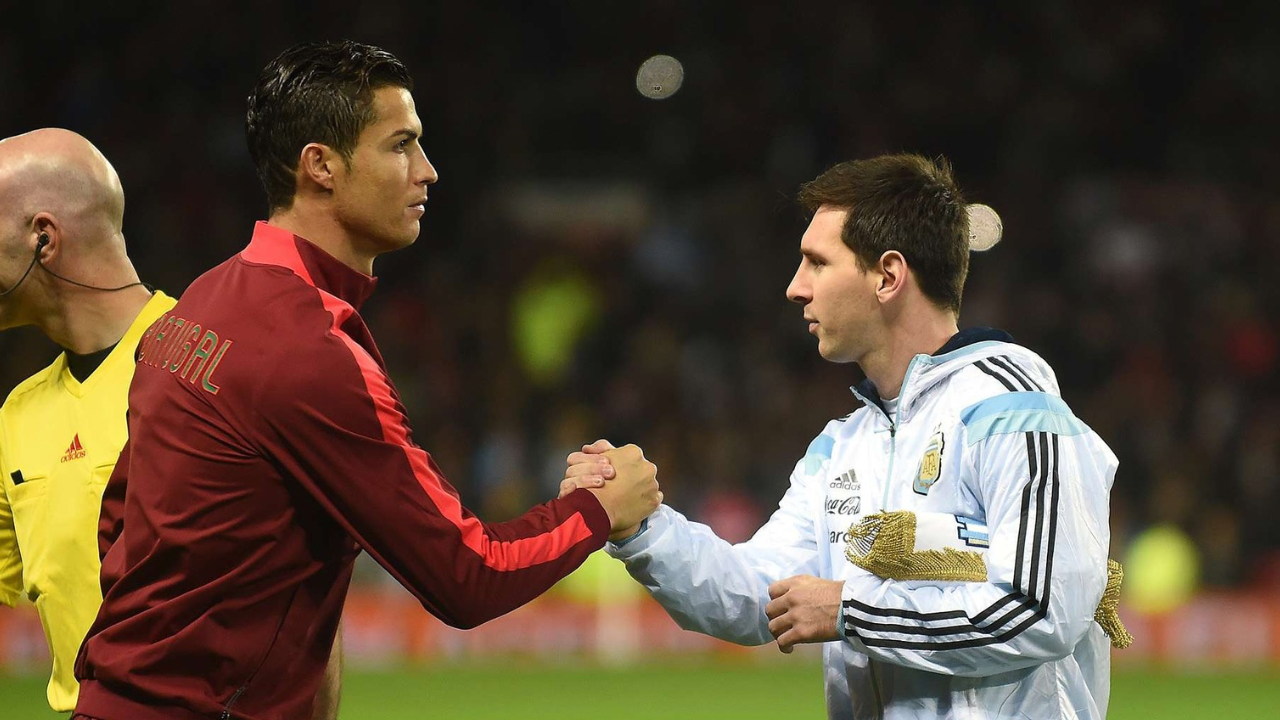
The transition of Lionel Messi and Cristiano Ronaldo from on-field assets to institutional owners represents a fundamental shift in the capitalization of Spanish football. This is not a nostalgic rivalry; it is a calculated entry into a distressed or undervalued asset class where "fame-driven equity" serves as the primary lever for valuation growth. By acquiring significant stakes in rival Spanish clubs, Messi and Ronaldo are testing a thesis: whether personal brand equity can bridge the revenue gap between mid-tier La Liga entities and the global elite.
To understand the mechanics of this shift, one must analyze the Spanish football ecosystem through three distinct lenses: the structural constraints of La Liga’s financial controls, the valuation multiples of provincial clubs, and the conversion of social capital into institutional liquidity. If you liked this piece, you might want to read: this related article.
The Financial Fair Play Bottleneck and Equity Injections
Spanish football operates under a rigid economic control system known as Límite de Coste de Plantilla Deportiva (LCPD). Unlike the Premier League's historical "spend and then penalize" model, La Liga requires clubs to prove financial solvency before registering players. This creates a hard ceiling for clubs with low organic revenue.
When an icon enters the boardroom, the primary objective is to manipulate the "Commercial Income" variable of the LCPD equation. A club like Real Valladolid or a regional peer struggles to secure global sponsorships. However, a club owned by Ronaldo or Messi immediately gains access to a tier of Middle Eastern or American capital that is brand-agnostic to the club but brand-loyal to the owner. For another angle on this story, refer to the recent update from The Athletic.
This creates a specific cause-and-effect chain:
- Brand Affiliation: The owner’s personal sponsors (e.g., Adidas, Nike, Binance) view the club as a subsidiary marketing channel.
- Revenue Inflation: Sponsorship contracts are signed at a premium above "fair market value" for a club of that size, though still within the limits of La Liga’s independent valuation committee.
- Squad Expansion: The increased revenue raises the LCPD, allowing the club to sign higher-caliber talent without violating league rules.
The Mechanics of Distressed Asset Acquisition
The selection of Spanish clubs by these icons is rarely an emotional choice. It is a play on the "La Liga Impulso" project—the CVC Capital Partners investment deal. By selling a percentage of their media rights for the next 50 years, Spanish clubs received an immediate cash injection earmarked for infrastructure.
Messi and Ronaldo are entering the market at a point where the infrastructure (stadiums, training grounds) is being modernized by external private equity. They are essentially acquiring "refurbished" assets at "pre-renovation" prices. The risk-reward ratio is skewed in their favor because:
- The Floor: Regional loyalty in Spain ensures a baseline of ticket sales and local broadcast revenue.
- The Ceiling: Promotion to or retention in the top flight, coupled with European qualification, provides a 5x to 10x return on initial investment due to global TV rights.
The "Messi vs Ronaldo" narrative provides a secondary layer of value: the Derby Premium. When their respective teams meet, the global viewership figures will rival "El Clásico," despite the actual quality of football being lower. This creates an artificial spike in ad-spot pricing and international broadcasting interest, specifically for those matchdays.
The Cost Function of Iconic Ownership
The primary risk in this model is the "Founder’s Trap" applied to sports. In business, a founder-led firm often struggles when the founder’s personal vision clashes with market realities. In football, the "Icon’s Trap" occurs when the owner’s fame creates an unsustainable cost structure.
The Wage-to-Revenue Disconnect
Middle-tier clubs often operate on a thin margin where 70% of revenue goes to wages. If a Messi-owned club targets "name" players to match the owner's status, the wage bill can quickly spiral. Unlike the owner, the club does not have a lifetime of global endorsements to fall back on. If the club is relegated, the debt-to-equity ratio becomes toxic because the commercial revenue—tied to the icon’s presence in the top flight—evaporates.
The Competence Gap
Being a "Tier 0" athlete does not correlate with scouting proficiency or financial modeling. Ronaldo’s tenure at Real Valladolid has been marked by friction between the fanbase’s expectations and the cold reality of avoiding the drop. The strategic failure point is usually the technical director level; icons often hire based on personal trust rather than data-driven recruitment expertise.
The Strategic Shift from Player to Platform
To quantify the potential success of these ownership stakes, we must look at the Enterprise Value to Revenue (EV/R) multiple. Elite clubs trade at 4x to 6x revenue. Mid-tier Spanish clubs often trade at 1.5x to 2.5x.
Messi and Ronaldo are betting on Multiple Expansion. They believe that by simply attaching their names, they can move a club from a 2x multiple to a 4x multiple without fundamentally changing the underlying product. This is a platform play. The club is no longer a sports team; it is a content distribution platform for the owner’s brand.
This leads to a specific strategic requirement for their survival:
- Digital Transformation: Shifting the club from a local "matchday" revenue model to a global "subscription/content" model.
- Academy Arbitrage: Using their status to attract the best youth talent in South America and Portugal, then selling that talent to the Premier League at a 1,000% markup. This "buy low, sell to England" strategy is the only way for non-elite Spanish clubs to generate significant capital gains.
Forecast: The Bifurcation of La Liga
The presence of Messi and Ronaldo as owners will accelerate the "NBA-fication" of Spanish football. We will see a league split into three distinct economic tiers:
- The Sovereigns: Real Madrid and Barcelona, operating as quasi-state actors with massive debt-to-income flexibility.
- The Icon-Owned: Mid-market clubs leveraging global personal brands to punch above their weight.
- The Legacy Proceduralists: Traditional clubs relying on local markets, likely to be pushed into the second tier (Segunda) as they cannot compete with the "Icon-Owned" commercial engines.
The final strategic move for Messi and Ronaldo will not be the management of these clubs, but their exit. Once the CVC-funded infrastructure projects are complete and the "Icon Premium" has been baked into the valuation, they will likely flip these clubs to American or Middle Eastern sovereign wealth funds. The goal is not to win the league; it is to exit at a valuation that reflects the prestige of the owners rather than the performance of the players. Success in this venture is measured in internal rate of return (IRR), not league points. Owners who fail to decouple their club's value from their own physical presence will find their assets depreciating the moment they stop being the center of the narrative.