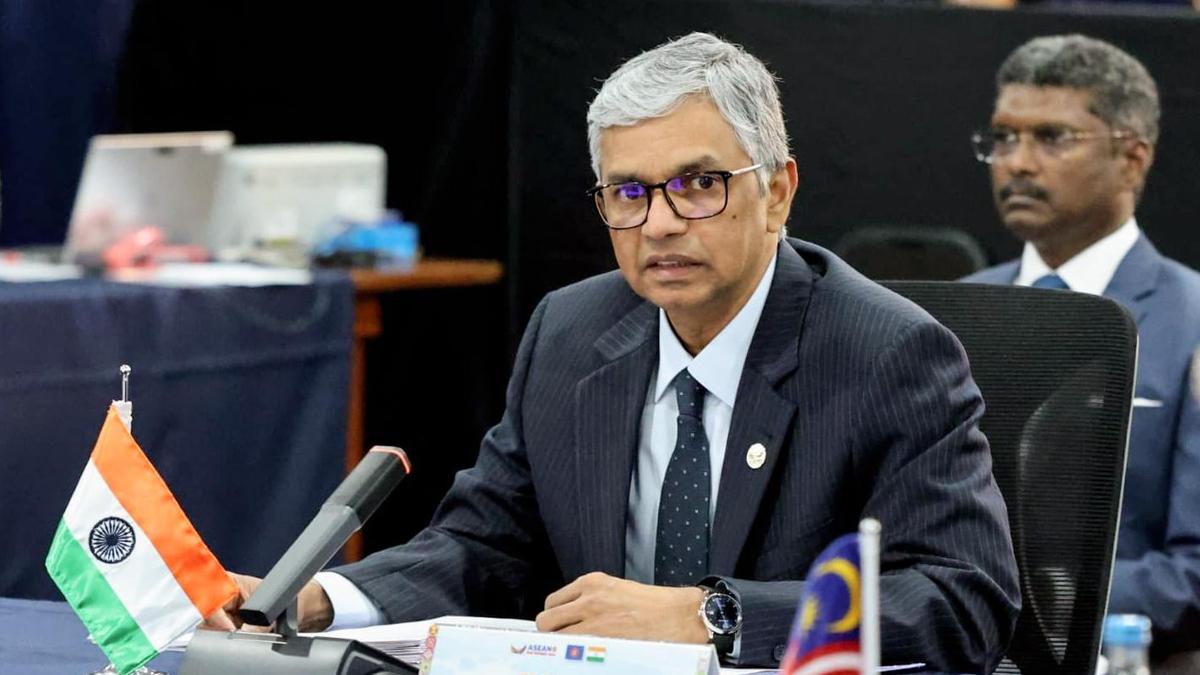
P. Kumaran just stepped into one of the most high-pressure roles in Indian diplomacy. Taking charge as India’s High Commissioner to the United Kingdom isn't just about attending galas or managing standard bilateral talks. He’s walking into a room where the stakes include a multi-billion dollar Free Trade Agreement (FTA) that’s been stuck in the "almost finished" phase for what feels like an eternity.
You should care about this appointment because London is changing its political guard and Delhi is looking for more than just historical ties. Kumaran isn't a rookie. He’s a 1992-batch Indian Foreign Service officer who previously served as Special Secretary (ER & DPA) in the Ministry of External Affairs. He knows how the machinery of international trade and development works from the inside out. His arrival in London marks a shift from holding the line to pushing for a deal.
A seasoned diplomat for a complicated relationship
The UK-India relationship is complicated. It's built on a massive diaspora and deep history, but it’s often tripped up by visa issues and diverging views on global security. Kumaran’s track record suggests he’s a pragmatist. Before his stint in Delhi, he was the High Commissioner to Singapore and the Ambassador to Qatar.
Think about those postings. Singapore is a financial hub where trade negotiations are a daily sport. Qatar is a strategic energy partner where delicate back-channeling is the norm. Kumaran has spent years navigating these exact types of environments. He doesn't just talk about policy. He understands how to bridge the gap between bureaucratic roadblocks in Delhi and the fast-moving demands of global financial capitals.
The elephant in the room is the Free Trade Agreement
Everyone wants to know when the FTA will actually happen. We’ve seen round after round of negotiations. Some experts thought it would be signed by Diwali two years ago. Then it was early 2024. Now, with Kumaran at the helm in London, there’s a sense of renewed urgency.
The sticking points aren't secrets. The UK wants lower tariffs on Scotch whisky and cars. India wants better mobility for its professionals and more robust protections for its service sector. It’s a classic tug-of-war. Kumaran’s job is to convince the British government that India is the indispensable partner of the next decade. He’s not just representing a country; he’s pitching a market of 1.4 billion people to a Britain that is still trying to define its post-Brexit identity.
I’ve watched these transitions for years. Often, a new envoy spends the first six months just getting settled. Kumaran doesn't have that luxury. The British political scene is volatile. If he can’t secure the foundational pieces of the FTA soon, the window might close as the UK focuses on its own internal elections and economic struggles.
Moving beyond the colonial lens
One mistake people make is viewing the UK-India relationship purely through the lens of the past. That’s a trap. India is now the fifth-largest economy in the world. In many sectors, especially technology and renewables, India is the one setting the pace.
Kumaran understands this power dynamic. His background in Economic Relations (ER) means he likely views the UK more as a strategic investment destination and a partner in green energy rather than just an old friend. Expect to see him focusing heavily on the "2030 Roadmap." This isn't just a fancy document. It’s a specific plan to double bilateral trade by the end of the decade.
He’ll likely lean into the following areas:
- Defense cooperation and co-development of military tech.
- Healthcare partnerships that leverage India’s pharmaceutical manufacturing.
- Strengthening the "living bridge" of students and tech workers.
Managing the diaspora and security concerns
It’s not all about trade. London has become a bit of a flashpoint for internal Indian politics playing out on foreign soil. We’ve seen protests and security incidents at the High Commission in recent years. These aren't just minor distractions. They affect how the Indian public perceives the UK’s commitment to the partnership.
Kumaran has to balance being a diplomat with being a protector of Indian interests. He needs to ensure that the UK government takes India’s security concerns seriously, particularly regarding extremist groups operating from British soil. If he can’t get the UK Home Office on the same page as the Indian Ministry of Home Affairs, the trade talks will always have a dark cloud hanging over them. It's a tough balancing act. He has to be firm without being undiplomatic.
Why this appointment is different from his predecessors
Vikram Doraiswami, the outgoing High Commissioner, did a lot of the heavy lifting to keep the relationship steady during some very rocky years. He was a master of communication. Kumaran feels like a choice made for the "finishing school" of diplomacy. He’s a technocrat in the best sense of the word.
If you look at the 1992 batch of the IFS, you see a group of officers who came of age just as India was opening its economy. They don't have the "Third World" baggage of earlier generations. They are confident, results-oriented, and extremely comfortable in the boardrooms of multinational corporations. That’s the energy Kumaran brings to Aldwych.
What happens next in the London-Delhi corridor
The next few months will be telling. Watch the frequency of high-level ministerial visits. If we see the British Foreign Secretary or Trade Secretary heading to Delhi shortly after Kumaran’s arrival, it’s a sign that the "final push" for the FTA is real.
Don't expect immediate miracles. Diplomacy at this level is a game of millimeters. But Kumaran’s presence suggests that India is sending a message: "We are ready to talk business, but we expect a deal that reflects our current global standing."
If you're a business owner looking at the UK market or an investor watching Indian equities, keep an eye on his first few public addresses. He’ll likely signal which sectors are going to get the most protection—and which ones are going to be opened up for competition.
Stop thinking of this as just another personnel change. It’s a strategic pivot. The UK needs a win. India wants a partner. P. Kumaran is the man tasked with making sure those two needs actually align. The grace period is over. Now we see if the "Special Relationship" can actually deliver.
You should monitor the official High Commission of India channels and major trade journals over the coming weeks. The first 100 days of Kumaran’s tenure will set the tone for the next five years of economic cooperation. Watch the visa policy updates specifically. That’s usually the first place where diplomatic progress—or friction—shows up in real life.