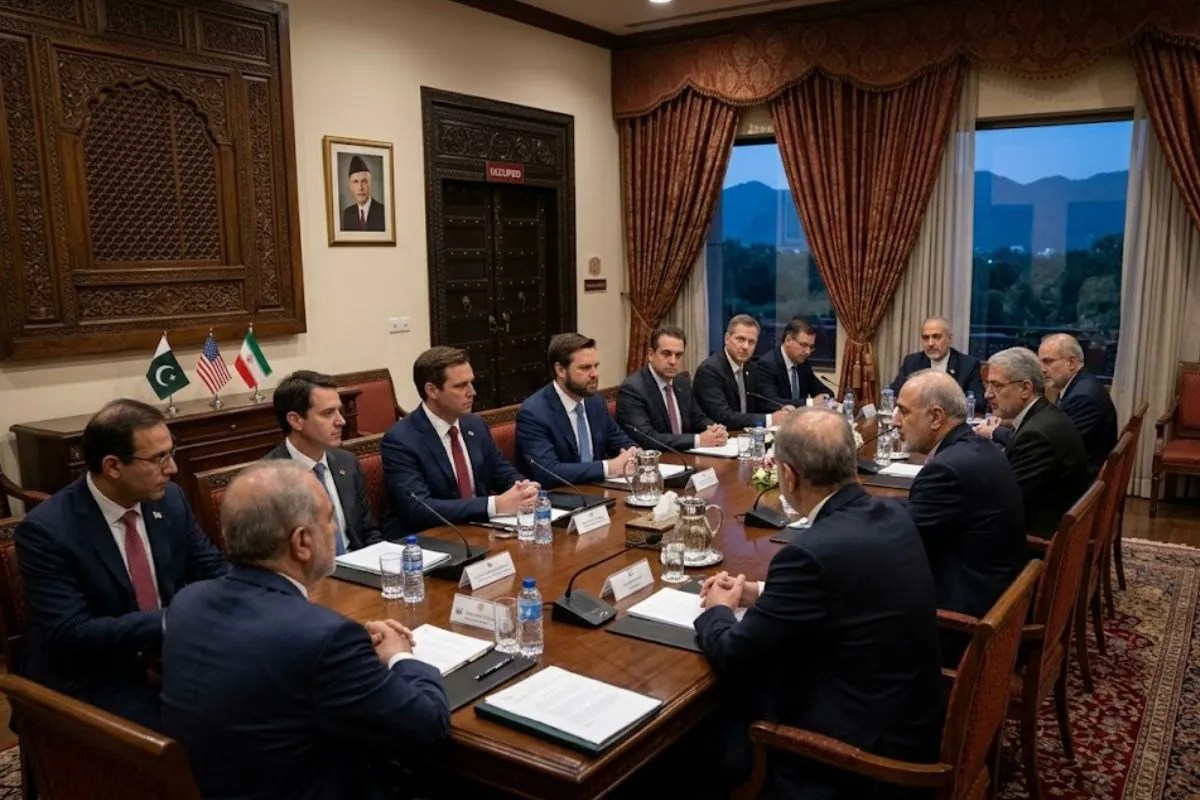
The headlines are screaming about a "historic breakthrough." They want you to believe that the sudden proximity of American and Iranian officials on Pakistani soil marks a tectonic shift in Middle Eastern diplomacy. It is a seductive narrative. It suggests that after decades of proxy wars and frozen assets, the adults have finally entered the room.
They haven't. This isn't a breakthrough. It is a choreographed distraction.
The mainstream media is obsessed with the optics of "direct talks." They see two adversaries in the same zip code and hallucinate a peace treaty. But if you've spent any time tracking the actual mechanics of back-channel negotiations, you know that physical proximity is often inversely proportional to actual progress.
The Islamabad Myth
Why Pakistan? The "lazy consensus" says Islamabad is playing the role of the neutral arbiter, leveraging its unique position as a partner to both the West and the Islamic Republic.
That is nonsense. Pakistan is not a mediator; it is a stage.
The Pakistani establishment is currently grappling with a shattered economy and internal political volatility. Hosting these talks isn't about regional peace. It is about domestic legitimacy and securing a seat at the table for future IMF negotiations. For the US and Iran, Pakistan is a convenient "gray zone"—a place where they can be seen together without the political baggage of a European capital or the high-stakes pressure of a Gulf monarchy.
The Nuclear Red Herring
Every analyst from D.C. to Tehran is hyper-focused on the nuclear file. They claim that the goal of these talks is to revive some ghost of the JCPOA.
They are wrong. The nuclear deal is dead. It isn't coming back because the math doesn't work anymore.
Since the original agreement, Iran has mastered the centrifuge technology and enrichment levels that make a "return to the status quo" a technical impossibility. You cannot un-learn physics. The US knows this. Iran knows this.
The real conversation in Islamabad isn't about uranium enrichment. It is about logistics and maritime control.
The global supply chain is bleeding. Insurance premiums for shipping in the Red Sea and the Strait of Hormuz have skyrocketed. The US is tired of playing maritime policeman in a region that is increasingly irrelevant to its long-term energy security. Iran, meanwhile, needs the "sanction shadows" to lift just enough to keep their oil flowing to China.
This is a business meeting masquerading as a diplomatic summit. It is about keeping the lanes open, not keeping the bombs away.
The Proxy Trap
The biggest mistake outsiders make is assuming that a "direct talk" between leaders translates to a ceasefire among proxies.
I have watched dozens of these "thaws" turn into bloodbaths. Why? Because the proxies—the militias, the insurgent groups, the shadow actors—have their own P&L statements. They don't take orders from a diplomat in a suit. In fact, when the "masters" start talking, the proxies usually ramp up the violence to prove they are still relevant.
If you see a handshake in Islamabad, expect an explosion in Erbil or a drone strike in the Levant within forty-eight hours. The "peace" being discussed is a high-level macro agreement that has zero interest in the micro-realities of the ground.
The Currency of Desperation
Let’s talk about the money. Most people think sanctions are a "wall." They aren't. They are a filter.
The US uses sanctions to create a black market that it can monitor. Iran uses the black market to survive. The talks in Pakistan are essentially a negotiation over the price of that survival.
Imagine a scenario where the US agrees to "look the other way" on certain oil shipments in exchange for Iran pressuring its regional affiliates to lower the heat for six months. This isn't diplomacy. It's a protection racket.
The "success" of these talks will be measured in basis points and barrels, not in human rights or regional stability. If you are looking for a moral victory, you are looking at the wrong map.
Why the Market is Wrong
Investors often rally on news of US-Iran "engagement." They see it as a de-risking event.
That is a tactical error.
True de-risking requires institutional trust, and there is zero trust between these two entities. This interaction is purely transactional. The moment the transaction is complete, the hostility returns.
If you are betting on a long-term Iranian opening or a Western pivot back to Tehran, you are ignoring the last forty years of history. The current friction is structural. It is baked into the DNA of both regimes. A meeting in Islamabad doesn't change the structural reality; it just puts a fresh coat of paint on a crumbling house.
Stop Asking if They Will Agree
The question isn't "Will they reach an agreement?"
The question is "How long can they maintain the illusion of an agreement?"
Both sides need the process of talking more than they need the result of a deal. For the Biden administration, it’s a way to signal to voters that they are "handling" the Middle East without committing more troops. For the Raisi-era remnants and the hardliners in Tehran, it’s a way to show the domestic audience that they can bring the Great Satan to the table on their own terms.
It is a performance. And Pakistan is the theater.
The Hard Truth of Diplomacy
Modern diplomacy has become a content play. These summits are designed for social media clips and "anonymous source" leaks that move the needle for a single news cycle.
Real power doesn't sit in a conference room in Islamabad with a flag behind it. Real power is moved in the dark, through Swiss bank accounts and back-door technical agreements that never see the light of day.
If the cameras are allowed in, nothing of substance is happening.
The Islamabad talks are the geopolitical equivalent of a "coming soon" trailer for a movie that will never be released. They are meant to keep you waiting, keep you watching, and keep you from noticing that the actual players have already moved on to the next game.
Do not be fooled by the handshake. Watch the shipping lanes. Watch the regional currency fluctuations. Watch the movement of heavy hardware.
The talk is cheap. The silence is what should scare you.
The "breakthrough" you’re reading about? It’s just the sound of two predators checking each other’s teeth before the next round begins.