Mainstream media outlets love a predictable script. When border skirmishes break out between the Afghan Taliban and Pakistani security forces, the headlines write themselves. Analysts scream about an escalating regional crisis, the collapse of ideological alliances, and the imminent destabilization of South Asia.
They are wrong. They are misreading the entire structural dynamic of the region.
What the conventional press frames as a sudden breakdown in relations is actually a highly normalized, transactional renegotiation of border reality. The lazy consensus presumes that because Islamabad spent decades supporting the Taliban, the two entities should operate as a monolith. This view ignores historical imperatives, economic incentives, and the fundamental nature of state survival. The current border friction is not the prelude to a catastrophic war. It is a calculated, aggressive trade negotiation conducted through artillery fire.
The Myth of Ideological Alignment
For twenty years, Western foreign policy experts operated under the assumption that the Taliban was merely an extension of Pakistan’s strategic depth. When Kabul fell in 2021, the expectation was a compliant neighbor serving Islamabad’s regional interests.
This view ignored the iron law of governance: the moment an insurgent group captures a state, its primary incentive shifts from ideological subversion to institutional survival.
The Durand Line, drawn by British administrators in 1893, splits the Pashtun heartland in two. No Afghan government—whether it was the monarchy, the communists, the Western-backed republics, or the Taliban—has ever formally recognized this border. To expect the current rulers in Kabul to bow to Islamabad on the border issue is to misunderstand Afghan nationalism. The Taliban cannot validate the Durand Line without destroying their own domestic legitimacy among the cross-border tribal networks that form their core constituency.
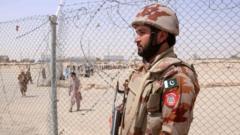
When the Pakistani military fences the border, they are attempting to solidify a colonial demarcation. When the Taliban forces tear down those fences, they are performing a mandatory ritual of Afghan sovereignty. It is political theater executed with live ammunition.
Smuggling Rents and the Real Economy
The conflict along the border is driven by hard currency, not religious fervor. The formal economy of Afghanistan is heavily restricted by international sanctions and frozen central bank assets. The real economy runs on informal trade, customs duties, and transit corridors.
Consider the Torkham and Chaman border crossings. These are not just transit points; they are economic lifelines that generate millions of dollars daily in customs revenues.
- The Pakistani Strategy: Implement strict visa regimes, biometric scanning, and formal customs declarations to choke off illegal capital flight and regulate the flow of goods.
- The Afghan Strategy: Maintain fluid, unregulated movement to maximize informal trade revenues and sustain the economic survival of border provinces.
When Pakistan shuts down a border crossing under the guise of security, it is applying economic strangulation. The Taliban’s subsequent artillery strikes are a direct counter-pressure tactic designed to force the reopening of trade routes. Every shell fired near the border is a bargaining chip aimed at lowering trade barriers and ensuring the uninterrupted flow of goods. It is a violent corporate restructuring of the regional black market.
The TTP Factor as Leveraged Capital
The standard narrative positions the Tehreek-e-Taliban Pakistan (TTP) as a wedge driving the two states apart. Pakistan demands that Kabul crack down on TTP safe havens; Kabul denies their existence or downplays their capability.
An insider looks at this and sees an asset, not an accident. The Afghan Taliban will never eliminate the TTP. To do so would mean alienating a group that fought alongside them for two decades. More importantly, the TTP represents significant geopolitical leverage.
Imagine a scenario where Kabul completely eradicates the TTP. The Afghan government would immediately lose its primary counterweight against Pakistani dominance. By allowing the TTP to exist within a managed threshold of activity, Kabul ensures that Islamabad must constantly negotiate, offer trade concessions, and maintain diplomatic engagement. The presence of these militant factions is a deliberate policy tool used to maintain a balance of power. It is an asymmetric deterrence mechanism that costs Kabul almost nothing to maintain.
The Limits of Escalation
Why will this conflict never blow up into a full-scale war? Because both sides understand the exact limits of their dependency.
Pakistan cannot afford a hostile, chaotic collapse on its western flank while facing chronic economic instability, severe inflation, and a tense eastern border. A completely destabilized Afghanistan means millions more refugees pouring into Khyber Pakhtunkhwa and Balochistan, further straining an exhausted national infrastructure.
Conversely, the Taliban cannot afford a total rupture with their primary economic gateway to the world. Despite diversification efforts via Central Asian trade routes and Iranian ports like Chabahar, Pakistan remains the cheapest and most vital artery for Afghan imports and exports.
The skirmishes are self-limiting. They follow a rigid choreography: a border incident occurs, local commanders exchange fire, high-level intelligence officials make phone calls, trade resumes, and the status quo is restored until the next economic friction point emerges.
The sensationalist reporting that predicts a massive regional conflagration misses the structural reality. The border violence is not a sign of a failing system. It is the system itself working out its contradictions in real time. Stop looking at the artillery smoke and start looking at the customs ledgers. That is where the real terms of the relationship are written.