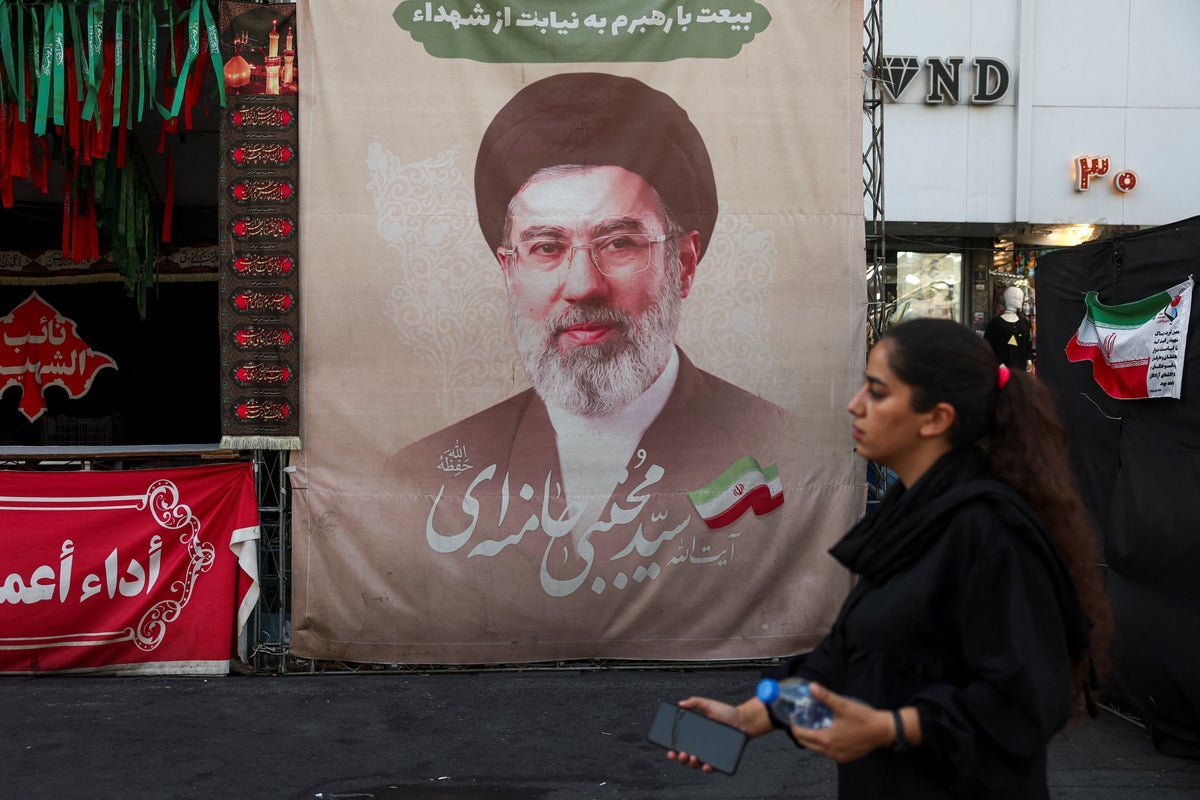
The western media is spinning a tired narrative. Headlines scream that citizens are desperate for any sign of life from the Supreme Leader, pointing to months of public absence during a grinding regional war as proof of a crumbling regime. Analysts on cable news furrow their brow and speculate about health crises, secret coups, and imminent power vacuums.
They are missing the entire architecture of modern authoritarianism.
I have watched analysts misread closed-loop political systems for decades. They project Western democratic expectations onto apparatuses specifically designed to function without individual personalities at the center. When you look at Tehran through the lens of a parliamentary election cycle, you see a crisis. When you look at it through the mechanics of institutionalized clerical governance, you see standard operating procedure.
The lazy consensus is that an invisible dictator equals a vulnerable state. The reality is far more uncomfortable: silence is not a sign of weakness in a system built on institutional momentum. It is a feature.
The Myth of the Indispensable Strongman
We love the Great Man theory of history because it is easy to digest. A single villain sits at the top of a pyramid, pulls the strings, and holds the entire structure together by sheer force of will. Remove the man, and the pyramid collapses into dust.
This framework works nicely for Hollywood blockbusters, but it fails completely when applied to the Islamic Republic. The regime created after 1979 was explicitly engineered to survive its founders. The Assembly of Experts, the Islamic Revolutionary Guard Corps, and the Guardian Council do not derive their legitimacy solely from the heartbeat of one man in a secure compound. They derive it from a deeply entrenched ideological bureaucracy, vast economic networks, and a monopoly on organized violence.
When commentators obsess over whether the Supreme Leader is appearing on state television, they misunderstand how power actually flows in Tehran. Power does not emanate downward from a podium; it is maintained laterally through patronage, resource allocation, and internal security apparatuses that operate on autopilot regardless of who is signing the executive orders.
I have seen corporate boards panic and freeze operations because a charismatic founder went dark for a week, destroying millions in market value over a phantom crisis. Western intelligence agencies make the exact same amateur mistake on a geopolitical scale. They mistake the absence of public theater for an institutional vacuum.
The Functional Advantage of Disappearance
Let us look at the strategic utility of prolonged silence during an active military conflict.
Conventional wisdom says a leader must rally the troops, project strength, and give daily briefings to maintain morale. That playbook works if you are running a public relations campaign in a democracy. But if you are managing a asymmetric survival strategy against technologically superior adversaries, personal visibility is a liability.
By stepping back from the daily public eye, the leadership achieves three distinct tactical advantages:
- Elimination of Target Vectors: Modern warfare relies heavily on signals intelligence, biometric tracking, and remote targeting. Remaining invisible denies opponents a predictable physical anchor for kinetic or cyber operations.
- Diffusion of Accountability: When things go wrong on the battlefield, a visible leader absorbs the blow directly. When the center is opaque, public frustration gets deflected down the chain of command to regional commanders, ministers, and bureaucratic scapegoats.
- Internal Paranoia as a Stabilizer: Silence breeds speculation among dissidents and foreign intelligence alike. When no one knows the exact status or location of the apex predator, everyone behaves as though the predator is watching everything. Uncertainty is an invisible fence.
This is not a sign of a regime on its deathbed. It is the cold, calculated conservation of authority.
Why Western Analysts Keep Getting Iran Wrong
The persistence of the "imminent collapse" narrative stems from a profound lack of granular understanding regarding how the security state functions below the surface. Observers confuse popular economic discontent with revolutionary readiness.
Yes, the population faces brutal inflation, international sanctions, and the devastating toll of regional conflict. Citizens want change. Iranians routinely express exhaustion with the status quo, and the desire for a better life is undeniable.
However, translating civilian exhaustion into an imminent regime collapse requires a viable alternative power structure ready to step into the breach. That alternative does not exist. Decades of targeted suppression, exile, and infiltration have systematically dismantled organized domestic opposition capable of mounting a serious challenge to the Revolutionary Guard.
When foreign pundits claim that an invisible leader triggers panic among the populace, they mistake the anxiety of ordinary survival for revolutionary fervor. People trying to buy groceries amid currency devaluation are worried about next week's meal prices, not orchestrating a sophisticated overthrow of a heavily armed security apparatus.
The Dangerous Allure of Wishful Thinking
We prefer simple narratives because complexity hurts. It is much easier to believe that an autocratic regime will magically dissolve if we just wait for the leader to age out or disappear from public view.
This wishful thinking shapes foreign policy failures across the globe. Policymakers build strategies around the fantasy of internal implosion rather than dealing with the stubborn, grinding reality of institutional resilience.
Stop looking for signs of life on state television as a barometer for regime stability. The machine does not need the face to keep turning the gears.
The next time you read a breathless report about a missing head of state signaling the end times for an authoritarian regime, ask yourself who benefits from that narrative. It is usually not the people analyzing the data. It is the architects of foreign policy justifications who need a clean, simple villain story to sell to the public.
Iran is not waiting for permission from a visible leader to endure. Neither should our analysis.