Every summer, the media dusts off the same tired playbook. Wildfires erupt in Spain. Smoke drifts toward Bordeaux. Headlines shriek about the imminent destruction of Europe's vinicultural heritage, painting a picture of an entire continent turning to ash while wine lovers weep into their overpriced Merlots. It is lazy journalism built on a foundation of panic, engineered to generate clicks from people who know nothing about viticulture, forestry management, or basic ecology.
I have spent two decades walking the rows of these exact appellations, arguing with conservative growers, and watching markets overreact to smoke, fire, and panic. The lazy consensus is that climate change is an unstoppable reaper coming specifically for our wine bottles, and that every fire is an unmitigated disaster demanding immediate, hysterical intervention.
That narrative is wrong. It misses the mechanics of how vines survive, how winemakers actually adapt, and why a little bit of smoke and heat is not the death sentence the nightly news makes it out to be.
The Myth of the Fragile Vine
The foundational misunderstanding underpinning every panic piece about Bordeaux and Spanish vineyards is the assumption that grapevines are delicate hothouse flowers. They are not. They are remarkably tough, woody, drought-resistant weeds native to harsh, Mediterranean environments.
Vitis vinifera evolved to struggle. Give a grapevine pristine, comfortable conditions with endless water and zero stress, and you get flabby, uninteresting fruit. Push a vine to its absolute limits—baking sun, dry soils, erratic weather—and you get structural complexity, concentration, and greatness.
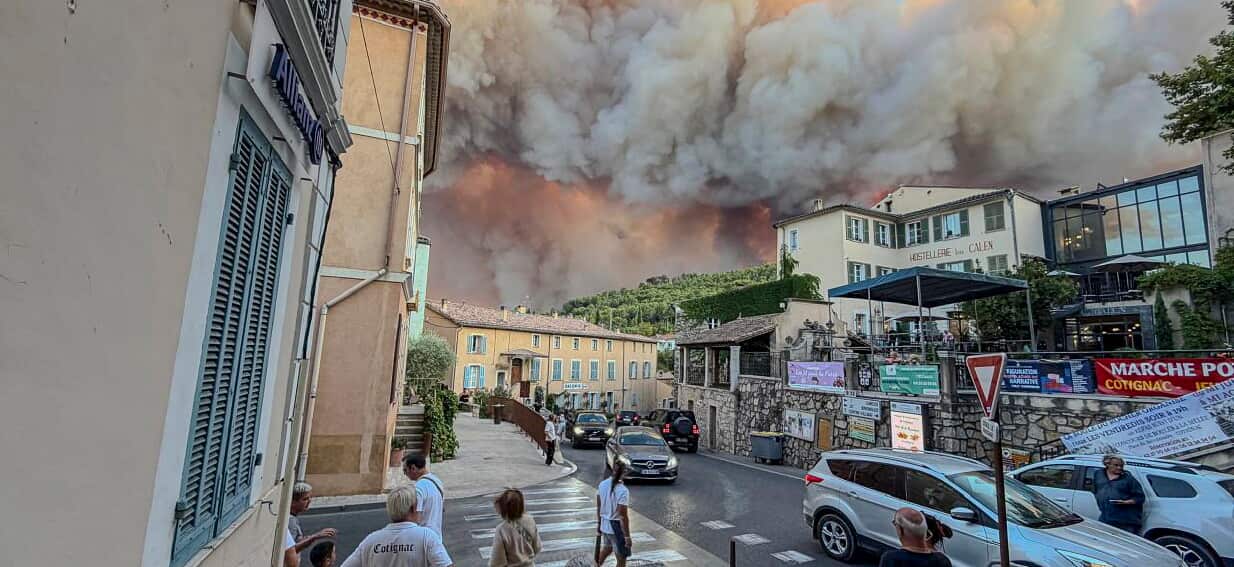
When a wildfire tears through a region in Spain or licks at the edges of Gironde, the coverage always focuses on the apocalyptic images of orange skies. What it ignores is the physiological reality of the plant during dormancy or ripening. A fire near a vineyard does not mean the vineyard burns. Most modern vineyards act as natural firebreaks. They are heavily tilled, cleanly spaced rows of green vegetation surrounded by bare earth or stone walls. Flames hit a vineyard block and often stall out completely.
Yet, the moment smoke lingers over the Garonne, brokers panic, futures prices fluctuate, and consumers hoard bottles like the world is ending.
Smoke Taint is a Real Estate Problem, Not an Apocalypse
Let us address the elephant in the room: smoke taint. This is the favorite boogeyman of wine writers everywhere. Volatile phenols from wildfire smoke absorb into grape skins, binding with sugars to create glycosides that later break down during fermentation, leaving a distinct, unpleasant flavor reminiscent of a wet ashtray or a chemical fire.
Sounds terrifying, right? Here is the nuance the fearmongers leave out: smoke taint requires a very specific window of vulnerability.
If smoke hits grapes during veraison—the exact moment when the berries change color and soften—you have a problem. If smoke hits two months before veraison, the vine shrugs it off. The compounds metabolize or wash off. Furthermore, winemaking technology has evolved past the amateur hour techniques of the past. Reverse osmosis, specialized fining agents, low-temperature fermentations, and carbon-bed filtration have given winemakers the tools to strip out volatile compounds without ruining the wine's underlying character.
I have watched estates write off entire vintages because the air smelled like campfire for three days, only to taste barrel samples six months later that showed zero detectable faults. The real damage isn't chemical; it is psychological. It is the panic-induced decision to harvest early out of fear, or to spray unneeded chemicals, or to abandon traditional terroir expressions to chase sterile, industrial consistency.
The Real Enemy is Bureaucratic Stagnation, Not the Flames
If you want to panic about the future of Spanish and Bordeaux wine, stop looking at the fire horizon. Look at the local agricultural councils, the Appellation d'Origine Contrôlée committees, and the rigid regulatory frameworks that treat tradition as a suicide pact.
Spain and France are drowning in rules written in the nineteenth century for a climate that no longer exists. Bordeaux historically allowed only a tiny handful of grape varieties: Cabernet Sauvignon, Merlot, Cabernet Franc, Petit Verdot, Malbec, and Carmenere. When heatwaves bake the region, these traditional varieties struggle to retain acidity, resulting in bloated, high-alcohol wines that lack balance.
Did the authorities adapt quickly? Of course not. It took years of bureaucratic agony just to approve a handful of heat-tolerant alternative varieties like Touriga Nacional, Marselan, and Castets. Even then, winemakers are legally capped on how much of these life-saving grapes they can actually plant in their blends.
In Spain, the fixation on traditional aging classifications—Crianza, Reserva, Gran Reserva—forces producers to keep wines in oak for mandated periods, even when hotter summers produce naturally richer, riper wines that do not need years of barrel softening.
The fire isn't killing Bordeaux. Red tape is.
Unconventional Truths for the Modern Wine Market
If you are buying, collecting, or investing in wine, your strategy needs an urgent reset based on reality rather than headlines.
First, stop buying wine based on vintage charts. The entire concept of a "good" or "bad" vintage is dead. In an era of intense weather volatility, general vintage sweeps are useless. A grower with modern irrigation management, precise canopy shading, and cooler-site parcel selections will make a stunning wine in what the lazy media calls a "disastrous" year, while a lazy estate with a famous name will churn out over-extracted syrup.
Second, look higher up. The future of Spanish and French wine isn't on the scorching valley floors; it is in the high-altitude pockets. Producers are frantically climbing mountains, planting vineyards at elevations previously thought too cold for reliable ripening. These high-latitude and high-altitude microclimates preserve acidity and bypass the worst of the lowland smoke traps.
Third, embrace the outliers. The most interesting wines coming out of the Iberian Peninsula right now are being made by renegades who dropped their DOC designations entirely to make fresh, vibrant, lower-alcohol wines from forgotten indigenous grapes without bureaucratic interference.
The next time a headline screams about flames threatening the holy grail of European winemaking, remember what is actually happening. It is a natural ecosystem doing what it has done for millennia, met by a media machine that profits off your anxiety, countered by stubborn farmers who have adapted for centuries. Pour yourself a glass, ignore the smoke, and back the people tearing down the rules.