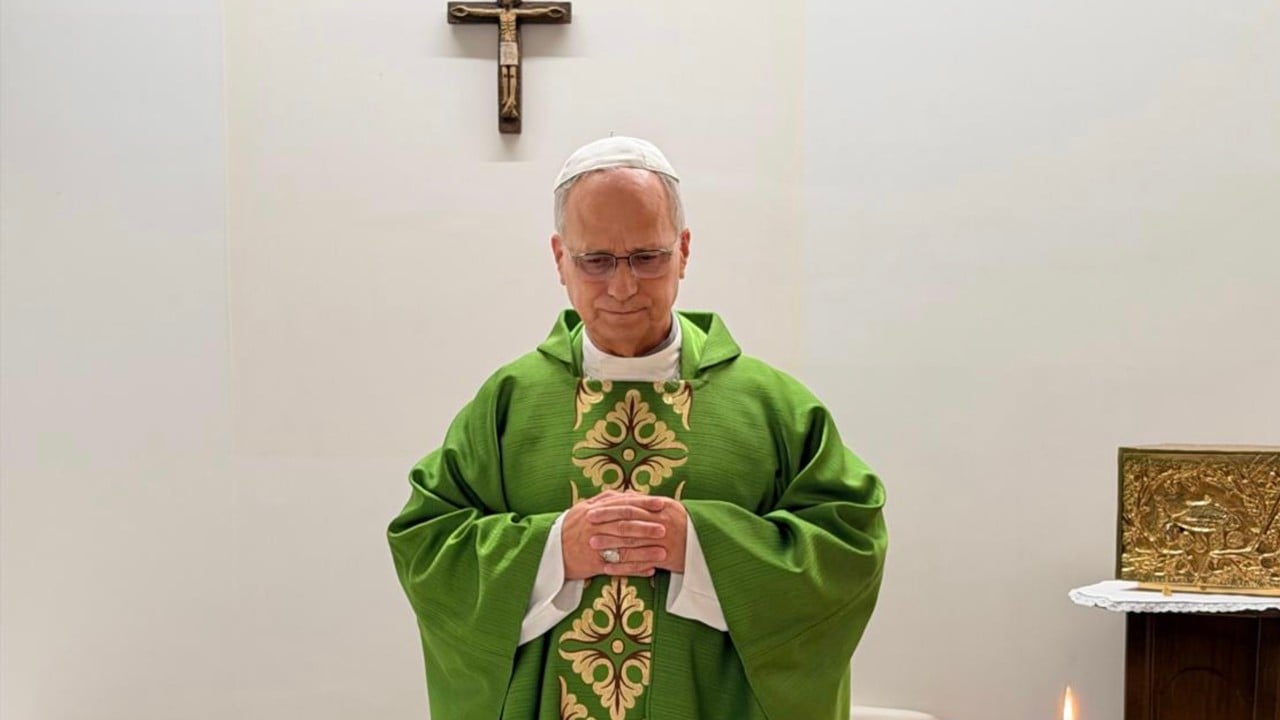
Moral authority does not move artillery. A hospital bed does not move artillery. And yet, every time a pope issues a plea from a sickroom for a ceasefire in a contested Ukrainian city, standard coverage treats the appeal as a diplomatic lever. It is not.
Look at the usual framing around headlines like "From hospital, Pope Leo pushes Putin for ceasefire in contested Ukraine city." The lazy consensus assumes two things. First, that a high-profile moral intervention from Rome increases pressure on Moscow because global attention spikes. Second, that a localized ceasefire around a contested city is a step toward de-escalation rather than a tactical pause that favors whichever side needs time to resupply, fortify, or reshuffle reserves.
Both assumptions confuse optics with leverage.
The Myth of Moral Leverage in Active Attrition
Diplomacy works when parties face incentives they cannot ignore. A moral appeal from a hospital ward offers suffering, dignity, and visibility. Those matter to believers, humanitarian workers, and sympathetic publics. They do not alter the cost-benefit math of an entrenched military command fighting over urban terrain.
When a city is contested, every street, rail spur, power substation, and high-rise represents months of attrition and thousands of casualties. Commanders do not abandon that calculus because a spiritual leader speaks softly from a clinic. If a belligerent pauses fire under those conditions, it rarely happens out of reverence for an appeal. It happens because ammunition stocks are uneven, weather shifts movement, or a local rotation requires breathing room.
I have watched analysts and commentators spend years treating symbolic gestures as inflection points. Over and over, observers confuse a dramatic headline with a shift in power. A sick pope asking for restraint makes for gripping television. Grip is not pressure.
Precision matters here. A ceasefire is a temporary halt to hostilities, usually negotiated or declared for a specific purpose or area. A peace settlement addresses underlying political, territorial, and security terms. Treating a localized pause around a contested city as if it carries the weight of a settlement is a category error. Worse, treating a unilateral plea as if it binds an adversary mistakes moral standing for coercive power.
Why "People Also Ask" Gets the Question Backward
Search behavior around stories like this tends to circle the same tired questions:
- Can a pope's hospital appeal pressure Moscow into a ceasefire? Not by moral force alone. Pressure requires material cost, credible enforcement, or a change in battlefield incentives. Without those, an appeal is a statement of values, not a mechanism of compliance.
- Why do leaders focus on contested cities during ceasefire talks? Because urban hubs anchor logistics, communications, and political narrative. Whoever controls the city shapes supply lines and claims momentum. Freezing the line there is never neutral.
- Does a papal intervention help civilians in a contested city? Sometimes at the margins, if local actors use the spotlight to allow a narrow humanitarian corridor or medical evacuation. Even then, access depends on armed commanders on the ground, not the prestige of the speaker in Rome.
Notice what is missing from those questions. Nobody asks whether pushing for an immediate ceasefire in a contested city actually locks in an untenable tactical position for the defender.
Imagine a scenario where defenders have stalled an assault inside a ruined industrial district, while attackers outside need time to clear mines, bring up heavy fires, and integrate fresh troops. A sudden halt in fighting does not freeze history in amber. It freezes movement while giving the side with greater depth time to prepare the next push. A ceasefire is not a neutral pause button. It is a distribution of advantage.
The Vatican's Real Instrument Is Quiet, Not Televised
If the Vatican has genuine utility in conflicts like Russia's war against Ukraine, it rarely shows up in a dramatic hospital dispatch. Historically, serious Vatican diplomacy has relied on discretion, humanitarian channels, prisoner exchanges, and back-channel mediation where public posturing would immediately poison trust.
Think of the heavy hitters of modern diplomatic realism—figures like Henry Kissinger, Thomas Schelling, and George Kennan. Whatever their blind spots, they understood a hard truth that sentimental commentary routinely ignores: negotiations and truces turn on interests, capabilities, and enforcement, not wishes. When a side believes it can still extract concessions by force, appeals to conscience bounce off hardened armor.
Public appeals from a hospital bed serve a different function. They remind the world of the human cost when news fatigue sets in. They keep civilian suffering visible when coverage narrows to maps, drones, and shells. That humanitarian witness has value. Pretending it is hard diplomatic leverage only sets readers up for disappointment every time the shelling resumes.
Where My Contrarian View Can Go Wrong
Being contrarian for its own sake is cheap. Good analysis also owns its blind spots.
First, I could be underestimating the slow, cumulative effect of reputational erosion. Even when a leader shrugs off a single appeal, repeated public condemnation from a major moral institution can complicate back-channel outreach with third countries or strain alliances that care about international standing.
Second, a localized pause—even a fragile or imperfect one—can save lives if it lets families leave a besieged neighborhood or lets medical teams clear trapped wounded. Weighing battlefield geometry against immediate human survival is never a clean spreadsheet exercise. A tactical disadvantage on paper can still mean someone gets out alive.
Third, leaders sometimes look for an off-ramp or a face-saving pretext to pause operations without looking weak before their own domestic audience. An external appeal occasionally provides cover for a move a commander already wanted to make for operational reasons.
What Observers Should Actually Do Instead
Stop reading ceasefire appeals as predictions. Start reading them as diagnostics.
When a call for a halt in fighting targets a specific contested city, ask three blunt questions:
- Who benefits from a pause right now? Look at troop fatigue, munition burn rates, weather, and supply routes on both sides. If one side is overextended and the other is poised to break through, a pause helps the overextended force far more than the one holding momentum.
- Who verifies and enforces the quiet? A ceasefire without monitoring, clear boundaries, and consequences for violations is an invitation to probe for weaknesses under cover of restraint.
- What changes during the pause? Track whether rotations, fortification work, drone staging, or diplomatic positioning accelerate while guns cool. What happens off the line often matters more than the quiet on it.
If you want to understand how contested cities are actually won, lost, or spared, watch the logistics and the leverage—not the bedside camera.