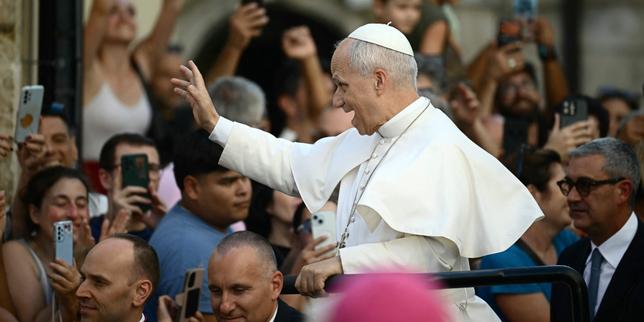
Every single headline claims that the upcoming visit of Pope Leo XIV to France will shatter attendance records. Officials nod gravely. Church PR teams leak optimistic headcounts. Logistics coordinators sweat over barricade placements and crowd-flow models.
They are all looking at the wrong metric.
Counting heads in public squares tells you nothing about institutional survival. When the lazy consensus dictates that a million shouting bodies equals a spiritual revival, someone has to point out that the emperor has no vestments. I have spent two decades watching religious organizations mistake transient spectacle for structural permanence, burning through capital to manufacture the illusion of momentum while the underlying foundation crumbles.
Let us dismantle the fiction piece by piece.
The Spectacle Trap
The primary fallacy driving the mainstream narrative is the conflation of curiosity with commitment. France is a fiercely secular republic wrapped in a deeply Catholic historical aesthetic. When a global figure arrives with pomp, pageantry, and international media tailwinds, people show up. They show up for football matches, rock concerts, and national strikes, too.
Attraction is not alignment.
Imagine a scenario where a stadium fills to capacity for a pop star. Does that venue occupancy rate guarantee that every attendee buys the merchandise, adopts the ideology, or changes their daily behavior? Of course not. Yet church administrators look at the projected permit requests for French basilicas and treat them as conversion metrics.
"Counting bodies at a high-profile public appearance is a vanity metric designed to comfort institutional leadership."
The data tells a much starker story about actual practice. Regular Sunday mass attendance across France hovers in the single digits. Baptism rates have plummeted over the past three decades. The demographic pyramid of the remaining active parishioner base looks less like a growing community and more like an aging social club waiting for the final bell.
When organizers trumpet numbers in the hundreds of thousands, they are managing public relations, not diagnosing reality. They want the state to see influence; they want donors to see vitality.
The Logistics of Decline
Let us talk about the actual mechanics of these mega-events. Behind the scenes, dioceses are bleeding cash to fund security, temporary staging, and crowd management. Municipalities absorb millions in policing costs, trading public services for a few days of global television coverage.
This is a defensive expenditure masquerading as an offensive victory.
When you spend your diminishing financial reserves on a massive, week-long pop-up event, you are actively starving the mundane, local infrastructure required for long-term survival. You are choosing the dopamine hit of a headline over the quiet, unglamorous work of community presence.
The institutional playbook relies on a simple trick: create a massive bottleneck of attention, point to the density of the crowd, and declare victory. It is the corporate equivalent of burning the quarterly budget on a massive product launch party while the core software remains fundamentally broken.
- The crowd is temporary.
- The media cycle is four days.
- The debt and administrative fatigue linger for years.
The Wrong Questions
If you search for answers regarding this papal tour, you find queries like: Where are the best viewing spots? How many security personnel will deploy? Will public transport handle the surge?
These are the wrong questions entirely.
The questions we should be asking are far more uncomfortable:
- What percentage of these attendees will darken a church door six months from now?
- How much debt is each diocese taking on to finance a temporary spectacle?
- Why does the hierarchy continue to prioritize broadcast-ready pageantry over localized relevance?
The honest answers destroy the narrative. The institutional leadership knows this, which is why they retreat into the comfort of large numbers. A crowd looks like a future. A crowd feels like validation.
Physics tells us that mass creates gravity. In institutional sociology, mass creates inertia. The sheer energy required to coordinate an event of this scale paralyzes the organization for months beforehand and leaves it exhausted afterward. Instead of adapting to a post-Christian cultural reality in France, the machinery doubles down on the one thing it still knows how to do: put on a medieval parade in a modern nation.
The Unspoken Trade-off
Every euro spent on papal logistics is a euro diverted from community outreach, pastoral support, or architectural preservation of crumbling rural heritage sites. France is dotted with thousands of small, historic churches falling into disrepair because the central administrative apparatus is busy budgeting for a temporary influx of tourists and the faithful looking for a selfie with history.
This is not strategy. This is nostalgia management.
Admitting this truth comes with a heavy personal cost for anyone inside the system. Careers are built on smooth visits and favorable press releases. Dissenting voices get sidelined as cynics who do not understand the pastoral value of inspiration.
Call it cynicism if you want. I call it basic financial and institutional literacy.
Stop measuring the health of an institution by how many people will stand behind a metal barricade in the rain to wave a flag. Measure it by its resilience, its local roots, and its willingness to look at empty pews without inventing a miraculous crowd to cover the void.
The Pope will arrive. The cameras will roll. The politicians will shake hands. The headlines will declare a triumph of faith.
And the French countryside will wake up on Monday with the exact same structural crisis it had on Friday.
Stop buying the math.


