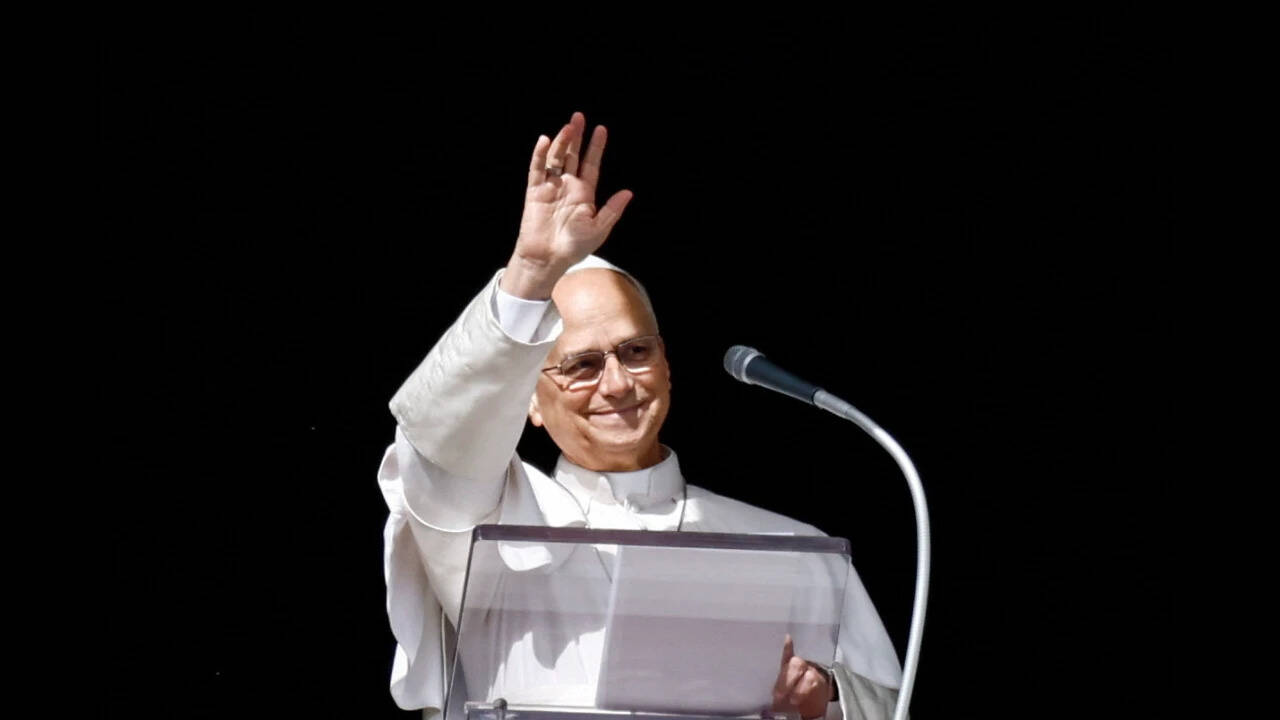
Mainstream wire services love a tidy narrative. A frail pontiff emerges from major thoracic surgery, steps up to a microphone, and calls for an end to bloodshed in a forgotten war. The press dutifully transcribes the plea. Readers nod along, feeling a brief surge of moral clarity before scrolling to the next headline.
It is comforting. It is predictable. And it completely misreads the mechanics of modern asymmetric warfare.
When Pope Leo steps out following lung cancer surgery to urge peace in Yemen, legacy media frames the moment as a triumph of moral authority over geopolitical cynicism. They treat a papal blessing like a diplomatic intervention. By doing so, they miss the hard, uncomfortable reality on the ground in Sanaa, Riyadh, and the Red Sea.
Moral appeals do not stop ballistic missiles. In conflicts driven by ideological survival and regional proxy deterrence, vague calls for "peace" and "restraint" do not create pressure for a ceasefire. They create political cover for the combatants who have zero intention of laying down their arms.
The Lazy Consensus of Symbolic Diplomacy
Standard news coverage of papal interventions relies on a comforting fiction: that global leaders are simply waiting for a reminder of their shared humanity to stop bombing each other.
Look at the typical framing. The headline pairs personal vulnerability—recovering from lung cancer surgery—with global ambition—ending the Yemen conflict. The subtext is obvious. If a man fighting for his own breath can spare energy for Yemen, surely the warlords can find the grace to compromise.
That is bad journalism disguised as human interest.
I have spent over a decade tracking diplomatic backchannels and humanitarian negotiations across the Middle East. I have watched billion-dollar aid packages vanish into smuggling networks while Western commentators applauded symbolic summits in Geneva and Stockholm. When you treat religious rhetoric as a substitute for coercive leverage, you misunderstand why wars continue.
In Yemen, the violence persists not because the actors lack moral guidance, but because the incentive structure rewards escalation.
Consider the primary players:
- Ansar Allah (the Houthis): An ideological movement whose domestic legitimacy and military recruitment depend entirely on perpetual mobilization against external enemies. Peace poses an existential threat to their governance model.
- Regional Backers: For Tehran, a low-cost, high-disruption conflict on Saudi Arabia's southern border and along the Bab el-Mandeb Strait yields massive strategic dividends.
- The Coalition and Western Powers: Caught between containing maritime piracy and avoiding another ground quagmire, their primary goal is containment, not resolution.
None of these actors wake up in the morning worrying about editorial praise from the Vatican. When international media elevates a post-surgery papal statement to breaking news, it shifts public attention away from the actual levers of power—arms embargoes, maritime interdiction, and financial sanctions—and redirects it toward performative sympathy.
Why "Ending the Violence" Is the Wrong Question
If you search for coverage of the Yemen crisis, the top questions always revolve around the same naive premise: How can the international community convince the warring parties to agree to peace?
That question is broken from the start. You cannot convince an actor to accept peace when war is their primary source of revenue, authority, and international relevance.
Let's define the actual terms of the conflict. Analysts frequently refer to Yemen as a "civil war" or a "humanitarian crisis." Both labels obscure the truth. Calling it a civil war implies a domestic dispute over governance that can be solved through power-sharing agreements. Calling it a humanitarian crisis frames a man-made blockade and deliberate economic warfare as if it were an earthquake or a drought.
Yemen is a war economy sustained by asymmetric leverage.
Take the Houthi campaign in the Red Sea. By firing relatively cheap drones and anti-ship missiles at commercial vessels, a non-state militia successfully disrupted global supply chains, forced major shipping liners to reroute around the Cape of Good Hope, and dragged global superpowers into an expensive naval defense operation.
Why would a movement holding that level of asymmetric power suddenly pivot to peaceful administration? If the fighting stops tomorrow, the Houthis are immediately forced to answer for unpaid civil servant salaries, collapsing infrastructure, extreme poverty, and local dissent in northern Yemen. War externalizes their failures. Peace exposes them.
Imagine a scenario where a formal, internationally brokered ceasefire goes into effect next month, complete with Vatican observers and UN monitors. Without a mechanism to dismantle the war economy, the militia leaders who control port revenues and fuel distribution simply rebrand as state ministries. They pocket the international reconstruction funds, buy more weapons on the black market, and wait for the next convenient pretext to resume hostilities.
We do not have to imagine that scenario. We already lived through it after the 2018 Stockholm Agreement.
The Stockholm Illusion and the Cost of Moral Posturing
History provides a brutal audit of well-intentioned international pleas. In December 2018, under intense diplomatic pressure and global media scrutiny, the warring parties signed the Stockholm Agreement. The centerpiece was a ceasefire in the critical Red Sea port city of Hodeidah, through which roughly 70 percent of Yemen's imports and humanitarian aid flowed.
Western diplomats celebrated. Editorial boards praised the triumph of dialogue over force.
On the ground, the reality was different. The agreement froze the military front lines just as anti-Houthi forces were on the verge of retaking the port. It handed the Houthis an administrative monopoly over Hodeidah's customs revenues while failing to enforce the promised demilitarization of the city. The group used the breathing room to fortify its positions, dig tunnels, and tax incoming humanitarian supplies to fund its military operations elsewhere in the country.
International humanitarian organizations, desperate to maintain access to starving populations, largely kept quiet about the diversion of aid. Moral urgency trumped operational accountability.
This is the fatal flaw of soft-power interventions. When prominent moral authorities—whether the Pope, the UN Secretary-General, or celebrity humanitarians—demand an immediate, unconditional halt to violence, they inadvertently pressure the more accountable side to make concessions while imposing zero costs on the side that ignores international norms.
A democratic government or a trade-dependent regional power feels the heat of global public opinion. An entrenched militia operating in sanctioned isolation does not.
What Realists Understand About Papal Geopolitics
To understand why the Vatican speaks out—and why the press misinterprets it—you have to look at the Holy See's actual diplomatic playbook.
The Vatican is not naive. Its Secretariat of State is one of the oldest and most sophisticated intelligence and diplomatic networks in the world. When Pope Leo addresses Yemen immediately after recovering from lung cancer surgery, he is not operating under the delusion that his words will trigger an immediate stand-down in Marib or Sanaa.
He is executing two very specific institutional priorities:
- Protecting Vulnerable Minorities: The Catholic Church maintains a direct stake in the survival of shrinking Christian communities across the Arabian Peninsula and the broader Middle East. Publicly advocating for regional stability keeps lines of communication open with Gulf monarchs in Riyadh, Abu Dhabi, and Manama, who value the Vatican's interfaith outreach as part of their own modernization branding.
- Establishing Moral Continuity: By speaking immediately after a major health crisis, the papacy projects institutional resilience. The message is aimed as much at the global Catholic faithful and Western policymakers as it is at the Middle East. It signals that the moral voice of the Church remains active despite physical frailty.
The failure lies not in the Pope speaking, but in how the media packages his speech. News outlets strip away the institutional context and sell the story as a direct intervention in a kinetic war. They confuse the Vatican's long-term pastoral positioning with short-term conflict resolution.
The Uncomfortable Truth About Leverage
Critics of hard-nosed realism will argue that dismissing moral appeals leads to cynicism and endless war. They will point out, correctly, that military force alone has failed to defeat the Houthis after nearly a decade of airstrikes, blockades, and ground offensives.
That is a fair point, and it highlights the downside of a purely kinetic approach. You cannot bomb an entrenched insurgency into submission when they have mountainous terrain, popular grievances, and steady external resupply. Pure military escalation has repeatedly backfired in Yemen, radicalizing civilians and strengthening the very militias it sought to destroy.
However, acknowledging the limits of military force does not validate the fantasy of symbolic diplomacy. Between "bomb them into oblivion" and "ask the Pope to pray for peace" lies the actual work of statecraft: targeted economic and logistical coercion.
If international actors genuinely want to reduce the violence in Yemen, they need to stop looking to Rome for inspiration and start focusing on the physical chokepoints that keep the war machine running.
1. Cut the Dual-Use Supply Chains
Sophisticated drones and ballistic missiles do not materialize out of thin air in the Yemeni highlands. They rely on commercial-grade navigation components, microcontrollers, and propulsion parts sourced through shell companies across Asia and the Middle East. Effective diplomacy means aggressively sanctioning the maritime insurers, freight forwarders, and component manufacturers facilitating those transfers—not issuing joint communiqués urging restraint.
2. Audit Humanitarian Cash Flows
For years, international donors poured billions into Yemen without strict end-use verification, terrified that demanding transparency would cause the ruling authorities to block aid visas. That cowardice subsidized the conflict. Aid must be routed exclusively through verifiable, biometric-tracked local networks, bypassing the central ministries controlled by armed factions. If a faction blocks access, donors must have the discipline to walk away rather than pay a warlord tax.
3. Tie Diplomatic Recognition to Concrete Benchmarks
Armed groups crave legitimacy. They want seats at international conferences, access to frozen central bank assets, and formal diplomatic ties. Instead of offering legitimacy upfront in exchange for vague promises of a truce, Western and regional powers must establish strict, sequential milestones. No lifting of financial restrictions without verified disarmament of heavy weaponry. No formal diplomatic recognition without independent monitoring of port revenues.
Stop Confusing Sympathy With Strategy
There is nothing wrong with admiring a leader who returns to public life after surviving lung cancer surgery. Personal resilience deserves respect.
There is everything wrong with allowing human-interest framing to dictate our understanding of a brutal, complex war.
Yemen has suffered hundreds of thousands of deaths, widespread famine, and the total collapse of its public health infrastructure. The people living through that nightmare do not need more sympathetic headlines from Western capitals, nor do they need analysts pretending that a speech from St. Peter's Square alters the balance of power on the ground.
Peace in Yemen will not arrive on the back of a blessing. It will only happen when the cost of continuing the war exceeds the profit of fighting it—and no microphone in Rome can change that math.