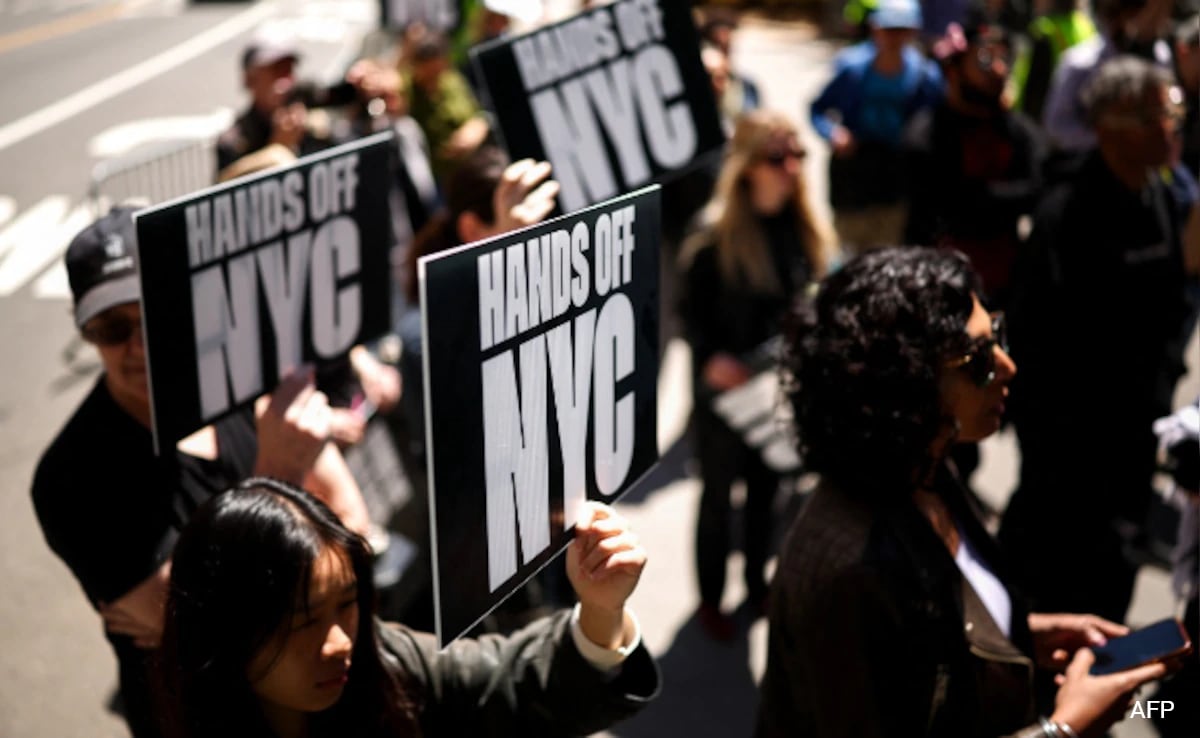
The headlines are doing exactly what they were engineered to do: trigger panic on one side and triumphant chest-thumping on the other. A 71% spike in immigration arrests across New York City. The media is painting a picture of a hyper-efficient, sweeping dragnet clearing the streets. The activists are screaming that a massive deportation machine has been activated.
They are both completely wrong.
When you look at how federal law enforcement actually operates, a 71% jump in administrative arrests is not a sign of operational success. It is a sign of a bloated system clearing out its low-hanging backlog to hit a political quota. I have spent years tracking immigration enforcement metrics, and if there is one universal truth in federal bureaucracy, it is this: the louder the metric, the softer the actual impact.
The media wants you to believe the enforcement landscape has fundamentally shifted. The reality is far less dramatic and far more cynical.
The Myth of the Dragnet: Inside the 71 Percent Illusion
To understand why this spike is a statistical illusion, you have to understand the difference between an "arrest" and a "deportation." The public hears "immigration arrest" and imagines tactical teams pulling people out of their homes.
That is not what is happening.
The vast majority of these spiked numbers come from administrative processing adjustments. When an administration changes, the operational directives shift from long-term investigation to high-volume processing. Immigration and Customs Enforcement (ICE) operations are bound by finite resources, limited detention bed space, and massive judicial bottlenecks.
Imagine a scenario where a local field office has a backlog of thousands of individuals who are already reporting regularly to ICE supervision offices under the Alternatives to Detention (ATD) program. Under previous operational guidelines, these individuals check in, log their addresses, and go home. Under new pressure to produce metrics, the agency simply changes the classification of these check-ins. A routine administrative encounter becomes an official "arrest" or re-detention on paper.
You have not increased public safety. You have not even increased the net number of people leaving the country. You have simply turned a piece of paperwork into a scary statistic to satisfy a headline.
Why High Arrest Numbers Actually Signal Failure
True enforcement efficacy is measured by one thing: the removal of high-threat, violent criminal offenders who pose a genuine risk to communities.
When an agency boasts a massive, sudden percentage spike in arrests, it almost always means they have shifted their focus away from hard-to-track, dangerous targets toward easy targets.
- High-Threat Targets: Tracking a member of a transnational gang or a non-citizen with a violent felony conviction requires weeks of surveillance, multi-agency coordination, warrants, and high-risk tactical execution. It yields one arrest for dozens of man-hours.
- Low-Volume Bureaucratic Targets: Processing non-violent individuals with old, outstanding final orders of removal who show up voluntarily to a federal building requires zero surveillance, zero risk, and five minutes of paperwork.
When you demand a 71% increase in output from a bureaucracy without doubling its budget or personnel, the bureaucracy does what it always does: it stops doing the hard work to maximize the easy work. The spike in New York is proof that the system is prioritizing quantity over quality. By chasing the numbers game, resources are diverted away from tracking actual public safety threats in order to round up delivery drivers and construction workers who had the misfortune of having an open administrative file.
The Sanctuary City Paradox
New York politicians love to beat their chests about being a "sanctuary city." They claim their local laws protect immigrant communities from federal overreach by restricting local police cooperation with ICE.
This is the biggest joke of all.
The sanctuary city policy actually accelerates the exact type of raw, unfiltered federal enforcement that activists claim to hate. When local jails refuse to honor ICE detainers—meaning they will not hold an undocumented individual arrested for a local crime until federal agents can pick them up—ICE does not just throw its hands up and go home.
Instead, ICE is forced to deploy Fugitive Operations teams directly into the community.
Instead of a controlled, safe transfer inside a secure jail facility, federal agents are sent out to conduct surveillance on homes, workplaces, and neighborhoods. And when federal agents go into a neighborhood to look for Target A, they inevitably run into Target B, C, and D. These are called "collateral arrests."
New York’s non-cooperation policies do not stop arrests; they simply move those arrests from the controlled environment of a corrections facility into the streets, driving up the raw numbers and increasing the risk of collateral enforcement. The 71% spike is the direct, predictable result of this friction.
Dismantling the "People Also Ask" Flawed Premises
The public discourse around this issue is broken because the questions people ask are fundamentally flawed.
Does a spike in ICE arrests mean deportations are happening faster?
Absolutely not. An arrest is merely the beginning of a prolonged legal marathon. The Executive Office for Immigration Review (EOIR) is currently suffocating under a backlog of over 3.5 million pending cases. In New York immigration courts, the average case takes years to resolve. An arrest today does not mean a removal tomorrow; it means another file added to a collapsing judicial system.
Are New York streets safer because of these operations?
The data says otherwise. When you flood a community with high-profile administrative enforcement, you destroy the exact mechanism required to keep streets safe: community trust. When undocumented victims and witnesses of violent crimes see a 71% spike in federal enforcement, they stop calling the local police. They stop reporting domestic abuse, gang extortion, and wage theft. You haven't fixed the city; you have effectively insulated local criminals by terrifying their victims into silence.
Can the federal government just deport everyone arrested in these spikes?
The logistics make this physically impossible. The United States does not have the charter flight capacity, the detention facility beds, or the diplomatic agreements necessary to execute mass deportations at the scale the rhetoric implies. Countries like Venezuela, China, and Cuba frequently restrict or outright refuse repatriation flights from the US. If you arrest someone who cannot be repatriated, they end up held in a high-cost detention bed indefinitely or released right back into the system with an ankle monitor.
The Hard Truth of Immigration Economics
Let's talk about the downside that nobody on the restrictionist side wants to acknowledge.
New York's economy relies on an undercurrent of undocumented labor to sustain its foundational industries: hospitality, agriculture in the greater state, construction, and service economies. A sudden, chaotic disruption in that labor force does not magically open up high-paying jobs for citizens. It shuts down businesses. It drives up prices for consumers who are already dealing with rampant inflation.
If the goal of an immigration policy is to create a stable, legal, and orderly society, relying on sudden spikes in administrative arrests is the worst possible methodology. It creates an environment of economic instability without solving the core issue of border integrity or systemic legal reform.
Stop looking at the 71% metric as a sign of a revolution in federal law enforcement. It is nothing more than a legacy bureaucracy churning through its easiest files to give politicians a talking point for the nightly news. It is a system spinning its wheels faster to stay exactly in the same place.
The numbers are up. The efficacy is not. Treat the data with the cynicism it deserves.