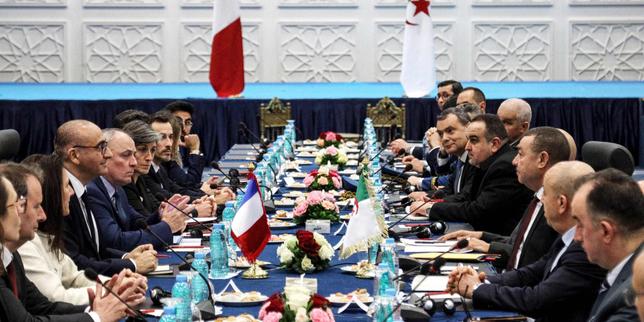
A High-Stakes Rendezvous in Paris
The upcoming visit of the Algerian Interior Minister to France, recently disclosed by Paris Police Prefect Laurent Nuñez, marks a critical pivot point in bilateral relations that extends far beyond standard diplomatic courtesy. While official channels paint the meeting as a routine bilateral exchange on security, the reality is much more complex. This visit comes at a moment of profound friction, where intelligence sharing, immigration policy, and regional security cooperation are being re-negotiated behind closed doors. The public narrative focuses on cooperation, but the underlying friction threatens to reshape the geopolitical dynamic between Paris and Algiers.
The immediate agenda centers on a delicate trade-off. France requires greater cooperation from Algiers regarding the repatriation of undocumented nationals and enhanced counter-terrorism intelligence. Conversely, Algeria seeks concessions on visa allocations and a reassessment of France’s shifting stance on regional territorial disputes. This is not a simple diplomatic courtesy call. It is a high-stakes negotiation where both sides are leveraging their unique security assets.
The Consular Passports Bottleneck
Behind the diplomatic pleasantries lies a persistent logistical battleground, specifically the issuance of consular passes. France cannot deport illegal immigrants back to Algeria without a laissez-passer issued by the Algerian consulate. For years, Algiers has used the slow approval of these documents as a political lever.
[French Deportation Order Issued]
               │
               ▼
[Request for Algerian Consular Pass] ──► (Algiers Bureaucratic Delay Used as Leverage)
               │
               ▼
[Actual Repatriation Achieved] ──► (Only achieved with significant diplomatic concessions)
When relations sour, the issuance of these passes drops significantly. When Paris offers concessions, the bureaucratic gears suddenly move faster. Nuñez’s public announcement of the visit indicates that Paris believes a deal is within reach, or at least that public pressure might force Algiers to accelerate the process.
The political cost for French officials is high. The French public increasingly demands strict enforcement of deportation orders, making the Algerian bottleneck a significant domestic liability for the current French administration. Algiers understands this vulnerability perfectly.
The Sahel Power Vacuum
The collapse of the French military presence in Mali, Niger, and Burkina Faso has created a massive security vacuum in the Sahel region. This shift has altered the balance of power, forcing France to rely on Algeria’s intelligence networks to monitor regional threats.
- Intelligence Inversion: France previously held the upper hand through military presence; now it depends on Algerian regional surveillance.
- Border Vulnerabilities: Algeria shares massive, porous borders with volatile states, making its border control strategy vital for European security.
- The Russian Factor: The growing influence of Russian paramilitary groups in the Sahel complicates cooperation, as Algiers maintains deep, historic defense ties with Moscow while trying to remain a partner to Paris.
Algeria views the Sahel as its exclusive sphere of influence and resents European intervention, yet it fears the rise of instability on its southern flank. This dynamic gives Algiers immense leverage. Paris can no longer dictate terms in North Africa; it must negotiate with a partner that holds the keys to regional stability.
The Visa Weapon and Domestic Politics
For the Algerian leadership, the issue of visas for its citizens traveling to France is not just a matter of mobility; it is a question of national pride and domestic stability. When France slashed visa quotas in recent years to punish Algiers for its lack of cooperation on deportations, the backlash was immediate and intense.
"The visa policy isn't just administrative; it's a barometer of respect between the two nations."
French politicians face intense pressure from right-wing factions to keep migration caps low. However, a complete cutoff of visas alienates the Algerian elite and middle class—the very people Paris wishes to influence. This upcoming meeting will likely see a quiet agreement where France promises to ease visa restrictions for specific categories of Algerian citizens, such as students, academics, and business leaders, in exchange for concrete commitments on security cooperation.
Overlooked Economic Undercurrents
While security and migration dominate the headlines, economic survival dictates the subtext of these talks. Algeria remains heavily reliant on hydrocarbon revenues, but its domestic infrastructure requires modernization. France is looking to secure its energy future amid shifting global supply chains.
| Sector | French Objective | Algerian Objective |
|---|---|---|
| Energy | Secure long-term LNG contracts | Attract infrastructure investment without losing sovereignty |
| Security | Increase deportation rates and counter-terror data sharing | Gain access to advanced surveillance technology |
| Diplomacy | Maintain influence in North Africa | Neutralize French support for Moroccan regional ambitions |
This economic interdependence acts as a safety net. No matter how tense political rhetoric becomes, neither side can afford a total breakdown in communication. The economic realities keep both nations tied to the negotiating table.
The Shadow of Morocco
One cannot analyze French-Algerian relations without addressing the presence of Rabat. France’s recent diplomatic shifts toward Morocco, particularly regarding the Western Sahara issue, have deeply angered Algiers.
Algerian officials view any French alignment with Moroccan interests as a direct threat to their national security. The Interior Minister's visit to Paris will undoubtedly involve quiet demands for clarification on France's long-term North African strategy. If Paris leans too far toward Rabat, cooperation on counter-terrorism and migration control with Algiers could instantly freeze.
The Fragility of Technical Agreements
Laurent Nuñez represents the technical, operational side of French governance, rather than the purely political wing. His announcement suggests that the upcoming talks will focus heavily on operational security cooperation rather than grand political declarations.
This focus presents its own challenges. Technical agreements between police forces and intelligence agencies are easily disrupted by political decisions made at higher levels. A single controversial statement from a politician in Paris or Algiers can instantly halt months of progress made by security officials working behind the scenes.
The success of this visit will not be measured by the joint press releases issued at its conclusion. It will be measured in the weeks and months that follow, observed through the volume of consular passes issued by Algerian authorities and the consistency of intelligence sharing regarding the Sahel. These quiet indicators will reveal whether the meeting achieved real progress or served as a temporary political fix.
The upcoming discussions highlight a fundamental reality: France and Algeria are locked in an uneasy partnership dictated by geography and history. Neither country can walk away from the table, but neither side is willing to blink first. The talks in Paris will test the limits of practical diplomacy in an era defined by geopolitical instability.


_Biopsy.png?branch=uat_release_3)
