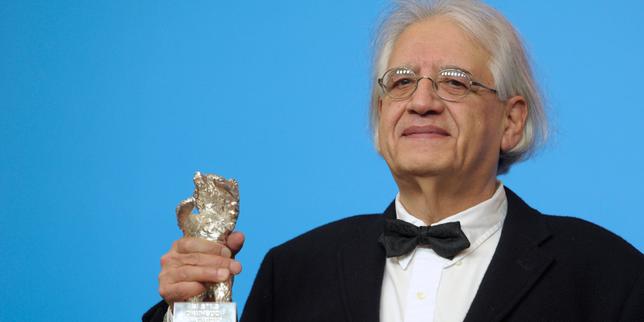
History isn't written solely by the victors. Sometimes, it's captured on 16 millimetre film by a man with a camera and absolute defiance. Patricio Guzmán didn't just document the turbulent rise and brutal fall of Salvador Allende's socialist government in Chile. He preserved the raw pulse of a nation before authoritarianism attempted to scrub it from existence. When the military junta led by Augusto Pinochet seized power in September 1973, cameras weren't neutral tools. They were contraband. They were evidence.
Most people misunderstand political documentary filmmaking. They think it's about lecturing audiences or pushing a dry political agenda. Guzmán understood something entirely different. He knew that cinema could function as a second chance for historical memory. While mainstream media outlets moved on and dictators tried to rewrite textbooks, his work stayed fixed on the pavement of Santiago, the faces of factory workers, and the haunting silence of the Atacama Desert. If you want to understand how authoritarian regimes operate and how ordinary people resist them, you have to look at what Guzmán achieved against impossible odds. If you liked this post, you should look at: this related article.
The Impossible Creation of The Battle of Chile
Picture working with a tiny crew, scarce film stock, and constant surveillance by secret police. That was the reality behind The Battle of Chile (La Batalla de Chile), a monumental three-part documentary shot between 1972 and 1973. Guzmán and his small team operated under the banner of the Comite de Cine de la Unidad Popular. They didn't have corporate backing. They had conviction.
When the coup struck on September 11, 1973, everything changed overnight. Tanks rolled through Santiago. Airplanes bombed the La Moneda presidential palace. Salvador Allende died. Arrests began immediately. Guzmán himself was detained in the Estadio Nacional, where thousands of political prisoners were held, tortured, and executed. Friends smuggled his precious reels of film out of the country inside diplomatic pouches, hiding the physical evidence of democracy's demise right under the nose of the military dictatorship. For another angle on this event, refer to the recent update from Deadline.
That footage eventually made its way to Cuba, where Guzmán spent years editing it into an epic historical fresco. It's harrowing to watch. You see the polarization of Chilean society in real time. You watch inflation bite, strikes paralyze cities, and right-wing opposition mobilize with foreign backing. Guzmán didn't invent drama. He captured history while it bled. Most historical films look backward with comfortable hindsight. The Battle of Chile looks forward into a dark abyss, terrified yet clear-eyed.
Exile and the Long Shadow of Memory
Exile changes an artist. For Guzmán, being forced out of Chile meant transforming his cinematic language. You can't shoot on the streets of your homeland when you're banned from returning. Paris became his base, but his creative anchor remained permanently moored to the cordillera of the Andes.
Instead of covering daily political combat, his lens drifted toward broader, deeper questions. How do societies heal after mass trauma? How does national amnesia take root? Dictatorships rely on silence. They pave over mass graves, rename streets, and encourage citizens to look away. Guzmán realized that fighting amnesia required poetry.
He didn't stop investigating. Even while living thousands of miles away, his mind buzzed with questions about collective trauma. People often assume political filmmakers get softer with age. Guzmán did the exact opposite. He sharpened his focus, turning his camera into an instrument of forensic archaeology. He didn't just ask what happened on a specific Tuesday in September. He asked how a whole country learned to live with a fractured soul.
Astronomy and Geology as Political Archives
Some of his greatest masterworks discard traditional talking-head interviews entirely. Nostalgia for the Light stands as one of the most astonishing documentaries ever made, and it sounds bizarre on paper. It links astronomers operating massive telescopes in the Atacama Desert with elderly women digging through the arid dirt with bare hands.
Why? Because the dry climate preserves everything. Astronomers scan the night sky to understand the birth of the universe billions of years ago. The women search for the skeletal remains of husbands, brothers, and sons dumped in shallow graves by Pinochet's death squads. Both groups are looking into the past. Both groups are seeking clarity in the dark.
Guzmán weaves astrophysics and human rights into a single, unified fabric of human experience. Starlight takes millions of years to reach Earth. Grief takes generations to acknowledge. When you watch that film, you realize that geology and astronomy aren't detached from human suffering. They hold our secrets.
He followed that up with The Pearl Button, exploring Chile's coastline and its indigenous history of genocide and colonialism. Water becomes the narrator. Water holds memory. While governments lie, rivers and oceans remember every body thrown into their depths. It's brilliant, haunting, and utterly unique.
Returning to the Cordillera and Modern Chile
Decades later, Guzmán finally returned to his homeland physically, though the psychological scars of exile never truly vanish. The Cordillera of Dreams treats the massive mountain range running down the spine of Chile as a silent, monolithic character. The Andes watched everything. They watched the copper miners, the poets, the dictators, and the protesters.
To Guzmán, the mountains represent both a shield and a wall. They protected Chile from the outside world, but they also trapped its people inside a national cage during the dark years of military rule.
When the massive social uprisings exploded across Chile in 2019, known locally as the estallido social, Guzmán was right there with his camera for My Imaginary Country. He captured a new generation tearing down old political statues, demanding a new constitution, and chanting slogans that echoed the hopes of Allende's era. It's fascinating to see an aging master filmmaker connect the dots between the youth on the streets today and the ghosts of 1973. He didn't view the protests as an isolated event. He saw them as the long-delayed continuation of an unfinished chapter.
Why His Cinema Still Matters Today
We live in an era of rapid-fire news cycles and digital amnesia. Information floods our screens, but retention plummets. Authoritarian politics are making a global comeback, disguised in new rhetoric and slick digital marketing. Strongmen test democratic guardrails daily, betting that citizens have short memories.
That's why Guzmán's entire filmography serves as an urgent manual for the present moment. He taught us that recording the truth is an act of courage. He proved that you don't need expensive Hollywood budgets to shift public consciousness; you need patience, moral clarity, and an unwillingness to look away when things get uncomfortable.
If you haven't watched The Battle of Chile, stop scrolling right now and find it. Sit with the unvarnished reality of how fragile free societies really are. Guzmán didn't just chronicle a tragedy. He left behind a warning. Pay attention to who controls the narrative, protect your archives, and never let anyone convince you that the past doesn't matter.