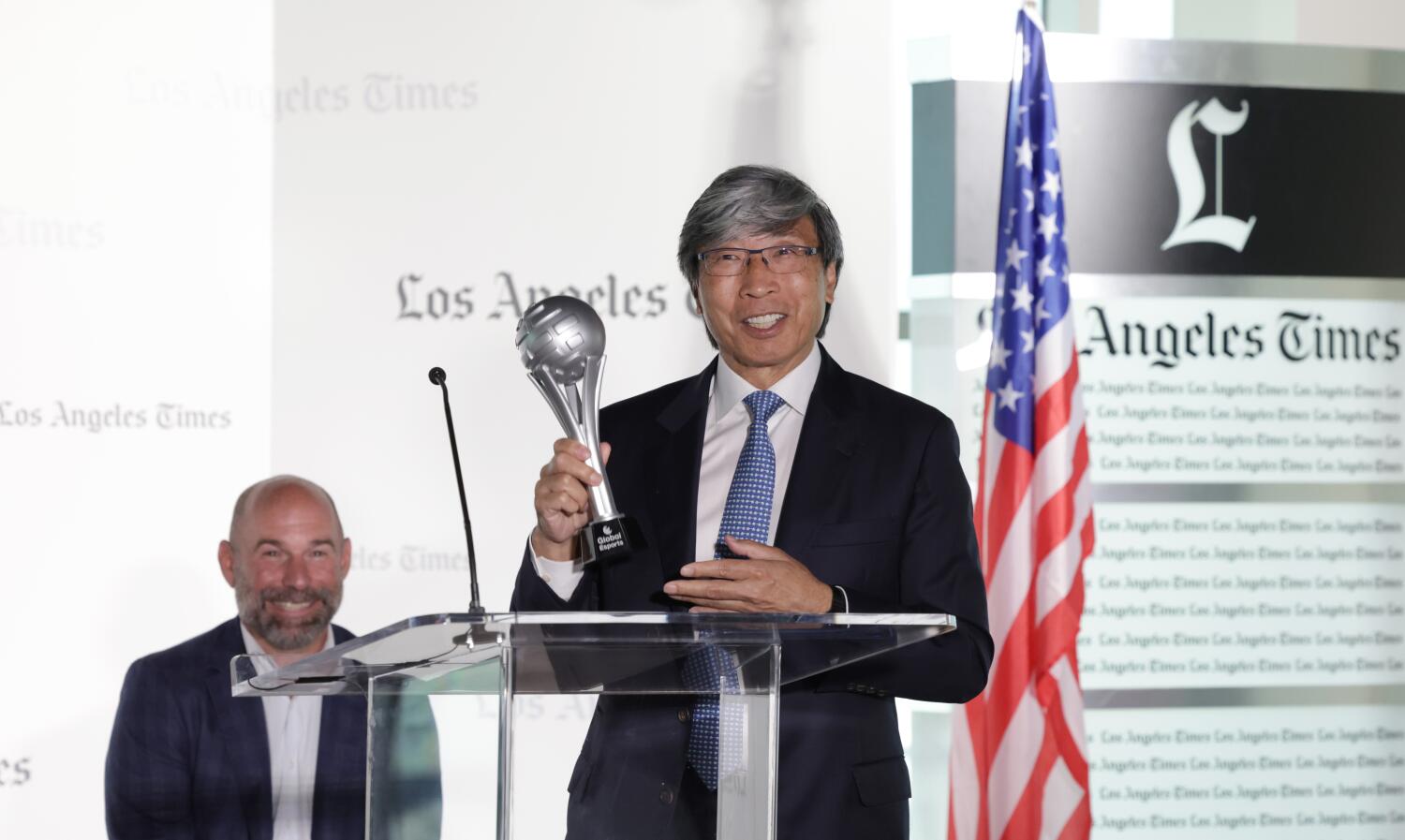
If the Los Angeles Dodgers ever return to the open market, billionaire biotech tycoon and Los Angeles Times owner Patrick Soon-Shiong stands ready to make a serious run at ownership. That reality frames the ongoing speculation surrounding Major League Baseball's most lucrative and successful modern franchise. Controlling ownership under Mark Walter and Guggenheim Baseball Management remains secure, yet whispering campaigns in financial circles persist. When a sports asset generates this magnitude of revenue, deep-pocketed runners-up from past bidding wars naturally maintain their positioning.
Baseball economics have shifted dramatically since the Guggenheim group purchased the Dodgers in 2012 for two billion dollars. Back then, that figure felt astronomical, bordering on reckless to traditionalists who viewed franchise valuations through a lens of conservative balance sheets. Today, that acquisition looks like a bargain. Valuations for top-tier franchises have skyrocketed past the five billion dollar mark, fueled by massive regional sports network revenue streams, global brand expansion, and lucrative digital partnerships. Soon-Shiong understands this hyper-inflationary environment intimately. He missed out on the initial 2012 bidding war when Frank McCourt was forced to sell, but his subsequent accumulation of liquid capital and media holdings changes his strategic posture entirely.
The Ownership Anatomy of Modern Franchises
Owning a modern baseball powerhouse requires far more than writing a massive check on day one. It demands a perpetual liquidity strategy. The Guggenheim group succeeded because they treated the franchise not merely as a civic trophy, but as an integrated entertainment and real estate engine. They monetized parking lots, secured record-setting television distribution deals, and maintained a payroll that consistently ranks near the top of the sport.
Soon-Shiong fits the profile of a modern sports mogul who views assets through a multi-vertical lens. As the proprietor of the Los Angeles Times and various healthcare enterprises, he possesses a distinct playbook for combining media influence with civic footprint. Owning a baseball team in the second-largest media market in the country is not just about ticket sales. It is about anchoring a media ecosystem.
Yet, buying a team like this involves navigating a rigid ownership committee structure. Major League Baseball guards its clubhouses jealously. Owners want partners who will not rock the financial boat, who will vote in lockstep on revenue sharing, and who understand the unwritten rules of baseball administration. Soon-Shiong has spent years building institutional heft in Southern California. That local roots narrative plays well with league officials who value stability over volatile outsider capital.
Financial Realities of a Potential Transition
Rumors of a sale usually stem from liquidity events or internal friction among minority partners rather than active distress. Guggenheim’s core leadership shows no public sign of wanting an exit. Their investments in international player acquisition, particularly capturing generational talent like Shohei Ohtani, have cemented the franchise as a global financial juggernaut.
If a sale were triggered, the bidding pool would be exceptionally thin. Very few individuals on earth possess the unencumbered capital required to clear a transaction north of five billion dollars without leveraging the franchise into operational vulnerability. Soon-Shiong represents a rare breed of buyer who can deploy cash reserves without assembling a chaotic syndicate of private equity partners. Private equity ownership remains a controversial subject within legacy sports leagues. Traditionalists fear that short-term return mandates from outside investment firms could compromise roster investment. An independent billionaire with local operational interests offers a cleaner governance model that league traditionalists prefer.
The Media Synergy Factor
A critical dimension of any future bid involves the intersection of sports broadcasting and traditional print media. Soon-Shiong owns the primary newspaper of record in the region. Integrating a premier sports franchise with a major regional media property creates unique promotional loops, though modern antitrust scrutiny and media consolidation rules present distinct hurdles.
When media moguls buy sports teams, they often encounter skepticism from journalists who cover both beats. Conflicts of interest loom large when the paper covering the team is owned by the person signing the manager's paycheck. Soon-Shiong has navigated this tightrope before, but a Dodgers acquisition would amplify those pressures exponentially. The daily scrutiny would match the intensity of any political campaign.
The Broader Market Implications
Should the ownership structure of the franchise ever wobble, the ripple effects would alter Major League Baseball's competitive balance. Mark Walter and his partners established a spending threshold that forces other large-market owners to adapt or face relentless fan revolts. A new owner would inherit not just a roster designed for perennial championship contention, but an expectation of dominance that leaves zero margin for error.
Fans care little about balance sheets until payroll cuts affect the box score. The legacy of the McCourt era still haunts long-time supporters who remember bankruptcy filings and organizational dysfunction. Any conversation about new ownership immediately triggers protective instincts among a fan base that demands absolute financial commitment to winning. Soon-Shiong's local profile offers reassurance on that front, signaling that a transition would prioritize resource allocation over austerity.
The baseline remains unchanged. The Dodgers are not actively for sale, and Guggenheim’s grip on the organization is firm. But in high-stakes sports finance, preparation meets opportunity in unexpected moments. When those moments arrive, the runner-up from the last historic auction will be waiting at the front of the line.