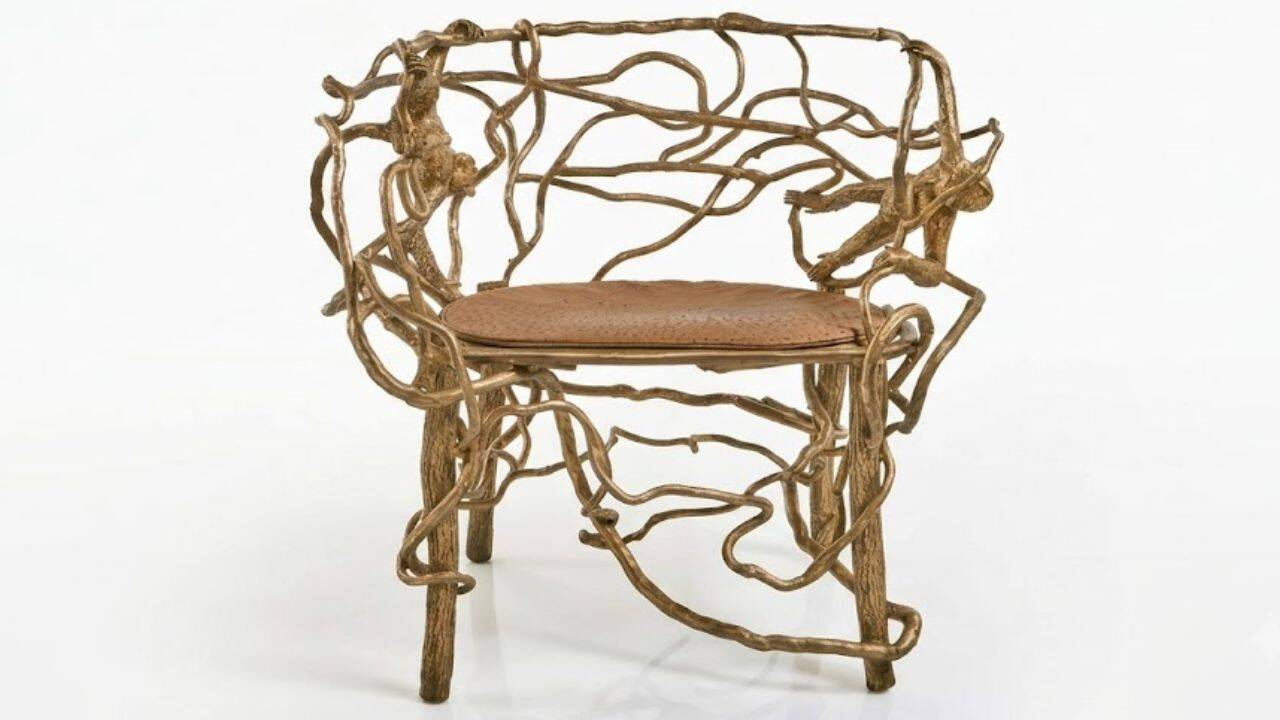
When Claude Lalanne’s bronze monkey armchair outfitted with an ostrich leather seat commands a cool $1.079 million at auction, the art press rushes to publish the same tired narrative. They call it a triumph of whimsy. They praise the blurring of boundaries between sculpture and utility. They write breathless paragraphs about how surrealism meets functional design as if buying a piece of furniture that costs more than a commercial real estate portfolio is some kind of profound philosophical statement.
It is not. It is a symptom of a market that has completely lost its grip on reality, substituting genuine cultural value for high-net-worth interior decoration disguised as high art. Don't forget to check out our earlier article on this related article.
Let us dismantle the lazy consensus right now.
The standard auction-house line tells you that Claude Lalanne, alongside her husband François-Xavier as Les Lalanne, created a singular visual vocabulary where nature gets reimagined through a luxurious, surrealist lens. They point to the bronze monkeys, the sheep bars, the ginkgo tables, and they swoon. They argue that because these pieces are rare, handcrafted, and favored by collectors like Yves Saint Laurent, their million-dollar price tags are self-evident proofs of genius. To read more about the background of this, The Spruce offers an excellent summary.
That is an expensive fairy tale designed to protect asset valuations.
The Functional Compromise
True great art commands millions because it alters how humanity perceives existence, challenges sociopolitical structures, or pushes the boundaries of visual medium. A bronze monkey holding a seat pan does none of those things. It is an expensive novelty piece. It is a conversation starter for billionaires who want quirky tax write-offs sitting in their Mayfair townhouses.
Think about the actual utility of the object. A bronze monkey armchair is neither a great sculpture nor a comfortable chair. Sculpturally, it is constrained by the ergonomic demands of human buttocks. Functionally, it is constrained by the fact that you are sitting on a heavy metal primate wrapped in exotic bird skin. If you sit in it, you feel ridiculous. If you do not sit in it, you have bought a very expensive coat rack that happens to look like a zoo exhibit.
When utility and fine art collide, compromise usually ruins both. A chair wants to be ergonomic, stable, and mass-produced for human comfort. Sculpture wants to exist purely for contemplation, untethered from the tyranny of lumbar support. By mashing them together, the Lalannes created expensive toys for the ultra-wealthy. Calling this the pinnacle of design innovation is an insult to actual industrial design and actual fine art.
The Yves Saint Laurent Halo Effect
Why did this specific armchair fetch $1.079 million? The answer has nothing to do with bronze casting techniques and everything to do with provenance laundering.
In 2009, the legendary Christie's auction of the Yves Saint Laurent and Pierre Bergé collection took place in Paris. It was the sale of the century. The Lalannes were major beneficiaries of that cultural earthquake. Yves Saint Laurent collected them obsessively. Once a dead French fashion icon stamps a creator as chic, the market creates an unshakeable feedback loop. Collectors are not buying the monkey chair because bronze primates represent a pinnacle of metallurgical mastery. They are buying the shadow of Saint Laurent's taste. They are buying membership into an exclusive club of cultural arbiters who pretend that whimsy justifies seven-figure liquidity.
I have spent decades watching money flow through secondary art markets. I have seen collectors drop small fortunes on pieces because a famous provenance paper gave them psychological cover. When you remove the Saint Laurent halo, strip away the gallery hype, and look at the physical object sitting in an empty room, the emperor has no clothes. Or rather, the monkey has no fur.
The Death of Subversion
The most grating part of the Lalanne mythos is the insistence that their work is somehow rebellious or subversive.
Real surrealism was dangerous. It attacked bourgeois sensibilities, disrupted rational thought, and unsettled the viewer. Salvador Dalí put lobsters on telephones to shock the establishment. Meret Oppenheim covered a teacup, saucer, and spoon in gazelle fur to provoke visceral, unsettling reactions about the familiar made alien.
Les Lalanne did the exact opposite. They took surrealism and domesticated it for the drawing rooms of the aristocracy. There is nothing subversive about a bronze monkey designed to look cute in a billionaire's Parisian salon. It is safe, expensive decorative art for people who want to feel avant-garde without ever being challenged. It is bourgeois comfort disguised as wild imagination. When you pay a million dollars for a piece of furniture because it features a cute animal, you are not rebelling against society. You are the establishment.
What Real Value Looks Like
If you want to spend a million dollars on functional objects, look at true masterworks of craftsmanship that push materials past their perceived limits. Look at the Greene and Greene architecture where wood joints become poetry. Look at modern studio glass artists who spend decades mastering thermodynamic chaos.
The Lalanne monkey armchair trades on irony and pedigree, substituting cleverness for profound execution. It relies on the art world's chronic insecurity—the fear that if you do not laugh along with the joke, you simply do not understand the culture.
I understand it completely. It is a brilliant marketing ecosystem built around cute bronze animals and high-society endorsements. But let us stop confusing interior design for art history.
Stop pretending that sticking a monkey under a cushion elevates furniture into the pantheon of human achievement. It is a rich person's pet project, inflated by auction house theater and a desperate desire for aristocratic charm.
Next time you see a bronze animal holding up a chair pad for seven figures, don't look for the genius. Look at who's laughing all the way to the bank.