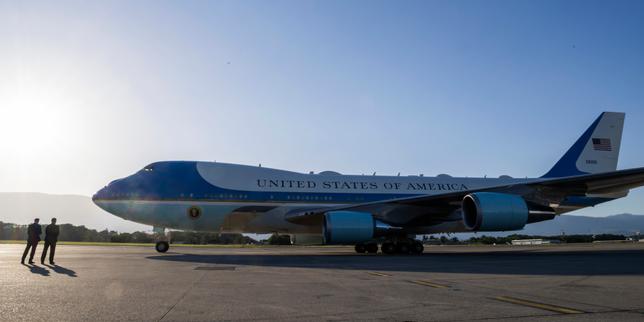
The United States air wing tasked with transporting the commander-in-chief is undergoing an unprecedented logistical shakeup. The military is quietly preparing to retire one of its specialized presidential transport aircraft, replacing it with a commercial Boeing jet originally built for Qatar. While the public often associates presidential flight exclusively with the massive VC-25A—the iconic Boeing 747 known as Air Force One—the broader white-and-blue fleet includes critical secondary aircraft that handle distinct VIP missions. The acquisition of this foreign-bound airliner represents a rare, pragmatic pivot for a procurement system more accustomed to decade-long delays and soaring budgets.
The Shell Game Behind Presidential Aviation
The white-and-blue paint scheme of the presidential fleet masks a complex web of military designations and operational realities. Most observers focus on the two heavily modified Boeing 747-200B aircraft that have served commanders-in-chief since the administration of George H.W. Bush. Yet, the air wing relies heavily on a broader assortment of support aircraft to move the president, the vice president, cabinet members, and high-ranking diplomatic delegations.
Among these are the C-32A aircraft, which are modified Boeing 757s, and smaller executive jets. The specific aircraft facing retirement belongs to this supporting tier, a workhorse that has reached the absolute limit of its economic and structural life. Maintaining these aging airframes requires a specialized supply chain. Parts become scarce. Scheduled maintenance cycles grow longer and more expensive, leaving the fleet vulnerable to availability gaps that the military cannot afford.
The solution came from an unexpected corner of the global aviation market. A Boeing commercial jetliner, originally ordered and configured for the Qatari government or its state-backed VIP transport wing, became available on the secondary market. Rather than commissioning a completely new aircraft from the ground up—a process that involves years of engineering design and contractual negotiations—the Pentagon moved to acquire this high-spec, low-flight-hour airframe.
Buying Foreign Backorders is a Hard Nosed Financial Choice
Opting for a jet originally earmarked for Middle Eastern dignitaries is a calculated shortcut. In the defense acquisition world, building a custom VIP transport from scratch is an administrative nightmare. The current program to replace the main Air Force One fleet with two new Boeing 747-8s has been plagued by billions of dollars in cost overruns and persistent labor shortages, serving as a cautionary tale for defense planners.
By purchasing an existing airframe, the government bypasses the initial manufacturing bottlenecks. The Qatari-spec aircraft was already built to a luxurious, high-security baseline standard often required by state delegations. It features advanced communication routing, long-range fuel tanks, and structural enhancements that make it far more suitable for conversion than a standard commercial airliner pulling duty for a domestic airline.
+-----------------------------------+-----------------------------------+
| Traditional Custom Procurement    | The Qatari Airframe Pivot         |
+-----------------------------------+-----------------------------------+
| 7-10 year development timeline    | Immediate airframe availability   |
| High engineering overhead costs   | Fixed baseline manufacturing cost |
| Susceptible to factory delays     | Structural modifications only     |
+-----------------------------------+-----------------------------------+
This acquisition strategy mirrors a broader trend in military logistics. When time is short and industrial capacity is strained, buying commercial off-the-shelf hardware and retrofitting it for military use is the only way to meet pressing operational deadlines. It is a confession of weakness by the defense industrial base, which can no longer pump out specialized airframes on demand.
The Hidden Costs of Retrofitting VIP Aircraft
The purchase price of the Qatari jet is only an initial down payment on a much larger engineering project. A commercial VIP airliner cannot simply fly into Andrews Air Force Base and immediately begin transporting American officials. The retrofitting process is intense, invasive, and shrouded in secrecy.
Technicians will strip the aircraft down to its bare metal frame to install specialized defensive suites. These systems include directional infrared countermeasures designed to blind incoming heat-seeking missiles, as well as electronic jamming equipment to disrupt radar tracking. The wiring alone requires a complete overhaul. The military demands redundant, hardened communication lines that can withstand the electromagnetic pulse of a nuclear detonation, allowing the passengers to maintain command and control during a national crisis.
- Advanced Encryption Suites: Installing cryptographic data links that hook directly into military satellite networks.
- Aeromedical Evacuation Capability: Modifying sections of the cabin to support intensive care medical equipment.
- Physical Security Hardening: Reinforcing flight deck doors and lower cargo holds against ballistic threats.
These modifications require thousands of hours of highly skilled labor. The work must be performed by defense contractors with top-secret clearances, working in secure facilities. Delays during this phase are common, as integrating modern military electronics into an airframe designed for commercial or foreign civilian use often uncovers unexpected software and electrical compatibility issues.
The Geopolitical Optics of a Secondhand Fleet
Symbolism matters in international diplomacy. For decades, the aircraft carrying the American president and top diplomats have served as flying emblems of economic and industrial might. Flying a plane that was originally manufactured for another nation's leadership represents a subtle shift in how the United States projects its power.
Critics point out that relying on a repurposed Qatari jet signals an inability to manufacture domestic alternatives efficiently. It highlights the contraction of the American aerospace sector, which now struggles to deliver specialized large-cabin aircraft on schedule. For an administration focused on reshoring manufacturing and projecting strength, explaining why a key piece of the presidential transport infrastructure is a repurposed foreign order requires careful public relations management.
The strategic reality outweighs the aesthetic concern. The military prioritizes reliability and availability over national pride. An older aircraft sitting in a hangar undergoing emergency repairs cannot project power anywhere. A modernized, readily available platform, regardless of its original buyer, keeps the leadership mobile and connected.
The Long Maintenance Tail of Aging Fleets
The retirement of the older airframe underscores a broader crisis facing military aviation logistics. The average age of the defense transport fleet has risen steadily over the past two decades. The aircraft being replaced has logged millions of miles, enduring the stress of frequent takeoffs and landings at airports across the globe.
As an airframe ages, it undergoes micro-cracking and corrosion that cannot be easily fixed with standard replacement parts. The military is forced to manufacture custom components or scavenge retired commercial planes in desert boneyards. This approach is unsustainable for high-priority missions where a mechanical failure could delay a crucial diplomatic summit or compromise executive safety.
The incoming Boeing aircraft offers a fresh maintenance slate. Its engines have fewer cycles, its hull has faced less structural fatigue, and its diagnostic systems are modern. This transition reduces the hours of ground maintenance required for every hour of flight time, lowering the operational burden on the crews tasked with keeping the fleet flight-ready.
Structural Realities of Modern Defense Procurement
The reliance on a Qatari-spec aircraft reveals a profound bottleneck within the domestic aerospace ecosystem. Decades of consolidation have left the Pentagon with very few prime contractors capable of handling large-scale aircraft manufacturing. When the sole domestic supplier faces systemic production backlogs and regulatory scrutiny over its commercial division, the ripple effects hit national security infrastructure directly.
The military cannot wait for a corporate turnaround or a restructuring of factory floors. The operational schedule of the executive branch is relentless. By taking an aircraft that was already in the production pipeline for an international client, the government effectively cuts the line, utilizing global supply chains that have already delivered a finished hull.
This method will likely become the blueprint for future specialized fleet updates. Whether replacing command-post aircraft or maritime patrol platforms, the Pentagon is discovering that adapting existing commercial variants is faster than asking an exhausted defense sector to invent something new. The era of building bespoke, ground-up military transport platforms for VIPs is drawing to a close, replaced by an era of clever retrofitting and opportunistic purchasing.