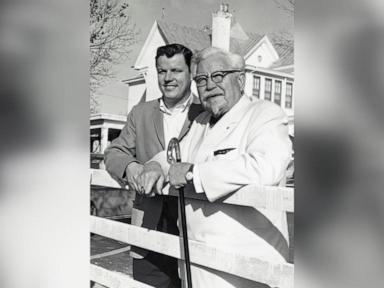
You have probably seen the headlines. Personal items, a former Kentucky home, and a massive chunk of fast-food history belonging to Colonel Harland Sanders are hitting the auction block.
For over half a century, these artifacts sat quietly away from the public eye. Now, collectors and fast-food historians are scrambling. But behind the hype of black bow ties, engraved pressure cookers, and vintage cash registers lies a fascinating story about how a man built an empire and carefully engineered his own myth.
Let us look past the sensationalized auction catalogs. Here is what is actually happening in Shelbyville, Kentucky, and why this sale matters to anyone obsessed with American business history.
The Settle Family Legacy
The items going up for auction didn't come from a corporate vault in Louisville. They were preserved for more than 50 years by the Settle family.
Back in 1974, Tommy and Cherry Settle bought the property directly from Colonel Sanders and his wife, Claudia. That purchase included Blackwood Hall—the Colonel's 5,000-square-foot home—and the famous Claudia Sanders Dinner House.
The Settles kept the restaurant running and maintained the personal belongings left behind. Organizing firm The Menish Group handled the massive task of bringing these items to light. According to auctioneers, the global response has been massive. People care deeply about the man behind the white suit.
What is Actually on the Bidding Block
Forget cheap plastic memorabilia. This collection represents the gritty reality of early food service innovation.
The catalog features items that tell the real story of Harland Sanders' daily life and business operations:
- The Signature Accessories: Yes, his black bow ties are up for grabs. Interestingly, auction insiders note that the Colonel frequently relied on clip-ons rather than tying them from scratch. His personal watches and cutlery sets are also included.
- Commercial Hardware: Bidders are fighting over an original cash register and a heavy-duty commercial gas range pulled straight from the Colonel's residence.
- The Tools of the Trade: Several engraved pressure cookers—the exact style Sanders used to test and demonstrate his revolutionary frying method—are up for sale.
- Personal Ephemera: A birthday greeting sent by former President Richard Nixon, city keys from around the nation, and a family-sculpted bust show the sheer scale of his public footprint.
The 1964 Planner and the Secret Recipe Myth
Every time a Sanders archive opens up, people lose their minds over the 11 herbs and spices. This auction is no exception.
Deep inside the collection sits a brown leather daily planner from 1964. It is packed with handwritten notes from the year Sanders sold his company to investors. Naturally, internet sleuths immediately assumed it contained the holy grail of fast-food formulas.
Reality is a bit more grounded. Decades ago, similar documents sparked legal battles when KFC tried keeping private papers out of the public eye. Legal teams later determined those notes did not match the actual corporate blend of 11 herbs and spices. Instead, historians believe it outlines a recipe for stuffing.
Even without the original corporate formula, the planner remains a prized historical piece. It maps out the exact months Sanders transitioned from owner to global brand ambassador.
The Genius of the Colonel Persona
Most people forget that Harland Sanders was not born looking like a southern plantation owner. He invented the character.
Bill Menish, the auctioneer handling the estate, points out that Sanders didn't dress in the iconic white suit and string tie during his early years of hard labor. He worked as a farmhand, streetcar conductor, insurance salesman, and service station operator.
When he finally hit success on US-25 in Corbin, Kentucky, he realized that marketing required a visual anchor. He adopted the white goatee, glasses, and white suit to stand out in a crowded roadside market. It worked brilliantly. He became one of America's first true celebrity chefs.
What Happens to Blackwood Hall and the Dinner House
The physical real estate adds a heavy weight to this auction. Sealed bids for Blackwood Hall and the Claudia Sanders Dinner House run through the end of the week.
The Settle family spent decades preserving this slice of Shelbyville history. Whoever writes the checks to take over these properties inherits a massive responsibility. They aren't just buying square footage. They are buying the physical headquarters of a culinary icon.
If you want to own a piece of this history, expect fierce competition. Online pre-bidding drew international attention, proving that the legacy of Kentucky Fried Chicken reaches far beyond fast-food counters.
Review the complete catalog via The Menish Group to track final bids and see the historical documentation yourself.


..jpg)