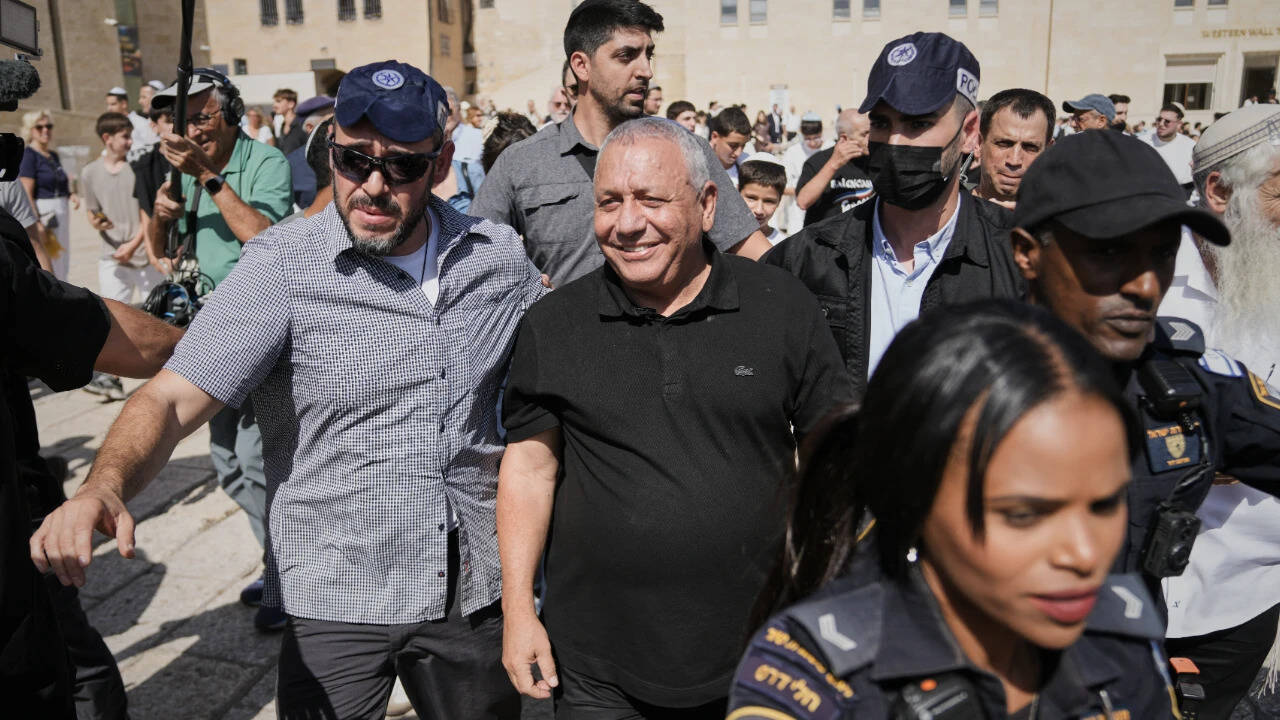
Everyone in Washington and Jerusalem wants a neat label for Gadi Eisenkot. They want him to be the great liberal savior who will magically undo years of right-wing rule, or they write him off as just another hawk in a different suit. Both takes miss the point entirely.
Right now, in November 2026, Eisenkot is sitting at the center of Israel's fiercest political knife fight. Following the deadlocked October 27 legislative election, President Isaac Herzog officially handed the former Israel Defense Forces (IDF) chief of staff the mandate to assemble Israel's next government. He has until December 6 to pull off what looks like an impossible coalition puzzle, staring down a 120-seat Knesset split between Benjamin Netanyahu's 53-seat bloc, Eisenkot's 48-seat opposition alliance, and 19 seats held by Arab-led parties.
If you're trying to figure out who Gadi Eisenkot actually is—and why he became Netanyahu's most dangerous challenger—you have to stop looking at him through an American political lens. He isn't running on a sweeping ideological manifesto. He's running on something far more potent in exhausted, post-war Israel: basic competence and a refusal to play the strongman game.
The Anti-Netanyahu Blueprint
To understand Eisenkot's appeal, look at the contrast between him and the man he's trying to unseat. Benjamin Netanyahu is the son of a Polish-born academic, raised in Jerusalem and educated in the United States, famous for polished English soundbites and theatrical political maneuvering.
Eisenkot is the exact opposite. Born in Tiberias in 1960 to Meir and Esther Eisenkot, Jewish immigrants from Morocco, he grew up in the southern port city of Eilat. If he secures a coalition and takes the oath of office, he will become Israel's first Mizrahi prime minister. That isn't just a trivia fact. For decades, Netanyahu's Likud party dominated working-class Mizrahi voters by painting the Israeli establishment as out-of-touch elites. Eisenkot short-circuits that entire playbook. You can't easily brand a guy who grew up in Eilat and came up through the infantry as a disconnected Tel Aviv aristocrat.
His political party's name tells you everything about his brand. He calls it Yashar, a Hebrew word that translates to "straight" or "honest". He doesn't do slick teleprompter speeches. He speaks quietly, dresses plainly, and projects the vibe of a tired dad who showed up to fix a broken pipe because nobody else bothered to bring a wrench.
Pollster Dahlia Scheindlin nailed why this works when she noted that voters see him as empathetic and grounded. After years of constitutional crises, judicial overhaul protests, and devastating multi-front wars, a massive chunk of the Israeli public isn't craving a visionary. They just want a functional adult in the room.
Forty Years in Uniform and the Dahiya Doctrine
Before he ever stepped onto a campaign stage, Eisenkot spent 41 years in the IDF, rising from a teenage conscript in 1978 to the 21st Chief of the General Staff from 2015 to 2019. Ironically, it was Netanyahu and then-Defense Minister Moshe Ya'alon who picked him for that top military job in late 2014.
People outside Israel often assume that because Eisenkot is a centrist politician today, he was some kind of dove in uniform. That's completely false.
The Architect of Disproportionate Force
During the 2006 Lebanon War, Eisenkot served as head of the IDF Operations Directorate and later commanded the Northern Command. In 2008, he articulated what became infamous globally as the Dahiya Doctrine—named after the Beirut stronghold of Hezbollah that Israeli airstrikes flattened two years earlier. The core premise was blunt: in any future war, Israel would apply disproportionate force against villages and civilian infrastructure used by militants, aiming to create massive deterrence rather than fighting drawn-out guerrilla battles.
Restraint Where It Counted
Yet once he actually sat in the Chief of Staff's chair between 2015 and 2019, Eisenkot surprised both his critics and his supporters. He became known for cool-headed restraint.
- Refusing escalation in Gaza: During the 2018 border clashes, hardline ministers pushed hard for a full-scale ground invasion of Gaza. Eisenkot pushed back, arguing against getting bogged down without a clear strategic objective.
- The Azaria controversy: In 2016, when an Israeli soldier named Elor Azaria shot and killed an incapacitated Palestinian attacker in Hebron, right-wing politicians rallied behind the soldier as a hero. Eisenkot publicly backed the military courts prosecuting him, insisting that IDF soldiers must follow strict rules of engagement and aren't above the law.
- The "Campaign Between Wars": Instead of big, messy invasions, Eisenkot favored quiet, targeted covert strikes—mostly in Syria—to disrupt Iranian weapons transfers without triggering full-blown regional war.
That mix of ruthless deterrence doctrine and strict institutional discipline defines him. He believes in military power, sure, but he hates reckless wars fought for political survival.
Personal Grief That Changed Israeli Politics
You can't separate Eisenkot's political rise from the brutal personal price his family paid after October 7, 2023.
When Hamas launched its devastating attack, Eisenkot had only been a Knesset member for about a year, having entered politics in 2022 alongside Benny Gantz in the National Unity alliance. Days after the massacre, he and Gantz joined Netanyahu's emergency war cabinet to help steer the military response.
Two months later, on December 7, 2023, Eisenkot was sitting in a military command bunker when he got the news every parent dreads. His youngest son, 25-year-old Master Sergeant Gal Meir Eisenkot, had been killed by a tunnel shaft explosion in northern Gaza. The very next day, Eisenkot's nephew, Sergeant Maor Cohen Eisenkot, was also killed in combat. Less than a year later, in November 2024, another nephew, Captain Yogev Pazy, died fighting as well.
Most politicians talk about sacrifice in the abstract. Eisenkot buried his son and kept showing up to war cabinet meetings the following week.
That grief gave him untouchable moral authority when he finally broke with Netanyahu. By early 2024, Eisenkot was openly challenging the Prime Minister's slogan of "total victory" over Hamas, calling it an empty fantasy disconnected from reality on the ground. He argued fiercely that bringing the remaining Israeli hostages home had to take priority over endless military occupation, and he accused Netanyahu of dragging out the conflict to keep his far-right coalition partners happy.
In June 2024, Eisenkot had enough and resigned from the government. He didn't throw a tantrum on television. He simply wrote a sober resignation letter stating that critical war decisions were being driven by narrow political considerations rather than national security, walked out, and began building the independent political movement that became Yashar.
Where Eisenkot Actually Stands on the Big Issues
If you're expecting Eisenkot to champion a sweeping peace deal or overhaul Israel's foreign policy overnight, pump the brakes. Analysts like Mairav Zonszein of the International Crisis Group have pointed out that Eisenkot hedges heavily on the toughest questions. Here's what his actual platform looks like beneath the hype:
- A State Commission of Inquiry: This is non-negotiable for him. Eisenkot demands a fully independent, judge-led state commission to investigate the political, intelligence, and military failures of October 7—a probe Netanyahu has repeatedly tried to block or downgrade into a politically controlled panel.
- Drafting the Ultra-Orthodox: For decades, Haredi (ultra-Orthodox) yeshiva students received blanket exemptions from mandatory military service. After thousands of secular and national-religious reservists served hundreds of days in combat, public anger boiled over. Eisenkot backs ending the blanket exemption, proposing that only the top 3% of religious scholars remain exempt while the rest serve in the military or national service.
- Palestinian Statehood and the West Bank: Don't confuse Eisenkot with the Israeli left. On the campaign trail, he explicitly rejected the idea that a two-state solution is achievable anytime soon, calling the conflict too deep for a near-term agreement. While he opposes controversial moves like the E1 settlement expansion—which would effectively bisect the West Bank—and fiercely criticizes far-right Finance Minister Bezalel Smotrich's handling of settler violence, Eisenkot broadly supports existing West Bank settlements and tight Israeli security control.
- Repairing Ties With Washington and Europe: Having earned the U.S. Legion of Merit in 2016 and graduated from the U.S. Army War College, Eisenkot speaks fluent Pentagon. Following the November 2026 U.S. midterm elections—where Democrats retook control of Congress and friction with Netanyahu spiked—Eisenkot pitches himself as the leader who can restore bipartisan American support and calm tensions with European allies like Britain and France.
Why Forming a Government Is His Hardest Battle Yet
Winning the mandate from President Herzog was the easy part. Actually cobbling together 61 seats in the Knesset before the December 6 deadline is brutal.
Look at the math. Netanyahu's Likud bloc sits at 53 seats, while Eisenkot's opposition camp holds 48. Neither side can govern alone without crossing deep ideological fault lines.
Right now, Eisenkot is juggling three messy paths:
- A National Unity Government Without Rotation: Eisenkot has invited Likud to join a broad emergency unity government, but his team drew a hard red line on November 20: no prime ministerial rotation with Netanyahu. Eisenkot insists on serving as sole prime minister for the full term, while Likud is demanding the exact opposite—Netanyahu as sole premier for four years and the inclusion of far-right National Security Minister Itamar Ben-Gvir's Jewish Power party, whom Eisenkot refuses to touch.
- Peeling Off Ultra-Orthodox Parties: Eisenkot's allies have floated compromises on military conscription enforcement to lure Haredi parties away from Netanyahu, though religious leaders remain deeply skeptical after years of clashes over draft laws.
- A Minority Government Backed by Arab Parties: The 19 seats won by Arab-led parties—specifically Ra'am and the Joint List—hold the literal balance of power. Yashar officials have warned that if unity talks collapse before December 6, they are prepared to bring a minority government to a Knesset confidence vote relying on external support from Arab lawmakers rather than letting the mandate slip back to Netanyahu. That's a massive political gamble in Israel, where right-wing opponents immediately attack any coalition reliant on Arab votes as illegitimate.
If Eisenkot fails to lock down a majority or pass a minority government before his clock runs out, Herzog will likely hand Netanyahu a shot at forming a coalition. If Netanyahu fails too, Israelis face yet another expensive, exhausting election cycle in early 2027.
How to Watch What Happens Next
If you want to cut through the noise of Israeli coalition headlines over the next two weeks, ignore the daily leaked "demands" from party spokespeople. Watch three concrete indicators instead:
- The December 6 Knesset Confidence Vote: Watch whether Eisenkot actually brings a minority government to the floor before his mandate expires. Calling that vote forces every party—including Avigdor Lieberman's right-wing Yisrael Beiteinu and the Arab factions—to show their cards on the record.
- Movement on the Haredi Draft Law: Track whether ultra-Orthodox lawmakers break ranks with Netanyahu over draft exemptions. If Haredi leaders decide Netanyahu can no longer protect their yeshiva students from arrest or funding cuts, his 53-seat bloc fractures overnight.
- Likud Backbenchers: Keep an eye on moderate Likud veterans rather than Netanyahu himself. Eisenkot's entire unity strategy depends on convincing enough Likud lawmakers that four years in a stable centrist-led government beats dragging the country into a sixth election cycle.
Gadi Eisenkot didn't enter politics to become a celebrity, and he won't transform Israel into a progressive utopia. He's an old-school infantry commander betting that a bruised country is finally tired of political theater and ready to hire a quiet professional to clean up the mess.