Getting a "free" aircraft carrier sounds like the defense deal of the century until the first fuel bill lands on your desk.
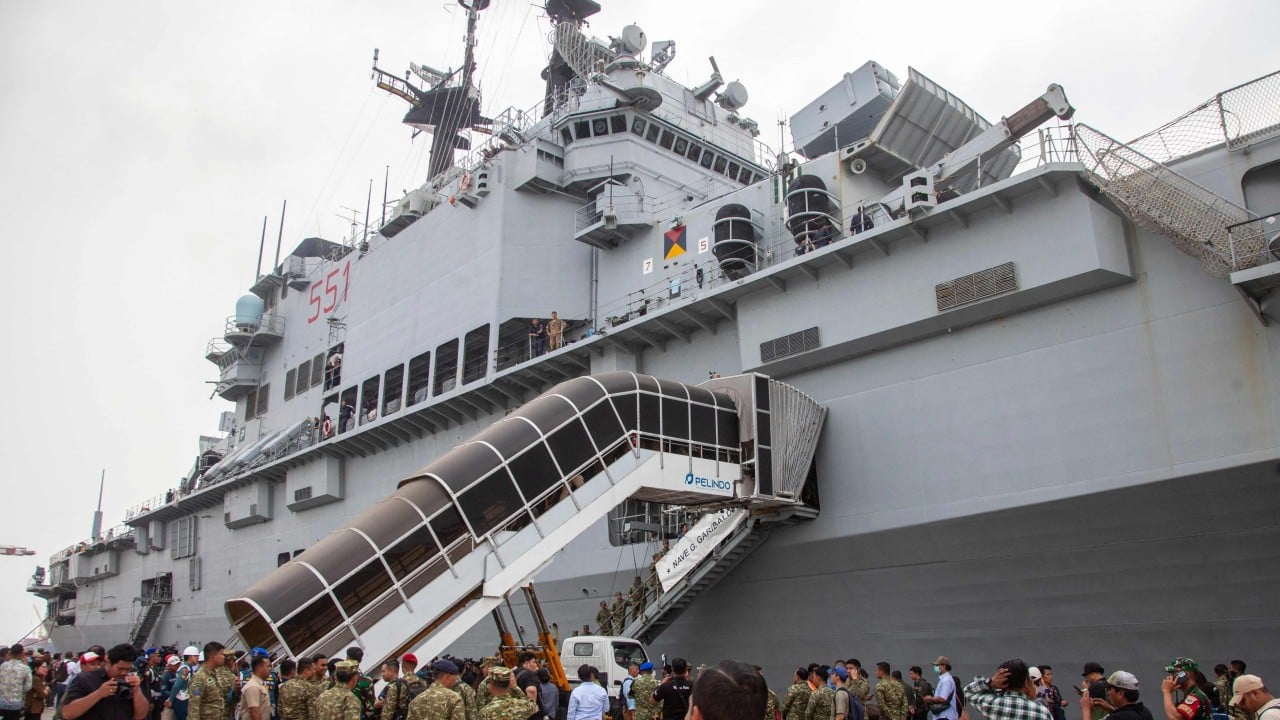
In September 2026, Indonesia commissioned the KRI Sriwijaya-100. It's a 41-year-old light carrier gifted by Italy after serving four decades as the ITS Giuseppe Garibaldi. Jakarta paid zero euros for the hull itself. Yet analysts and lawmakers are already tearing into the math behind keeping it at sea. Reports peg the vessel's daily fuel burn at roughly US$98,700—about 1.6 billion rupiah every 24 hours.
Is Indonesia’s new aircraft carrier worth its US$98,700 a day fuel cost? Honestly, if Jakarta treats the ship like a floating status symbol without funding its helicopters, escorts, and retrofits, it's an expensive vanity project. If they actually build out the aviation and disaster-response ecosystem around it, that six-figure daily tab starts looking a lot more reasonable across an archipelago of 17,000 islands.
The real debate isn't about the fuel price. It's about whether a developing naval power can stomach the hidden lifecycle costs of a Cold War warship while juggling tight domestic budgets.
Why a Free Warship Costs Nearly $100,000 a Day to Move
Naval enthusiasts love to look at sticker prices. Defense accountants look at propulsion plants.
The KRI Sriwijaya runs on a Combined Gas and Gas (COGAG) system built around four General Electric/Avio LM2500 gas turbines. Together, those turbines crank out 81,000 shaft horsepower to push a 14,150-ton hull up to 30 knots. Gas turbines pack huge power into a compact space, which is why NATO navies love them. They're also notoriously thirsty.
Think of it like inheriting a vintage Ferrari with no warranty. You didn't pay for the car, sure. You still have to buy premium fuel every time you leave the driveway, and replacement parts come from specialist workshops thousands of miles away.
When the ship is actively steaming—especially at higher speeds or running flight operations—burning through roughly US$98,700 worth of marine fuel per day adds up fast. Keep the Sriwijaya at sea for just 150 days a year, and you're looking at nearly US$15 million annually just to keep the turbines spinning. That figure doesn't cover lubricants, crew salaries for its 400-plus sailors, pier maintenance at bases like Lanal Lampung, or the aviation fuel for whatever aircraft sit on its 174-meter flight deck.
Even Indonesia's own defense and research institutions recognize the problem. By November 2026, state shipbuilder PT PAL and the National Research and Innovation Agency (BRIN) were already exploring clean-energy and propulsion upgrades to rein in the ship's operating footprint. You don't launch an emergency propulsion study two months after commissioning unless the fuel math is keeping admirals awake at night.
What Italy Actually Got Out of the Deal
To understand whether Indonesia got a bargain, look at Rome's ledger first.
Scrapping and disposing of a 14,000-ton warship with asbestos-era wiring and complex military systems isn't cheap. Italian defense documents estimated that decommissioning the Giuseppe Garibaldi would take at least two years and cost Rome around 18.7 million euros. Keeping the retired vessel "warm" at the dock after December 2024 was already costing millions.
Gifting the hull to Jakarta saved Italy millions in disposal bills while opening doors for lucrative defense contracts. Rome has been actively pitching Indonesian defense planners on submarines, M-346 trainer jets, and maritime patrol aircraft worth well over a billion euros combined. In defense diplomacy, "free" is almost always a down payment on future hardware.
Indonesia, meanwhile, received a stripped-down hull. Before leaving Italy, the ship's sensitive NATO communications and legacy weapons systems were removed. What arrived at Tanjung Priok port in Jakarta on September 18, 2026, was a solid steel hull, a ski-jump flight deck, and aging turbines. Everything that makes an aircraft carrier useful still had to be bought, integrated, and paid for by Indonesian taxpayers.
The Retrofit Bill Nobody Agreed On
Fuel is an operating expense, so it gets the headlines. Retrofitting is a capital expense, and that's where the numbers get truly messy.
Back in 2025, Indonesia's Finance Ministry approved up to US$450 million in foreign loan financing for the carrier program. Then the estimates started swinging wildly:
- In early 2026, the Ministry of Defense floated a refurbishment ceiling around 7.2 trillion to 7.5 trillion rupiah.
- Lawmaker TB Hasanuddin from Parliament's Commission I warned lawmakers that full retrofitting—depending on electronics, weapons, and structural upgrades—could hit 16 trillion to 16.8 trillion rupiah, roughly US$900 million.
- Defense officials pushed back, calling the upper figures "unconfirmed" while PT PAL and Italian shipbuilder Fincantieri assessed the hull.
Spend US$500 million to US$900 million modernizing a ship built in the 1980s, and you have to ask a hard question. How many years of service do you actually get back? Even with an aggressive overhaul aimed at squeezing out another 15 to 20 years of life, Indonesia is pouring massive capital into a mid-life platform.
Compare that to Thailand's experience with the HTMS Chakri Naruebet, the only other aircraft carrier in Southeast Asia. Commissioned in 1997, Thailand's carrier famously spent most of its career tied up in port because Bangkok couldn't afford the fuel, spare parts, and replacement jump-jets to keep it deployed. Naval analysts across the region bring up Thailand as a cautionary tale every time Jakarta talks about carrier operations. Nobody wants a 180-meter pier queen.
Disaster Relief vs Combat Reality
The Indonesian Navy (TNI AL) knows it isn't going to fight a blue-water carrier battle against a superpower. That's why officials have framed the KRI Sriwijaya primarily around Military Operations Other Than War—specifically humanitarian assistance and disaster relief.
On paper, the logic makes sense. Indonesia sits squarely on the Pacific Ring of Fire. Earthquakes, tsunamis, volcanic eruptions, and peatland forest fires hit the country every single year. When a major quake destroys ports and airport runways in Sulawesi or Sumatra, getting heavy aid ashore becomes a logistical nightmare.
President Prabowo Subianto and Navy Chief of Staff Admiral Muhammad Ali have both emphasized this role. A ship with a 5,220-square-meter flight deck can park roughly 10 medium-to-heavy helicopters—such as Black Hawks or Mi-17s—and launch continuous relief sorties without needing a working airport on land. It can haul massive stores of fresh water, generate electricity, act as a floating hospital, and serve as an offshore command center for combating forest fires.
Here is the catch that defense experts keep pointing out. A carrier without its air wing is just a very expensive barge.
If an earthquake strikes tomorrow and the KRI Sriwijaya sails out burning US$98,700 a day in fuel, what happens when it arrives off the coast? Without a dedicated, fully trained squadron of heavy transport helicopters embarked on board, and without amphibious landing craft or support vessels to move heavy earthmoving gear ashore, the carrier risks becoming a "sitting duck" offshore. You can't airlift excavators off a flight deck if you don't own enough heavy-lift helicopters to fly them.
What About Drones and Fixed-Wing Jets?
Some defense commentators have billed the KRI Sriwijaya as Southeast Asia's first future drone carrier. Italy's Fincantieri previously pitched concepts for converting the Garibaldi into a launchpad for unmanned aerial systems, and Indonesia has shown growing interest in Turkish and domestic drones.
Launching long-endurance surveillance drones or tactical unmanned aircraft from a mobile sea base would give Indonesia eyes over the Natuna Sea and the Strait of Malacca. That's genuinely useful for tracking illegal fishing, smuggling, and grey-zone maritime intrusions.
Fixed-wing fighter jets are another story entirely. The Garibaldi was built to operate short take-off and vertical landing (STOVL) aircraft like the AV-8B Harrier II. Harriers are obsolete and retiring worldwide. The only modern western STOVL fighter is the F-35B Lightning II—a jet Washington hasn't cleared for Jakarta, and one that costs over US$100 million per airframe plus deck heat-shield upgrades the Sriwijaya wasn't built to handle.
So let's be clear about what this ship is. It's a helicopter and drone carrier. Calling it an aircraft carrier in the traditional fighter-jet sense sets unrealistic expectations that the hull simply can't meet.
Where the Same Money Could Have Gone
Whenever a government spends hundreds of millions on a flagship asset, opportunity cost enters the room.
Indonesia faces very real fiscal pressures in 2026. Prabowo's administration is funding massive social programs—including its nationwide free nutritious meals initiative—while navigating softer commodity revenues and tight state budgets. Every trillion rupiah spent retrofitting a 1980s Italian cruiser is money pulled away from somewhere else.
Even within the Indonesian Navy, plenty of officers and defense scholars argue that smaller, distributed assets deliver far better bang for the rupiah. Consider what US$500 million to US$900 million buys in regional naval hardware:
- Landing Platform Docks (LPDs): Indonesia's own PT PAL builds reliable, locally designed Makassar-class LPDs for a fraction of a carrier's cost. They carry helicopters, launch landing craft directly onto beaches without needing ports, and burn far less fuel than a 30-knot gas-turbine warship.
- Offshore Patrol Vessels and Frigates: For day-to-day sovereignty patrols in the North Natuna Sea, three or four modern frigates or long-range patrol ships cover far more ocean simultaneously than one capital ship.
- Maritime Patrol Aircraft and Land-Based Drones: Aircraft flying from airfields in Kalimantan, Riau, and Papua can reach maritime flashpoints in hours without burning US$98,700 a day just to transit at 20 knots.
A single carrier can only be in one place at a time. When it goes into dry dock for months of maintenance—which an aging ship will need regularly—Indonesia's carrier capability drops to zero.
How to Judge If the KRI Sriwijaya Succeeds
Right now, calling the KRI Sriwijaya a total failure is premature, and calling it a strategic triumph is pure hype. The ship has only been in Indonesian commission since late September 2026, with early helicopter deck drills starting in November.
If you want to know over the next 24 months whether Jakarta is actually getting value out of that US$98,700 daily fuel bill, watch four specific benchmarks rather than political speeches:
- Embarked Air Wing Size: Watch how many naval helicopters are permanently assigned to the ship, not just borrowed from land bases for photo ops during national holidays. A carrier needs at least eight to ten dedicated rotary-wing aircraft to justify its deck space.
- Escort and Replenishment Readiness: A capital ship shouldn't sail alone. Look for regular joint deployments pairing the Sriwijaya with air-defense frigates and fleet replenishment tankers so it can actually stay at sea for weeks at a time.
- Transparent Retrofit Contracts: Keep an eye on the final contract signed between the Defense Ministry, PT PAL, and Fincantieri. If the upgrade package prioritizes modern radar, communications, and turbine efficiency over flashy weapons, planners are taking sustainability seriously.
- Real Disaster Response Time: The next time a major earthquake or flood hits eastern Indonesia, measure how many hours it takes the Sriwijaya to leave port, arrive on station, and put relief supplies on the ground.
The fuel bill isn't the real threat to Indonesia's first aircraft carrier. Half-measures are. Jakarta either commits the full budget to turn the KRI Sriwijaya into a properly equipped helicopter and drone hub, or it ends up paying nearly six figures a day for a floating museum piece.


