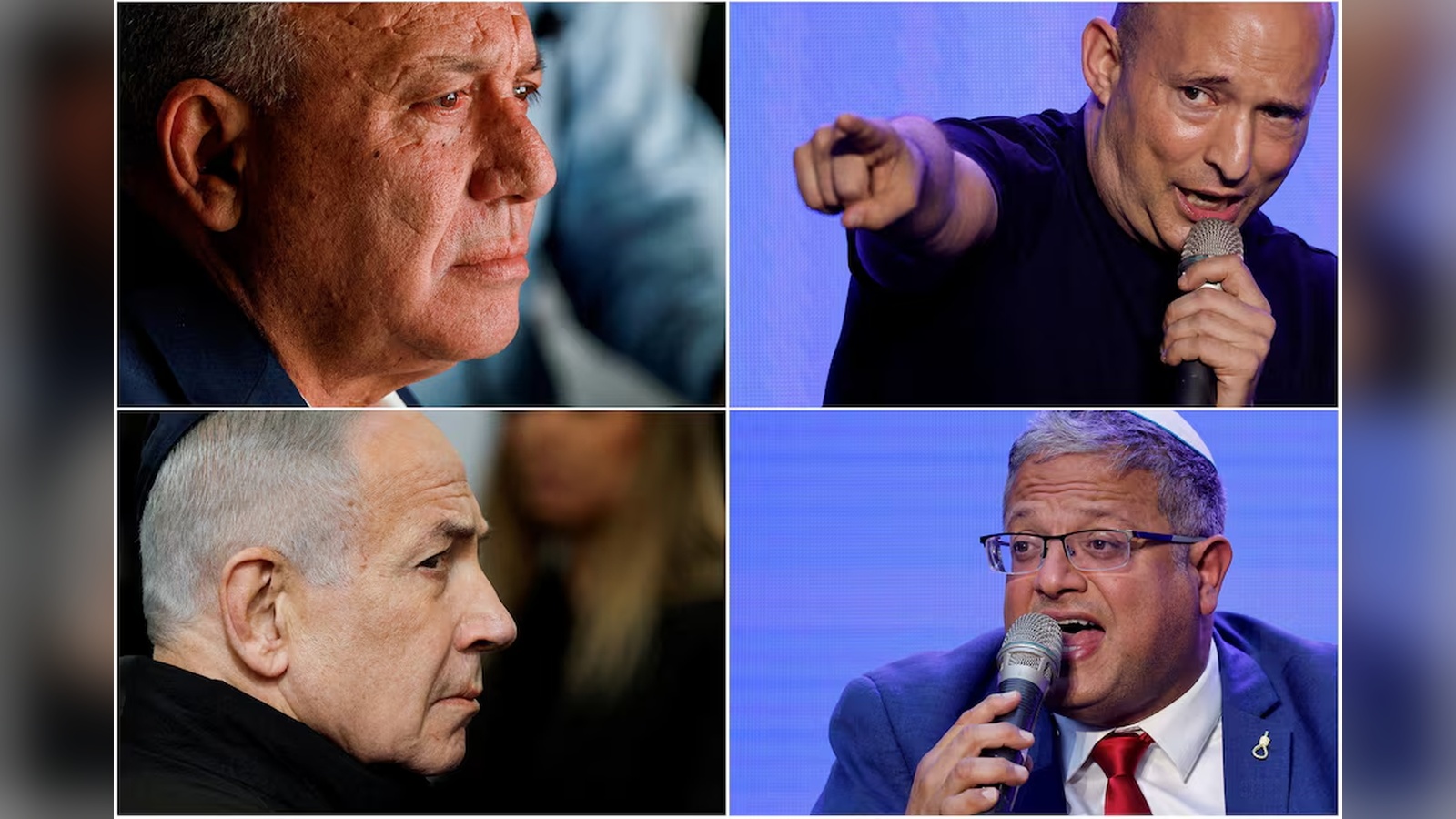
Gadi Eisenkot doesn't look like your typical career politician, yet he suddenly sits at the center of Israel's fiercest coalition battle. If you've been watching the headlines about Israel government formation and Eisenkot securing a majority against Benjamin Netanyahu, you're probably seeing a lot of noisy punditry and very little clarity on how the math actually works in the Knesset.
Let's cut through the noise right away. In Israel's 120-seat parliament, 61 is the magic number. Anything less means you're either ruling through a fragile minority government or heading straight back to the ballot box for yet another expensive election cycle. When reports broke that former IDF Chief of Staff Gadi Eisenkot cleared that 61-seat threshold to form an alternative coalition without Netanyahu, the political establishment in Jerusalem went into overdrive.
Here is the immediate answer to what everyone is asking: Eisenkot's reported majority relies on a broad, ideologically diverse bloc stretching from center-right security hawks to center-left liberals, combined with either direct backing or crucial outside abstentions from Arab-majority parties. It isn't a cozy ideological marriage. It's a pragmatic anti-Netanyahu alliance built on sheer political survival and deep frustration with the status quo.
How the Knesset Math Actually Works for Eisenkot
Most people outside Israel misunderstand how a government gets built there. Nobody ever wins an outright majority on election night. Under Israel's proportional representation system, parties need to pass a 3.25% electoral threshold just to enter the Knesset, which regularly produces eight to twelve distinct factions fighting over cabinet ministries.
To replace Netanyahu, Eisenkot couldn't just rely on his own political base. He had to stitch together a coalition out of factions that rarely agree on taxes, judicial reform, or the future of the West Bank.
Let's look at the core pillars that make a 61-seat anti-Netanyahu majority mathematically possible:
- The Centrist Core: Yesh Atid, led by Yair Lapid, alongside Benny Gantz's National Unity camp (from which Eisenkot emerged as a powerhouse figure). These parties supply the bulk of the seats, roughly 35 to 45 mandates depending on the exact polling or post-election tally. They bring middle-class voters from Tel Aviv and the central coastal plain who prioritize institutional stability and hostage/security deals.
- The Right-Wing Anti-Netanyahu Factions: Avigdor Liberman's Yisrael Beiteinu and Gideon Sa'ar's New Hope (or equivalent right-of-center breakaways). These guys aren't liberals. They're hardline nationalists who fell out with Netanyahu personally and despise the influence of ultra-Orthodox (Haredi) parties over state budgets and military draft exemptions.
- The Left-Wing Bloc: The merged Labor-Meretz alliance (The Democrats), led by Yair Golan. They bring around 8 to 12 seats and demand aggressive diplomatic initiatives alongside strict protections for Israel's Supreme Court.
- The Decisive Swing Factor (Arab Parties): Ra'am (the United Arab List, led by Mansour Abbas) and Hadash-Ta'al. Without at least passive cooperation or outside support from Arab lawmakers, an anti-Netanyahu coalition almost never hits 61 seats unless one of Netanyahu's ultra-Orthodox allies defects.
Notice the friction baked into that list. Putting Yair Golan and Avigdor Liberman in the same cabinet room is like locking a vegan chef and a Texas pitmaster in a kitchen and asking them to agree on dinner. Yet they did it before in 2021 under Naftali Bennett and Yair Lapid, proving that shared opposition to Netanyahu is the strongest glue in modern Israeli politics.
Why Gadi Eisenkot Became the Consensus Candidate
You might wonder why Eisenkot—rather than Yair Lapid or Benny Gantz—emerged as the figure capable of rallying a majority. Honestly, it comes down to credibility and personal sacrifice.
Lapid carries heavy baggage among right-wing voters who view him as too secular and too left-leaning. Gantz, while popular for years, frustrated many anti-Netanyahu voters by repeatedly joining emergency governments with Netanyahu—first during the COVID-19 pandemic in 2020, and again after the October 7, 2023 attacks. Voters started viewing Gantz as overly cautious, someone who hesitated when it was time to pull the trigger politically.
Eisenkot is different. Having served as the 21st Chief of Staff of the Israel Defense Forces from 2015 to 2019, he holds ironclad security credentials that even Likud voters respect. More importantly, during the Gaza war, Eisenkot suffered unimaginable personal tragedy when his son, Gal Eisenkot, and his nephew were killed in combat. Despite that grief, he stayed in the war cabinet to push for hostage release deals and strategic accountability, eventually resigning alongside Gantz when he felt Netanyahu was prioritizing political survival over national strategy.
When Eisenkot speaks, people listen. He doesn't sound like a slick PR machine. He speaks slowly, bluntly, and without theatrical flair. For right-wing voters who hate Netanyahu but can't stomach voting for Yair Lapid, Eisenkot offers a safe, respectable landing spot. That psychological bridge is the entire reason he could assemble a majority where others stalled out.
Which Parties Backed Netanyahu's Rival and What They Demanded
Securing a majority in Jerusalem never comes free. Every party leader who signed on or signaled backing for an Eisenkot-led government brought a steep price list to the negotiating table. If you're tracking whether this coalition can actually survive past its first hundred days, watch the concessions made to these specific blocs.
1. Yesh Atid and the Institutional Reformers
Yair Lapid's party remains the organizational engine of the opposition. Backing Eisenkot meant Lapid had to swallow his own ambition to return immediately to the Prime Minister's Office—or at least settle for a rotation agreement or the Foreign Ministry. In exchange, Yesh Atid demanded ironclad commitments to roll back the Netanyahu government's judicial overhaul legislation, pass a Basic Law enshrining equality and democratic checks, and enforce universal military conscription for ultra-Orthodox yeshiva students.
2. Yisrael Beiteinu and the Secular Right
Avigdor Liberman has spent years campaigning on one relentless message: end the financial and legal privileges of the Haredi parties. Liberman backed Eisenkot's bid because he saw a chance to finally pass a strict draft law without exemptions and strip ultra-Orthodox ministries of discretionary coalition funds. Liberman typically eyes the Finance Ministry or Defense Ministry, giving him direct control over where taxpayer shekels flow.
3. The Democrats (Labor-Meretz)
Yair Golan, himself a former IDF Deputy Chief of Staff, shares a military background with Eisenkot, which smooths over personal friction. Still, Golan's base demanded clear commitments on restarting regional diplomatic tracks with moderate Arab states, curbing settlement expansion in the West Bank, and launching a formal State Commission of Inquiry into the failures surrounding October 7.
4. Ra'am and the Arab List Dilemma
This is always the trickiest piece of the puzzle. Mansour Abbas proved in 2021 that an Islamist-rooted Arab party could sit inside a Zionist coalition if the focus stayed on civil budgets, combating organized crime in Arab towns, and housing permits. Right-wing partners like Liberman hate sitting formally with Arab parties, so the compromise often involves Ra'am providing a "safety net" from outside the coalition—voting for the government during investiture and budget votes without taking ministerial seats. Meanwhile, Hadash-Ta'al refuses to sit in any Zionist government, meaning their backing usually takes the form of tactical abstentions that lower the threshold Eisenkot needs to clear.
The Fatal Flaws Threatening an Eisenkot Coalition
Getting to 61 seats on paper is one thing. Governing with 61 seats is a nightmare. Having followed Knesset coalition mechanics for years, I can tell you that a razor-thin majority gives every single backbencher veto power over the entire government.
Look at what happened to the Bennett-Lapid "change government" between June 2021 and June 2022. It collapsed in barely a year because two individual MKs from Bennett's own right-wing Yamina party—Idit Silman and Nir Orbach—defected under relentless pressure from Netanyahu's Likud opposition. When your majority is 61 out of 120, losing just one lawmaker reduces you to 60-60 parity, paralyzing legislation. Losing two kills the government instantly.
Netanyahu is a master of opposition warfare. He knows how to isolate the weakest ideological link in a rival coalition and hammer them daily in the media, at synagogue entrances, and through targeted legislative traps. For example, Likud will routinely propose bills that sound patriotic—like extending Israeli civilian law to West Bank settlements—forcing right-wing members of Eisenkot's coalition to either vote against their own ideology or trigger a crisis with left-wing and Arab partners.
There's also the ultra-Orthodox factor. Shas (led by Aryeh Deri) and United Torah Judaism have been Netanyahu's most loyal allies for over a decade. Unless Eisenkot manages to peel away one of those Haredi factions—which is tough given Liberman's presence in the coalition—those 18 Haredi seats will fight fiercely alongside Likud to bring the new government down before its first annual budget passes. Under Israeli law, if a government fails to pass a state budget by the statutory deadline, the Knesset automatically dissolves and triggers new elections.
Why Netanyahu's Counter-Strategy Isn't Finished Yet
Don't make the mistake of writing Benjamin Netanyahu's political obituary just because Eisenkot flashed a 61-seat majority. Netanyahu has survived more political near-death experiences than almost any democratic leader in modern history.
Even when a rival secures initial backing to form a government, the process under Israel's Basic Law: The Government involves several vulnerable stages:
- Presidential Consultations: Party leaders formally recommend a candidate to the President of Israel (Isaac Herzog). Backroom deals can unravel hours before a delegation walks into the President's residence.
- The 28-Day Mandate (plus 14-day extension): Being tapped to form a government doesn't make you Prime Minister. You have up to 42 days to finalize signed coalition agreements and present your cabinet to the Knesset for a confidence vote. Netanyahu uses every single hour of that window to poach defectors with promises of senior ministries and safe spots on the Likud electoral slate.
- The Swearing-In Vote: Until the Knesset actually votes confidence in the new government, Netanyahu remains caretaker Prime Minister with full executive authority.
Netanyahu's core argument to wavering right-wing MKs is simple: "You are handing power to a government dependent on Arab parties and the far left during a time of existential security threats." That message resonates deeply with right-leaning voters, creating intense grassroots pressure on politicians who break ranks with the Likud bloc.
What You Should Watch Next in Jerusalem
If you want to know whether Eisenkot's majority will actually turn into a functioning, long-term government—or collapse into another round of snap elections—ignore the loud TV studio debates and track three concrete indicators over the coming days:
- Watch the Finance and Defense Ministry assignments: If Eisenkot keeps Defense for himself or hands it to an experienced security figure while giving Finance to a disciplined budget hawk rather than a partisan spender, the coalition has a real shot at passing a credible state budget.
- Monitor the exact wording on the Haredi draft law: This is the ultimate litmus test. If Liberman and Lapid demand immediate criminal sanctions against draft dodgers while Eisenkot pushes a gradual quota system, internal cracks will appear before the cabinet even takes its oath.
- Track defection rumors among Likud's moderate wing: Netanyahu's Likud isn't monolithic. Figures like Yoav Gallant (who clashed repeatedly with Netanyahu over war strategy and Haredi conscription) represent a pragmatic security wing within Likud. If even two or three Likud MKs refuse to follow Netanyahu into scorched-earth opposition, Eisenkot's cushion grows from a fragile 61 to a comfortable 64, changing the entire political equation overnight.
Keep your eye on the official Knesset voting roster during the confidence session and the subsequent state budget deadline—those two roll calls will tell you everything about whether Israel is entering a genuine post-Netanyahu era or just gearing up for another campaign cycle.

