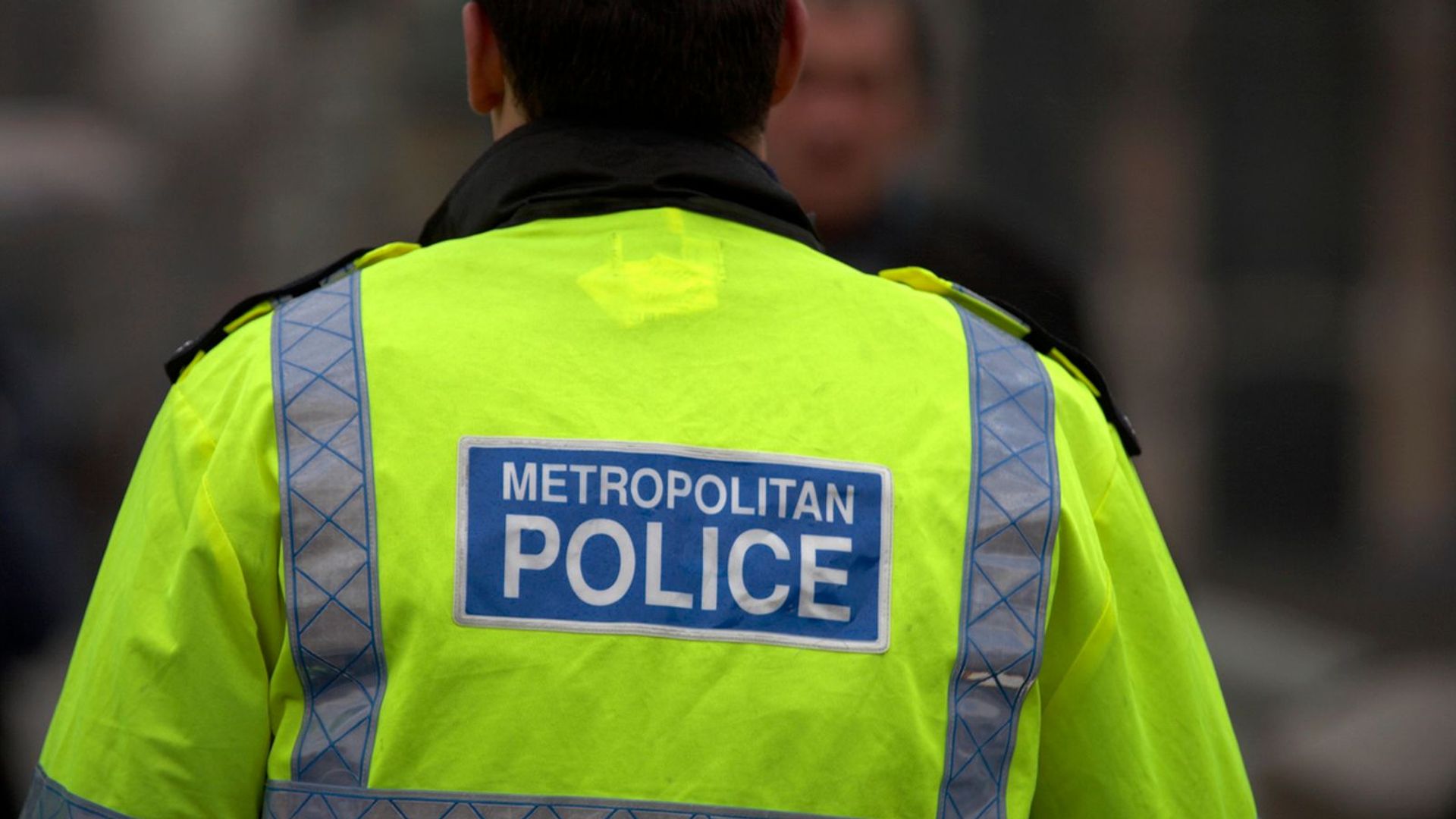
Walk down a London high street today, and a camera mounted on a police van can scan your face, map your biometric data, and run it against a watchlist before you even finish crossing the road. You don't get asked for permission. You don't sign a waiver.
Honestly, most people assume that's illegal in the UK. It isn't.
When news broke that the Metropolitan Police can photograph members of the public without consent during their live facial recognition pilot, the internet did what it always does. Outrage spiked. Headlines made it sound like a brand-new, rogue surveillance grab that appeared out of thin air.
That reaction misses the real story. The legal framework allowing UK police to take your photograph in public without asking has existed for years, and the Met's current expansion isn't a sudden glitch in the law—it's the predictable result of how British policing interprets common law, data protection rules, and public space privacy.
If you live in, work in, or visit London, understanding how this system actually operates matters far more than reacting to sensationalist headlines. Let's break down what the Met is actually doing, what the law says about your face in public, and what happens to your data when you walk past those blue signs.
How the Met Police Facial Recognition Pilot Actually Works
Live Facial Recognition (LFR) isn't passive CCTV running 24 hours a day on every street corner. At least, not yet.
Right now, the Met deploys LFR through dedicated camera vans parked in specific high-footfall areas—places like Croydon, Oxford Street, Soho, and major transport hubs. When a deployment is active, cameras capture live video feeds of everyone passing through a designated zone.
Software isolates every human face in that feed. It converts your facial geometry—the distance between your eyes, the width of your nose, the contours of your jawline—into a mathematical template. That biometric template is then compared in real time against a pre-loaded watchlist of images.
Who is on that watchlist? According to the Metropolitan Police's own deployment policies, watchlists are built for specific operations and typically include individuals wanted by the courts, suspects wanted for serious offenses, people subject to court orders like Sexual Harm Prevention Orders, or missing persons deemed at high risk.
Here is the part that determines whether your face gets stored or wiped. If the software finds no match between your facial template and the watchlist, your biometric data is deleted immediately. The Met states this deletion happens automatically within fractions of a second.
If the system flags a potential match, an alert goes to a human officer on the ground. That officer is supposed to visually compare the live camera image against the watchlist photo before deciding whether to stop and speak to the person.
Sounds clean on paper. Real life gets messier.
Why Police Don't Need Your Consent to Photograph You
Here is the core legal reality that surprises almost everyone I talk to about UK surveillance law. Under English and Welsh law, there is no general right to privacy when you are standing on a public street.
Anyone—a tourist, a street photographer, a journalist, or a police officer—can legally photograph you in a public space without asking for your consent. That basic principle sits at the root of why the Met doesn't need you to opt in before capturing your image.
When police take your photograph or capture your face on camera for policing purposes, they aren't relying on consent as their legal basis. Under the UK General Data Protection Regulation (UK GDPR) and Part 3 of the Data Protection Act 2018, law enforcement agencies process biometric data under "law enforcement purposes" where processing is strictly necessary and authorized by law.
Specifically, the Met leans on common law policing powers—the broad duty to prevent and detect crime—alongside the Protection of Freedoms Act 2012 and the Surveillance Camera Code of Practice.
You'll often see civil liberties groups point to the landmark 2020 Court of Appeal ruling in R (Bridges) v Chief Constable of South Wales Police. That case was huge. Ed Bridges, a civil liberties campaigner in Cardiff, sued South Wales Police after his face was scanned while he was out shopping.
The Court of Appeal ruled that South Wales Police's use of automated facial recognition was unlawful at the time. Why? Not because taking photos without consent is inherently illegal, but because the police force had failed to put clear policies in place regarding who could be placed on watchlists and where deployments could happen, and they hadn't properly fulfilled their Public Sector Equality Duty to check the software for racial or gender bias.
Police forces took notes. Rather than banning the technology, the Bridges judgment effectively gave the Met and other forces a legal checklist to fix their governance frameworks so they could keep rolling it out.
The Consent Illusion and the Problem With Public Notices
When the Met runs a facial recognition pilot or operational deployment, they put up physical signs near the perimeter of the camera zone and publish deployment schedules on their website beforehand.
They argue this provides transparency and gives people notice.
Think about how that actually plays out on a Tuesday afternoon in central London. You're rushing out of a Tube station to catch a train or make a meeting. You're looking at your phone, dodging commuters, carrying groceries. You probably don't notice a blue A-frame sign tucked beside a bus shelter until you've already walked straight through the camera's field of view.
Even if you do spot the sign, what are your real options?
- You can turn around and take a ten-minute detour around the block, assuming you know where the camera boundary ends.
- You can pull up a hood, put on sunglasses, or wear a face mask.
- You can walk through and accept being scanned.
Notice the catch with option two. Covering your face to avoid a facial recognition camera in a high-policing zone can itself attract police attention. Officers have previously stopped and questioned individuals who actively concealed their faces around LFR vans, treating evasion itself as grounds for suspicion—even though avoiding a camera isn't a crime.
That isn't meaningful consent. Consent in data protection law has to be freely given, specific, informed, and unambiguous. Walking down a public pavement where turning back isn't practical doesn't meet that standard, which is precisely why the police don't claim consent as their legal foundation in the first place.
Accuracy, False Positives, and Algorithmic Bias
Whenever facial recognition pilots come up, the conversation quickly splits into two camps. Supporters say it catches violent offenders fast. Critics say it's an inaccurate surveillance dragnet that disproportionately harms minorities.
Both points carry weight, and looking at the actual testing data helps cut through the noise.
In 2023, the National Physical Laboratory (NPL) published an independent evaluation of the facial recognition algorithm used by the Metropolitan Police and South Wales Police. The NPL tested the NeoFace Watch algorithm across different settings and demographic groups.
The findings were revealing. At the specific face-matching threshold settings the Met decided to adopt, the NPL found that the software achieved a remarkably low false-positive alert rate—roughly 1 in 6,000 passersby—and showed no statistically significant difference in false-positive rates across race or gender at that exact threshold.
That was a major talking point for police leadership. They used the NPL study to argue that earlier criticisms about racial bias in facial recognition algorithms had been engineered out of their current system.
Hold on. Look closer at the full picture.
First, testing an algorithm under controlled evaluation conditions isn't identical to operating it in chaotic street environments with shifting lighting, rain, crowd occlusion, and outdated watchlist photos.
Second, a false-positive rate of 1 in 6,000 sounds tiny until you multiply it by London's foot traffic. If 60,000 people walk past a camera van during a busy Saturday deployment in the West End, a 1 in 6,000 rate still produces around ten innocent people flagged by the machine as wanted criminals.
Those ten people get pulled aside by uniformed officers on a crowded street in front of strangers, colleagues, or family members. They have to prove who they are to clear up a mistake generated by an algorithm.
Third, independent researchers and organizations like Big Brother Watch and Liberty have repeatedly raised concerns about what happens when watchlists expand. In early iterations of UK facial recognition trials, false positive rates were vastly higher—sometimes exceeding 80% of all alerts generated. While newer algorithms have improved dramatically, the accuracy of any biometric system still depends entirely on the quality of the reference photo on the watchlist and the threshold dial set by the operator.
Retrospective Facial Recognition Is the Quiet Giant Nobody Talks About
Everyone focuses on the vans with the live cameras. Honestly, the bigger shift in UK policing is happening behind closed doors with Retrospective Facial Recognition (RFR).
Live facial recognition scans faces in real time on the street. Retrospective facial recognition takes a still image from any existing source—a doorbell camera, a shop's CCTV, a mobile phone video uploaded by a witness, or social media—and runs it against police custody photo databases.
The scale difference is massive.
While LFR deployments happen on specific days in specific locations, RFR is used routinely every single day across police forces in England and Wales. Police forces hold millions of custody photographs in the Police National Database (PND).
Here is a detail that still shocks civil rights lawyers. Many of the people in that custody database were arrested years ago and never charged, or were found completely not guilty in court. Under previous rulings, the High Court found that retaining custody images of innocent people indefinitely breached privacy rights, yet millions of those photos remain searchable on police systems because deleting them manually requires individuals to apply to the specific force that took them.
When police run retrospective searches, there are no vans on the street and no warning signs on the pavement. It happens silently on a desktop terminal.
How This Compares to the Rest of Europe
If you look across the English Channel, the UK is heading in a very different direction from the European Union.
Under the EU Artificial Intelligence Act, real-time remote biometric identification in public spaces is broadly prohibited across member states. European lawmakers carved out narrow exceptions—such as searching for victims of abduction, preventing a specific terrorist threat, or locating suspects of severe crimes like murder or armed robbery—and even then, police generally need prior judicial authorization from a judge or independent administrative authority before turning the cameras on.
In the UK, there is no specific primary legislation passed by Parliament governing live facial recognition.
Read that again. Parliament has never passed a dedicated Facial Recognition Act setting clear statutory limits on when, where, and how police can scan the public. Instead, the rules are stitched together from general data protection statutes, common law powers, non-binding surveillance codes, and internal police force policies.
The Information Commissioner's Office (ICO) has investigated LFR deployments and urged police to follow strict necessity and proportionality standards. Former Biometrics and Surveillance Camera Commissioner Fraser Sampson repeatedly warned that police were operating in a legal grey zone where technology was moving faster than democratic oversight.
Without clear legislation, what stops a future pilot from expanding from serious violent offenders to shoplifters, protesters, or low-level public order offenses? Right now, the main barrier is internal police policy—and internal policies can be rewritten without a vote in Parliament.
What You Can Actually Do About Your Biometric Privacy in the UK
You can't single-handedly dismantle a Metropolitan Police camera van, and trying to obstruct officers on the street will only get you arrested. Still, you aren't completely powerless when it comes to your own biometric footprint.
Know Where Deployments Are Happening
The Metropolitan Police publishes upcoming and active Live Facial Recognition deployment locations on its official website under its LFR deployment records. Checking this before heading into major shopping districts or protests tells you whether cameras are active in that borough.
Understand Your Rights During a Stop
If an LFR alert triggers and an officer approaches you, stay calm and ask clearly whether you are being detained or whether it is a voluntary stop. Under UK law, a facial recognition alert alone isn't automatic proof of identity, and officers still need reasonable grounds to detain or search you. You don't have to answer questions beyond what is legally required if you aren't under arrest, though confirming your identity quickly usually resolves a false match on the spot.
Request Deletion of Old Custody Photos
If you were ever arrested in England or Wales in the past—even if the charges were dropped or you were acquitted—your face is very likely sitting in a police database used for facial recognition searches. You have the legal right under data protection law to submit a formal deletion request to the Chief Constable of the relevant police force asking them to erase your custody photograph, fingerprints, and DNA profile.
Audit What You Share Publicly
Remember that retrospective facial recognition and third-party biometric scraping tools like PimEyes or Clearview AI don't rely on street vans. High-resolution, front-facing photos posted publicly on LinkedIn, Instagram, or community websites can be indexed and matched against other images. Lock down profile photo visibility where you can, and avoid uploading clear passport-style headshots to public forums.
Push for Statutory Oversight
Because UK facial recognition rules rely heavily on policy rather than dedicated law, public pressure directly shapes how far pilots go. Groups like Big Brother Watch and Liberty run active campaigns and parliamentary briefings pushing for a clear legal framework. Writing to your local MP asking whether they support statutory regulation and independent judicial oversight for biometric surveillance puts the issue directly on the legislative agenda.