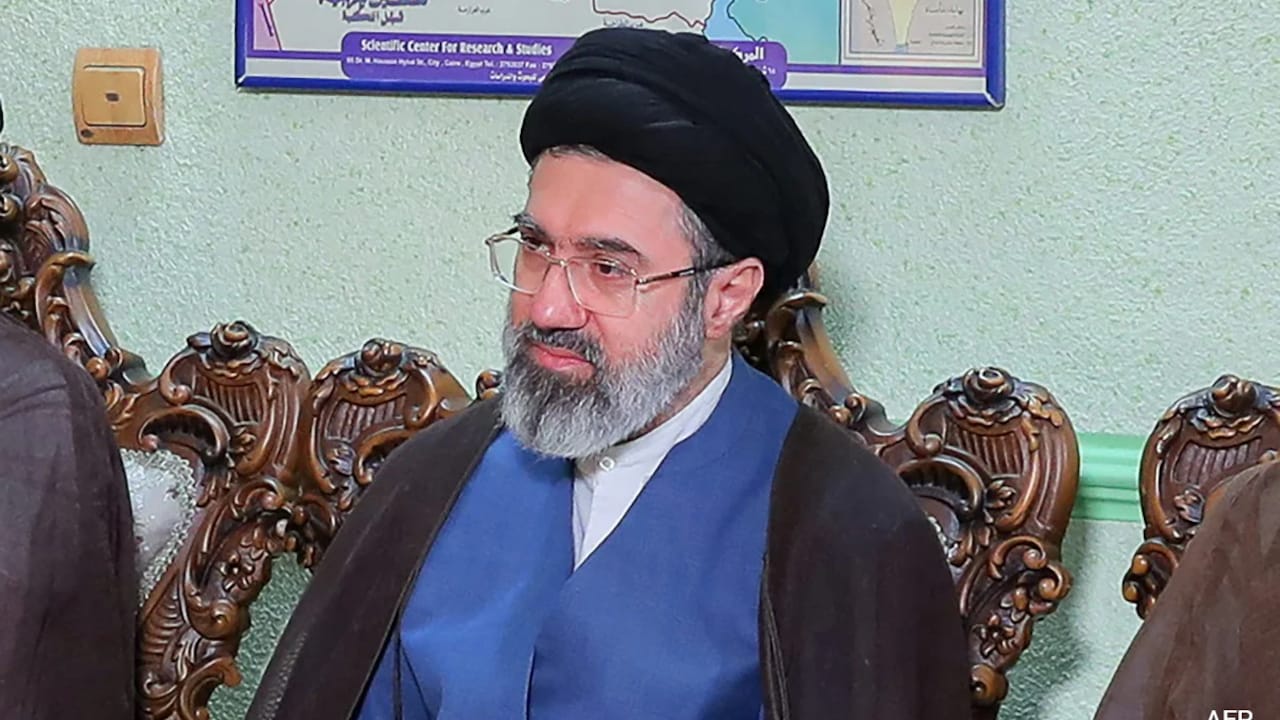
Everyone watching Tehran right now is missing the actual point. When reports surfaced that Mojtaba Khamenei granted "certain powers" to the Iranian government for talks with the US, Western commentators immediately started framing it as a sudden diplomatic breakthrough.
It isn't. Not even close.
If you've spent any time tracking how power actually moves inside the Islamic Republic, you know that delegation isn't surrender. It's insulation. By handing limited negotiating authority to the civilian administration, Mojtaba Khamenei isn't softening Tehran's core red lines—he's building a political firewall so the supreme leadership doesn't take the blame if Washington walks away or demands too much.
Why Mojtaba Khamenei Granting Powers to Iran's Government Changes the Diplomatic Math
To understand why this matters, you first have to drop the illusion that Iran's elected president runs foreign policy. Under the Iranian constitution and decades of political precedent, the Supreme Leader holds absolute authority over strategic security, nuclear thresholds, and relations with the United States. The president and the Foreign Ministry are essentially executors. When talks succeed, the system claims victory. When they collapse, the civilian government absorbs the domestic fury.
For years, Mojtaba Khamenei operated largely behind the curtain, consolidating influence across the Islamic Revolutionary Guard Corps (IRGC), intelligence networks, and clerical institutions. Any shift where he formally or informally authorizes the executive branch to engage Washington carries massive weight because it signals that the core security apparatus has signed off on testing the waters.
Here's what that authorization actually looks like in practice:
- Tactical flexibility without strategic retreat. Negotiators get room to discuss sequencing, sanctions relief mechanisms, and indirect backchannels through regional intermediaries like Oman or Qatar.
- Strict containment of core dossiers. Ballistic missile capabilities and regional deterrence networks remain completely off the table unless explicitly cleared at the highest level.
- Built-in deniability. If the US administration overplays its hand or imposes new sanctions mid-dialogue, Tehran's top leadership can disavow the civilian team's concessions without losing face.
Honestly, this is classic Iranian statecraft. We saw a version of this playbook during the lead-up to the 2015 Joint Comprehensive Plan of Action (JCPOA), when the Rouhani administration was given "heroic flexibility" to negotiate technical nuclear limits while the broader geopolitical posture remained untouched. The difference now is the stakes. The regional security environment in 2026 is far more volatile, sanctions pressure has reshaped Iran's domestic economy, and the leadership transition dynamics around Mojtaba Khamenei mean every move is calculated for internal regime stability first and international applause second.
The Real Reason Tehran Wants Talks Right Now
You don't open a channel to Washington out of sudden goodwill. You do it because the math at home demands relief.
Iran's economy has been grinding under years of compounding sanctions, currency depreciation, and chronic inflation that eats into middle-class savings and working-class wages alike. Even with alternative trade corridors to Asia and deepened ties with Moscow and Beijing, Tehran can't easily unlock frozen assets, modernize aging energy infrastructure, or stabilize the rial without at least partial sanctions relief from the West.
At the same time, look at the geopolitical calendar. Escalation risks across the Middle East have stretched military and financial resources thin. Direct confrontation with the United States or its regional allies carries existential costs that nobody in Tehran wants to pay if indirect diplomacy can buy breathing room.
Granting "certain powers" to the government solves three problems at once:
- It signals seriousness to Washington. American diplomats have long complained that talking to Iranian ministers is pointless if the real decision-makers aren't bound by the outcome. A clear nod from Mojtaba Khamenei tells the State Department that the backchannel isn't a waste of time.
- It manages hardline pushback at home. Hardline factions in parliament and state media routinely attack any diplomat who even hints at talking to the "Great Satan." When authority comes directly from the top, those critics have to bite their tongues—at least temporarily.
- It tests American political will. Tehran wants to know what Washington is actually willing to put on the table before committing to anything irreversible.
What "Certain Powers" Actually Leaves Out
Pay close attention to the phrasing. "Certain powers" is deliberate, careful, and restrictive. It isn't a blank check.
If you're expecting Iran's Foreign Ministry to suddenly announce sweeping compromises on uranium enrichment levels or regional alliances, you're going to be disappointed. In Tehran's bureaucratic language, delegated authority comes with invisible tripwires. Negotiators are typically handed a strict mandate detailing exact fallback positions—Position A, Position B, and a hard stop at Position C. Cross that line without a fresh green light from the top, and your career is over.
This creates a frustrating dynamic for Western diplomats. Progress happens in agonizingly slow increments. An Iranian envoy might spend weeks negotiating a single phrase regarding sanctions verification, only to pause everything for ten days while the text goes back to Tehran for line-by-line scrutiny by the Supreme National Security Council and the leadership's inner circle.
It's kinda like negotiating with someone who has to call their lawyer before ordering lunch. Exhausting, sure, but completely intentional. Delay itself is a negotiating tool.
How Washington and Regional Allies Are Reading the Move
In Washington, reaction to these signals is always split down predictable lines.
One camp—mostly career diplomats and proponents of containment through engagement—sees any top-level authorization in Tehran as a rare window that shouldn't be wasted. Their argument is simple: ignoring an opening from the actual center of power guarantees continued nuclear advancement and regional brinkmanship.
The other camp views the whole thing as a stall tactic. Hawks in Congress and regional partners like Israel and several Gulf capitals argue that Tehran only grants limited negotiating powers when it needs to buy time, ease financial pressure, or divide the US from European allies. From their perspective, partial deals just fund the very networks Washington is trying to constrain.
Both sides have valid points, which is exactly why these talks rarely produce clean, sweeping treaties anymore. Instead, what you usually get are quiet, unwritten understandings: temporary caps on nuclear activity in exchange for selective sanctions waivers, prisoner swaps, or de-escalation commitments in specific theaters.
How to Track What Happens Next Without Falling for the Spin
If you want to know whether these talks are actually going anywhere over the coming weeks, stop reading breathless headlines about "historic breakthroughs" or "imminent collapse." Watch the concrete indicators on the ground instead.
First, track the specific diplomats involved. When Iran sends senior figures closely tied to the security establishment alongside career technocrats, the talks have real teeth. If the delegation consists solely of mid-level Ministry of Foreign Affairs officials, it's mostly window dressing.
Second, watch the tone of state-aligned media in Tehran. Outlets like Kayhan or IRGC-affiliated news agencies act as a barometer for internal tolerance. If they suddenly dial back attacks on the government's diplomatic team, the top leadership is actively protecting the negotiating space. If the domestic smear campaigns ramp up, the window is already closing.
Third, look for quiet financial or humanitarian confidence-building steps—things like unfreezing specific tranches of overseas oil revenue for food and medicine, or pausing secondary sanctions enforcement on targeted transactions. Big deals in US-Iran diplomacy never start with a signing ceremony; they start with quiet money moving through third-party banks.
Don't mistake a delegated mandate for a change of heart in Tehran. Mojtaba Khamenei gave the government room to maneuver because tactical diplomacy serves the regime's immediate survival interests, and the moment those interests shift, those powers can be revoked just as quickly as they were granted.


