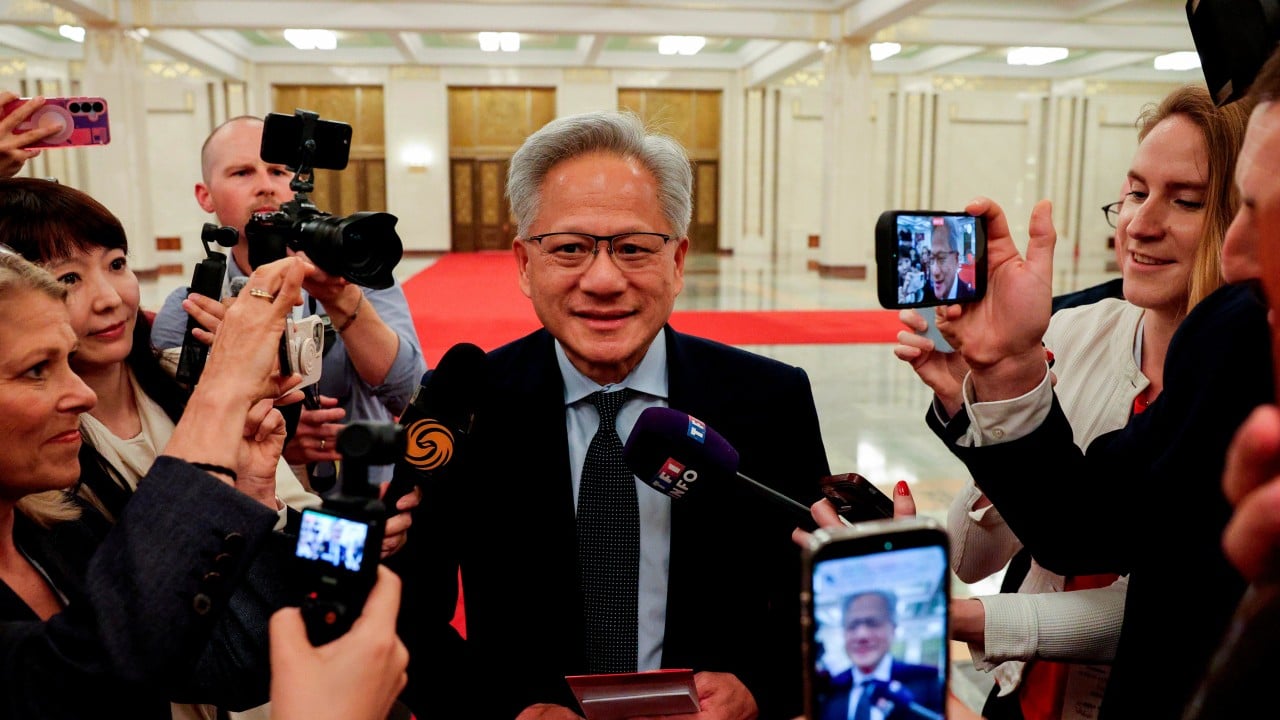
Most headlines treat Nvidia's investigation of CEO Jensen Huang like a closed chapter because the board reinstated him earlier this week. That's a massive misreading of what's happening in Santa Clara and Washington right now.
Huang is back in the corner office, yes. Yet the internal probe led by independent directors is still running, the Securities and Exchange Commission is digging into Nvidia's international sales disclosures, and three congressional committees are preparing to question Huang under oath in days. If you're watching Nvidia's stock price or tracking U.S. semiconductor export controls, you need to separate the tabloid drama from the actual corporate and national security risks. You might also find this connected coverage useful: Executive Social Graphs and State Intelligence Vectors in Semiconductor Leadership.
How the Nvidia Investigation Actually Started
The crisis broke into public view on November 8, 2026. Reports surfaced detailing an extramarital affair between Huang and Alice Huang, a former executive at Megaspeed International—a Singapore-based data center firm suspected of helping divert restricted AI chips into China.
U.S. intelligence officials had assessed that Chinese intelligence recruited Alice Huang, a claim Beijing officially denied. Within hours of the news breaking, Nvidia's board of directors announced an independent investigation into whether the company's co-founder had been targeted by a foreign intelligence operation. As highlighted in recent articles by The Next Web, the implications are significant.
Huang didn't deny the personal misconduct. He sent a blunt message to Nvidia employees admitting he was unfaithful to his wife, apologizing to his family, and pledging full cooperation with the board's review. At first, the company insisted Huang would stay on without interruption.
That stance lasted four days.
By November 12, additional reporting surfaced alleging Huang had also been involved in relationships with two Nvidia employees, including a vice president who reported directly to him. Facing intense boardroom pressure and a sinking share price, Huang resigned. Chief Financial Officer Colette Kress stepped in as interim CEO, and Board Chair Harvey Jones told investors during a November 17 earnings call that the board had no intention of bringing Huang back.
Six days later, the board reversed course completely.
Why the Board Reinstated Huang So Quickly
Corporate reversals of this speed almost never happen at multi-trillion-dollar public companies. To understand why Nvidia's directors changed their minds between November 17 and November 23, you have to look at two things: operational dependency and political intervention.
First, Nvidia has no real succession bench. Huang runs an unusually flat organization with roughly 60 direct reports. He delegates very little. Removing him didn't just create a PR headache; it ripped out the central nervous system of the world's dominant AI chipmaker during a massive infrastructure buildout.
Second, the White House stepped in. President Donald Trump publicly backed Huang, urged the board to reinstate him, and later told reporters he personally convinced directors to bring the founder back. Senior administration officials, including Attorney General Todd Blanche, assured the board that Huang was not the target of a Justice Department criminal investigation and that federal prosecutors held no evidence of unlawful conduct by the CEO. Vice President JD Vance echoed that position on November 25, stating Huang was under no criminal investigation and did not need a presidential pardon.
Armed with those assurances from Washington, the board voted unanimously on November 23 to restore Huang as president, CEO, and director.
The Separate Investigations That Haven't Gone Away
Here's where investors and casual observers get tripped up. Being cleared of personal criminal wrongdoing by the Justice Department does not mean the investigations surrounding Nvidia are over.
Right now, four distinct tracks of scrutiny remain active:
- The Independent Board Probe: Nvidia explicitly confirmed that its committee of independent directors is continuing its internal investigation into the foreign intelligence allegations. The board is also searching for a new Chief Compliance Officer and has formed a dedicated National Security and Export Control Oversight Committee.
- DOJ Chip-Smuggling Cases: While prosecutors cleared Huang personally, the Justice Department's criminal investigations into two major Nvidia clients—Megaspeed International and Super Micro Computer—are still active. Both firms face scrutiny over potential violations of U.S. export controls designed to keep advanced GPUs out of China.
- The SEC Accounting Inquiry: According to reporting from The Wall Street Journal and Reuters, the Securities and Exchange Commission has opened a civil probe into Nvidia. Regulators are examining whether Nvidia's financial disclosures misled investors after the company changed how it reports international chip sales and stopped breaking out revenue tied to Singapore.
- Congressional Interviews: Lawmakers aren't satisfied with a two-week internal review. The chairs of the House Select Committee on China, the House Intelligence Committee, and the House Foreign Affairs Committee issued a joint statement calling the board's rapid reinstatement insufficient. Both Huang and Nvidia General Counsel Tim Teter are scheduled for transcribed interviews before Congress on December 1 and December 2.
What About National Security and Trade Secrets?
Whenever a tech CEO is linked to an alleged foreign intelligence asset, the immediate fear is espionage—stolen chip blueprints, leaked CUDA source code, or compromised hardware designs.
So far, both Nvidia and federal officials say there's no evidence that proprietary technology or classified national security secrets were handed over. Intelligence assessments shared with Congress suggest Chinese intelligence may have surveilled Alice Huang during her relationship with the Nvidia chief, though officials haven't established that she actively passed company secrets to Beijing.
The real vulnerability isn't someone walking out the door with a USB drive full of Blackwell or Rubin schematics. It's commercial leverage and export-control workarounds.
According to Financial Times reporting, Alice Huang and a business partner pitched China-based investors in early 2025 on funding an Asian data center, claiming they would have no trouble securing Nvidia GPUs. In an era where access to compute clusters determines geopolitical power, preferential allocation of chips—or introductions to regional intermediaries like Megaspeed—carries massive strategic weight. Even if no laws were broken by Huang himself, the appearance that personal relationships intersected with gray-market chip distribution is exactly why congressional committees refuse to drop the issue.
Credit Ratings and Governance Risks for Investors
Market reaction to the scandal has been volatile. Nvidia shares tumbled during Huang's brief exit and remained choppy even after his return.
More telling than daily stock swings is how credit analysts view the governance fallout. S&P Global Ratings warned this week that Nvidia faces a potential credit rating downgrade within the next 90 days. While S&P noted any cut would likely be limited to a single notch, the agency flagged that ongoing regulatory probes and governance disclosures could damage Nvidia's reputation or future business prospects.
Think about what that means. A company sitting on tens of billions in cash and dominating the AI hardware market is staring down a credit warning—not because its chips stopped selling, but because its boardroom oversight failed to catch glaring conflicts of interest before they became front-page news.
Creating a National Security and Export Control Oversight Committee and hiring a Chief Compliance Officer are smart structural fixes. Still, governance rules only work if a board is willing to enforce them against a founder who commands cult-like loyalty inside the building and political backing from the Oval Office.
How to Track What Happens Next
If you follow Nvidia as an investor, tech analyst, or policy watcher, stop reacting to every anonymous leak and watch three specific milestones over the next few weeks:
- Read the December Congressional Summaries: Pay close attention to what emerges after Huang and Tim Teter sit for their transcribed interviews on December 1 and December 2. Watch for whether lawmakers pursue formal subpoenas or push new legislative restrictions on third-party data center resellers in Southeast Asia.
- Monitor SEC Filing Footnotes: Check Nvidia's upcoming 10-Q and 10-K filings for expanded legal proceedings disclosures. Specifically, look for updates on the SEC's inquiry into geographic revenue attribution and Singapore billing practices.
- Watch the Megaspeed and Super Micro Dockets: Court filings in the DOJ's export-control cases against Megaspeed and Super Micro will reveal far more about how restricted GPUs actually moved across borders than any corporate press release ever will.
Jensen Huang survived the immediate boardroom crisis and kept his job. Now comes the harder part: proving to regulators, credit agencies, and Congress that Nvidia's compliance controls are strong enough to match its market power.