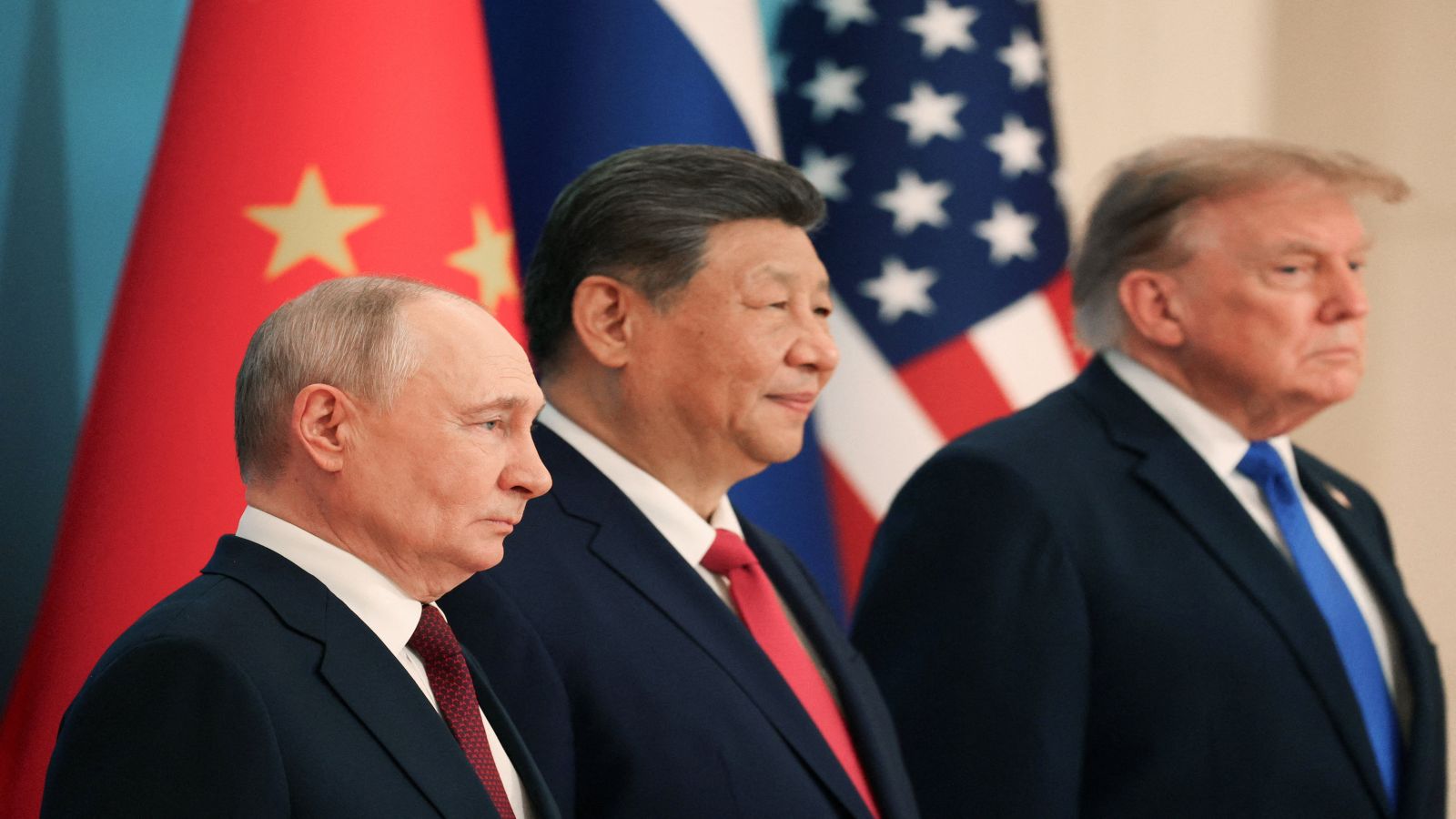
Donald Trump called it a "12 out of 10". German Chancellor Friedrich Merz dismissed it as a "photo op". When Donald Trump, Xi Jinping, and Vladimir Putin sat down together at Kylin Villa in Shenzhen on November 19, 2026, the conventional wisdom solidified before the ink on their joint statement even dried: great theater, zero substance.
That consensus misses the actual point of what happened in southern China.
Sure, the 90-minute closed-door meeting on the sidelines of the APEC summit didn't produce a sweeping treaty. It didn't end the war in Ukraine, and it didn't resolve nuclear tensions over Iran. If you're grading the Trump-Xi-Putin summit like a traditional diplomatic negotiation where leaders trade concrete concessions line by line, then yes—it looks empty.
I've watched international summits get misread like this for years. Analysts measure the text of a communiqué instead of looking at the structural shift happening right in front of the cameras. In Shenzhen, the choreography wasn't a distraction from the substance. The choreography was the substance.
Why the Shenzhen Trump-Xi-Putin Summit Happened Now
Context matters here. This wasn't just three strongmen deciding to grab dinner because they happened to be in the same hemisphere. Each leader walked into Kylin Villa facing immediate, heavy pressure at home and abroad, and each needed a specific political payoff that only the other two could provide.
Trump arrived in Asia fresh off a bruising domestic political cycle, eager to project himself as the indispensable global dealmaker who rejects "old school" diplomatic orthodoxy. In his opening remarks, he argued that refusing to talk solves nothing. For Trump, the sheer novelty of convening the leaders of the world's three largest military powers in one room—something not even Cold War presidents pulled off in a formal trilateral—was a political trophy in itself.
Xi Jinping had an entirely different calculation. By hosting the gathering on Chinese soil, Beijing positioned itself as the central convener of global politics. Look at the protocol details carefully. Xi personally greeted Trump at the airport in Shenzhen and sat beside him at the opening dinner, projecting parity between Washington and Beijing. Then, during the group photographs, Xi carefully balanced the room—placing Trump to his right (the traditional position of higher honor in Chinese protocol) before the gala dinner, and placing Putin in that exact spot for the final photo after the talks.
And then there's Putin. For the Russian president, simply sitting as an equal between the American and Chinese heads of state shattered years of Western efforts to isolate Moscow. Despite battlefield attrition, Western sanctions, and an active International Criminal Court arrest warrant, Putin walked out of Shenzhen looking like an indispensable pillar of a new multipolar order. He didn't have to give up a single inch of territory in Ukraine to get that validation.
Breaking Down the Four-Point Declaration Towards Peace
If you actually read the four-point "Declaration towards Peace" released after the 90-minute session, its brevity jumps right off the page. There are no binding timelines, no verification mechanisms, and no hard numbers. Here is what the three leaders actually put their names on:
- Nuclear risk reduction: The leaders reaffirmed that a nuclear war cannot be won and must never be fought, committing to dialogue on reducing nuclear risks and preventing proliferation.
- United Nations reform: All three pledged to preserve and reform the UN system, emphasizing international law and state consent.
- Global energy supply: In one of the few tangible economic nods, the statement outlined plans to boost the production and supply of refined petroleum products "for the benefit of all nations".
- Strategic communication: A general commitment to keep high-level channels open among Washington, Beijing, and Moscow.
Critics at think tanks like the Council on Foreign Relations (CFR) and the Center for Strategic and International Studies (CSIS) immediately pointed out what was missing. CFR President Michael Froman noted that optics clearly took precedence over hard policy deliverables. The communiqué doesn't mention Ukraine once. It says nothing about Iran's nuclear program. It avoids any mention of Taiwan or U.S. export controls on advanced semiconductors.
Yet dismissing the text completely misses a subtle shift in Beijing's posture. For years, China flatly refused to join any trilateral arms control discussions with Washington and Moscow, arguing that its nuclear arsenal was far smaller than theirs. With the last major U.S.-Russia arms control framework already lapsed, getting Xi to sign onto a trilateral pledge for nuclear risk dialogue—even without committing to formal arms reductions—breaks a long-standing diplomatic logjam. As CFR nuclear expert Erin Dumbacher pointed out, talking about reducing nuclear risks isn't the same as negotiating warhead caps, but getting Beijing into the room at all is a real change.
The Yalta 2.0 Fear Versus Reality
In the days leading up to November 19, European capitals were on edge. Diplomats in Berlin, Paris, and Kyiv worried openly about a "Yalta 2.0"—a modern replay of the 1945 conference where great powers carved up spheres of influence over the heads of smaller nations.
Those fears didn't come out of nowhere. Just days earlier, on November 10 and 11, U.S.-mediated Russia-Ukraine talks took place in Abu Dhabi with European officials kept away from the main negotiating table. When European leaders gathered in Berlin as the "Coalition of the Willing" on the very day of the Shenzhen summit, Chancellor Merz warned bluntly that a Yalta-style format couldn't bring lasting peace, repeating the mantra that nothing about Ukraine should be decided without Ukraine.
Honestly, the Yalta comparison was always overblown, and Chinese scholars like Fudan University's Wu Xinbo were right to push back on it. China had zero interest in helping Moscow and Washington redraw European borders in Shenzhen. Beijing's entire diplomatic brand relies on presenting itself as a defender of sovereignty and stability, especially to the Global South.
Still, Ukraine was discussed behind closed doors, and the mixed signals afterward show why European anxiety hasn't disappeared. Putin emerged from his bilateral and trilateral sessions claiming that Kyiv and Europe were "not ready" to compromise. Meanwhile, U.S. envoy Jared Kushner suggested that Putin was "comfortable" with NATO-style security guarantees for Ukraine and that Trump would relay European positions to Moscow. Nothing concrete moved on territory, and nobody traded away Kyiv in Shenzhen. What did happen is subtler: the summit normalized the idea that the world's three biggest military powers can huddle privately to set the broad parameters of global crises while traditional U.S. allies wait outside for a readout.
What Experts Missed About the Informal G3 Dynamic
Most commentary treats Shenzhen as a one-off spectacle. That's a mistake. Look at the calendar.
The G20 summit is scheduled for December 14–15, 2026, at Trump's Doral resort in Miami, and Trump has already extended an invitation to Putin despite European objections and his ICC warrant. If Trump, Xi, and Putin reconvene in Florida next month, Shenzhen won't look like an isolated photo op anymore. It will look like the birth of an informal "G3"—an ad-hoc steering committee of nuclear superpowers operating outside the G7, NATO, and existing multilateral institutions.
That prospect terrifies traditional foreign policy hands in Washington. Nine Democratic senators have already warned against trading American security alliances for high-profile photo opportunities. Even within Asia, U.S. allies are watching nervously. Japan's leadership left the broader APEC meetings without formal bilateral talks with Xi, underscoring how easily smaller and mid-sized powers get sidelined when Washington prioritizes big-power theatrics.
There's also a massive economic subtext beneath the friendly handshakes. Despite Trump calling Xi his "friend" and praising their "very special relationship," U.S.-China tech friction hasn't vanished. Strict enforcement of U.S. AI chip export controls remains a live wire. CFR's Rush Doshi and other Asia analysts have warned that Xi leaves Shenzhen believing he holds a stronger hand, which could embolden Beijing to tighten rare-earth or critical mineral supply chains if Washington pushes harder on semiconductors. Flattery at a banquet table doesn't rewrite industrial policy.
Three Concrete Tests to Watch Next
Forget the pundit scorecards arguing over whether the summit was a "12 out of 10" or a diplomatic failure. If you want to know whether the Shenzhen meeting actually mattered, ignore the speeches and track three measurable benchmarks over the next 30 days:
- Watch for named nuclear negotiators. A communiqué promising "dialogue" on nuclear risks means nothing without bureaucratic follow-through. Look for Washington, Beijing, and Moscow to announce an actual date, a neutral venue, and lead envoys for trilateral strategic stability talks before January. If no working group forms, that clause was pure window dressing.
- Track who sits in the room for the next Ukraine round. Watch whether European diplomats and Ukrainian officials are brought directly into the next U.S.-mediated negotiating session, or if Washington continues running parallel bilateral tracks with Moscow. That single detail will tell you whether the "G3" format is sidelining traditional alliances.
- Monitor the guest list in Miami. Keep your eye on the December 14–15 G20 summit in Florida. Whether Putin actually travels to Miami—and whether Trump stages a second trilateral sit-down at Doral—will confirm if Shenzhen was an anomaly or the permanent new template for great-power diplomacy.