You can't make this stuff up. For months, we've been told by the White House that Iran's military was essentially history. Done. Dusted. Wiped off the map.
If you tuned into any conservative news outlet or caught the president's social media posts since Operation Epic Fury kicked off back in February, the narrative was rock solid. The United States and Israel had supposedly achieved absolute dominance.
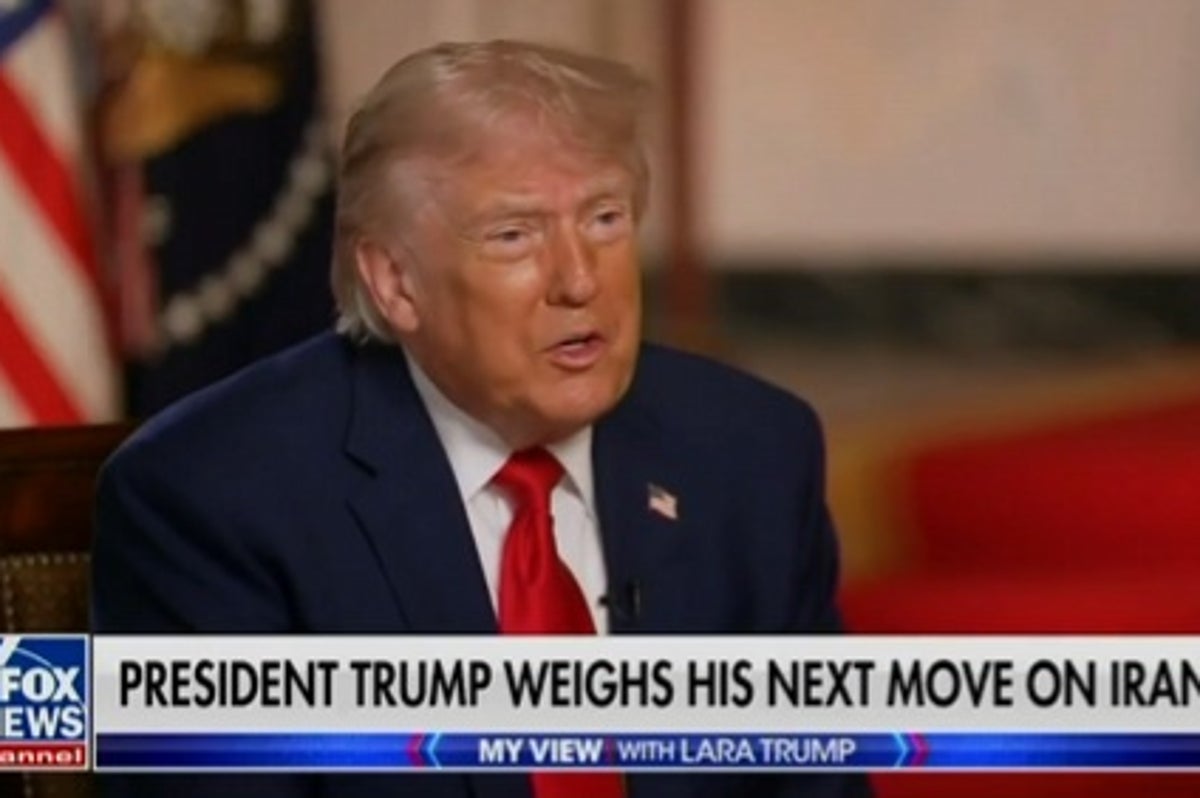
But then, Donald Trump sat down for a chat with his daughter-in-law Lara Trump on her Fox News program, and the script flipped entirely.
"We’ve actually left their military alone," Trump casually dropped during the interview.
Wait, what? Left them alone?
This is the exact same man who spent the last eight weeks boasting that Iran's navy, air force, and air defenses were "totally wiped out" and "literally obliterated." The whiplash is enough to give the entire defense establishment medical-grade concussions.
Let's look at what is actually happening behind the scenes, why the narrative changed overnight, and what it tells us about the mess that is the Third Gulf War.
The Receipts On The Bluster
Politicians stretch the truth, but this is a whole new level of rhetorical gymnastics. To understand how wild this new "left them alone" claim is, we have to look back at what Trump was saying just weeks ago.
Back in March, the administration was on a victory lap. Trump went on Truth Social and claimed the U.S. had "destroyed 100% of Iran’s military capability." He didn't stop there. During a Kennedy Center board meeting, he bragged that the Iranian air force and navy were "gone."
He even told a room full of kids at the White House in May that Iran's military capabilities were "completely destroyed."
The administration's own defense officials were out there trying to back up these massive claims with numbers. White House press briefers claimed Iranian ballistic missile attacks were down 90% and drone operations had plummeted by 95%. They painted a picture of a thoroughly broken adversary that couldn't fight back if it tried.
Then came the late-May reality check.
The Reality On The Ground
The problem with claiming you completely destroyed an enemy's military is that the enemy keeps shooting at you.
While the White House bragged about a total wipeout, the actual conflict told a much messier story. Yes, the initial joint U.S.-Israeli airstrikes killed high-ranking Iranian officials and pounded command structures. Pentagon estimates suggested somewhere between 160 to 190 Iranian missile launchers were knocked out.
But Iran is huge. Its military doctrine has spent decades preparing for exactly this type of asymmetrical warfare.
Even as Trump claimed total victory, Iran was still firing warning shots at U.S. warships in the Strait of Hormuz. They were still launching drones at commercial tankers, sending global oil prices spiking by 5% in a single afternoon. You don't manage to choke a vital global shipping lane if your entire military apparatus has been reduced to ash.
Independent defense analysts at institutions like the Brookings Institution were shouting into the wind for weeks, pointing out that Iran was heavily degraded but far from defeated. They weren't completely broken; they were just rationing their hardware and picking their battles.
Why The Narrative Shifted So Quickly
So why the sudden change in tone? Why go from "we obliterated them" to "we left them alone"?
It’s all about setting up an exit strategy for a war that has cost billions and brought the global economy to its knees.
The U.S. is currently staring down the barrel of a massive diplomatic shift in the Middle East. Rivals in the region, completely shocked by the chaos and the threat of a total regional collapse, have been aggressively pushing a peace deal brokered by Pakistan and Qatar. A two-week ceasefire already went into effect, and Trump is facing intense pressure from foreign leaders to accept a permanent arrangement that reopens the Strait of Hormuz and re-establishes nuclear talks.
If Trump admits that he tried to destroy Iran's military but failed to land a decisive knockout blow, he looks weak. That's a political nightmare for him.
But if he shifts the narrative and claims the U.S. chose to leave their military alone all along? Well, then the lack of total capitulation looks like a calculated strategic choice rather than a military stalemate. It allows the administration to frame a messy, compromised peace deal as a victory of American restraint rather than the result of a ground reality they couldn't fully control.
Reading Between The Lines
The lessons here are pretty clear for anyone trying to make sense of foreign policy theater.
First, never take battlefield assessments delivered during political interviews at face value. Military reality is measured in logistics, remaining operational hardware, and strategic leverage, not in prime-time TV soundbites.
Second, watch the regional allies. The fact that Gulf states and regional players moved to negotiate an outline for peace behind the scenes shows that they knew Iran's capabilities were still a major threat, regardless of the victory laps being taken in Washington.
Moving forward, expect the rhetoric to stay fluid. The administration needs to sell a diplomatic resolution to a war that cost billions and achieved highly volatile results. If that means pretending they deliberately spared the very military forces they claimed to have destroyed a few weeks ago, that's exactly what they'll do. Keep your eyes on the shipping lanes and the actual diplomatic text, because the television commentary is just noise.
,webp/023/461/650/v2/2560x1440.233.webp)