Most headlines treat the Starshield speed limit in Ukraine like a routine internet slowdown, as if soldiers are just waiting an extra second for a map to load. That misses the entire point.
When a terminal traveling faster than 161 kilometers per hour (100 mph) loses its satellite lock, the connection doesn't buffer—it dies completely. In November 2026, Ukrainian President Volodymyr Zelenskyy warned that renewed caps on SpaceX's military-grade satellite network were actively crippling Ukraine's air defenses right as winter strikes ramped up. Following reports from Defense Minister Yevhenii Khmara and Commander-in-Chief Mykhailo Drapatyi, Kyiv confirmed that terminals operating over Russian-occupied Ukrainian territories were once again hitting that exact 161 kph ceiling.
You can't catch a jet-powered drone when your interceptor goes blind at highway speeds.
Why a 161 kph Cutoff Grounds Interceptor Drones
People hear "speed limit" and immediately think of bandwidth—megabits per second, download rates, or video latency. In satellite warfare, though, speed means physical velocity over the ground.
Modern battlefield terminals rely on phased-array antennas that electronically steer beams toward low-Earth orbit satellites moving across the sky at roughly 27,000 kilometers per hour. Firmware inside those terminals uses built-in GPS chips to track how fast the dish itself is moving. Cross the programmed velocity threshold, and the software severs the link.
Standard civilian Starlink units have long enforced strict velocity caps to stop buyers from bolting consumer dishes onto guided missiles or long-range suicide drones. That's literally why Starshield exists. Built by SpaceX specifically for national security and defense clients, the hardened system strips away commercial restrictions so aircraft, high-speed vessels, and unmanned aerial vehicles can maintain continuous data links.
Here's why that distinction matters on the ground in late 2026.
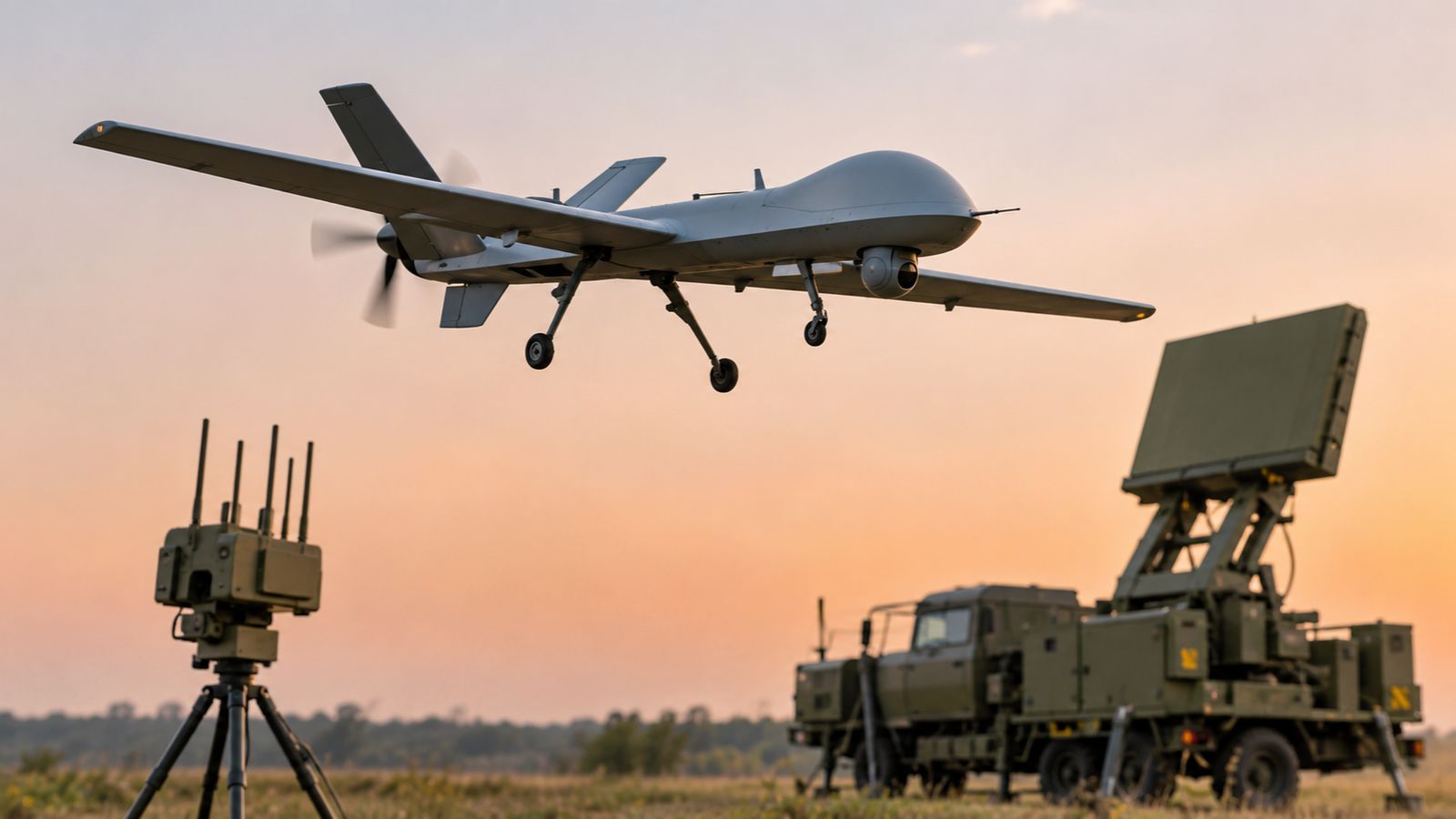
Ukraine's stocks of traditional surface-to-air interceptor missiles have been stretched thin after years of relentless bombardment. To protect power substations and cities without burning million-dollar missiles on cheap targets, Ukrainian engineers built a doctrine around high-speed interceptor drones.
- The threat: Russia increasingly relies on fast, upgraded Shahed-type unmanned aircraft—including jet-powered variants—that scream toward Ukrainian energy infrastructure well above 160 kph.
- The counter: A Ukrainian interceptor drone needs a high-speed, low-latency video and command feed to chase, track, and ram an inbound target mid-air.
- The failure point: The moment an interceptor crosses into occupied territory or accelerates past 161 kph to close the distance, its Starshield link drops. The operator loses sight, and the Russian drone flies straight through toward the grid.
Zelenskyy stated plainly on November 18 that Russian strikes had already slipped past Ukrainian defenses because interceptors couldn't reach pursuit speeds without losing connectivity. When your defensive shield depends on catching fast targets before they reach civilian power plants, a 100 mph geofenced speed cap isn't a minor technical hiccup. It's a fatal blind spot.
Starshield vs Starlink Where the Confusion Starts
If you follow defence news on social media, you've probably watched commentators argue in circles over whether Elon Musk or the Pentagon flipped the switch. Part of that chaos comes from people using "Starlink" as a catch-all nickname for every SpaceX terminal in the war zone.
They aren't the same system.
Starlink is the commercial consumer network. Throughout 2026, terminals operating under standard registration rules in Ukraine faced tight velocity limits—often around 60 to 90 kph—specifically to prevent unauthorized weaponization. Starshield, by contrast, is procured under U.S. government contracts and operates with different encryption, payload hosting, and authorized high-velocity profiles for military platforms.
Yet in practice, the boundary gets messy fast.
In October 2026, Ukrainian forces first reported that Starshield connections were cutting out above 160 kph right as Russia launched massive aerial barrages. Ukrainian defense officials scrambled to get the whitelists restored, and by October 24, military sources indicated high-speed operations had been brought back online. Then, less than three weeks later in mid-November, the exact same 161 kph barrier snapped back into place.
When journalists pressed both sides on who ordered the November slowdown, nobody wanted their fingerprints on it.
Elon Musk argued publicly that Starshield is owned and controlled by the U.S. government, insisting that usage limits and speed thresholds rest with the American military and the White House. He also accused Zelenskyy of being untruthful and claimed Kyiv wanted unrestricted connectivity for offensive strikes. Meanwhile, Washington officials maintained they didn't know who imposed the specific restrictions, leaving Kyiv stuck between a private aerospace contractor and its largest military backer.
Honestly, the finger-pointing reveals a structural flaw in modern warfare. When a sovereign nation's air defense depends on software parameters controlled remotely by an allied government and a private contractor, accountability vanishes the moment a switch gets flipped.
Geofencing Occupied Territory Creates a Political Trap
Look closer at where the November 2026 speed limits triggered, and the technical explanation starts falling apart.
According to sources inside Ukraine's Defense Ministry, terminals operating inside Ukrainian-controlled territory didn't experience the 161 kph cutoff. The restriction kicked in specifically along the front line and over temporarily Russian-occupied Ukrainian territory.
Think about what geofencing a speed cap to occupied territory actually means.
First, it proves the restriction isn't a random satellite constellation glitch or solar storm interference. Software engineers have to deliberately draw polygon boundaries on a digital map and apply distinct firmware rules inside those coordinates.
Second, it backs up Zelenskyy's warning about the diplomatic danger baked into those lines. In remarks released on November 14, he pointed out that treating occupied regions differently inside satellite control software implicitly treats those territories as separate from the rest of Ukraine.
Third, the timing raised serious eyebrows in Kyiv and Brussels. Reporting from the Financial Times noted that senior Ukrainian officials suspected the restrictions were timed to pressure Kyiv during peace negotiations with Russia held in Abu Dhabi on November 10 and 11. While those suspicions haven't been independently proven, the pattern is hard to ignore:
- October 14: Starshield cuts out above 160 kph during heavy Russian aerial strikes.
- October 24: High-speed access is restored after intense diplomatic and military outreach.
- November 10–11: Talks take place in Abu Dhabi.
- November 12–18: Zelenskyy reports five-plus days of renewed 161 kph limits over occupied zones, right ahead of winter grid attacks.
Whether the primary motive in Washington or Hawthorne was preventing long-range deep strikes inside Russia or nudging negotiators at the table, the tactical fallout landed squarely on Ukrainian air-defense crews. You can't intercept an incoming Shahed before it reaches a power plant if your drone loses its signal the second it crosses the front line at pursuit speed.
What Defence Planners and Analysts Should Watch Next
If you're tracking military tech, European security, or commercial space policy, this standoff isn't a one-off headline. It's a case study in single-vendor dependency during high-intensity conflict.
As the Center for Strategic and International Studies (CSIS) has highlighted in its analysis of Ukraine's satellite access, relying on a single commercial-military architecture creates massive operational leverage for whoever controls the network's backend. No matter how brilliant a drone brigade is on the ground, a remote configuration update can ground its fastest aircraft overnight.
To track how this plays out—and avoid getting misled by noisy social media claims—focus on four concrete indicators over the coming weeks:
- Watch European multi-orbit alternatives: Keep an eye on accelerated deployments of OneWeb terminals, SES O3b mPOWER links, and European Union GOVSATCOM capacity in Ukraine. None match SpaceX's sheer low-Earth orbit density yet, but militaries across NATO are actively funding backup constellations specifically to eliminate single-point kill switches.
- Track terminal whitelisting and firmware updates: Look for official statements from Ukraine's Ministry of Defense rather than viral X threads. When high-speed locks are restored, Kyiv typically confirms it through defense briefings once field units verify telemetry above 161 kph.
- Monitor autonomy upgrades on Ukrainian interceptors: When satellite links become unreliable near the front line, engineering teams shift toward onboard terminal guidance—using edge AI and optical tracking so an interceptor drone can lock onto a Shahed's heat or visual signature and finish the intercept even if its satellite link drops.
- Separate offensive strike rules from air-defense corridors: Watch how Pentagon and SpaceX policy language evolves around "defensive interception." Until contractual definitions explicitly carve out high-speed counter-UAS operations near occupied zones, every future diplomatic flare-up will carry the risk of another sudden speed cap.
Treat any satellite network controlled outside a nation's direct chain of command as a contested utility, not a guaranteed right—and build redundant guidance systems into your hardware before the next winter offensive hits.