The tear gas hasn't even cleared from the boulevards of Paris, yet pundits are already calling this just another seasonal French strike. They're wrong.
As France heads into its third consecutive weekend of mass demonstrations, something fundamentally different is happening on the streets of Western Europe. This isn't the traditional union-led march where workers demand an extra week of vacation or a slight bump in minimum wage. Look closely at the crowds blocking intersections in Lyon, Berlin, Madrid, and Brussels. They're twenty-somethings. Students. Gig-economy workers who don't even have a union card to burn. And they aren't just asking for tweaks to the system—they're demanding a complete rewrite of an economic contract that left them behind before they even graduated.
If you've been watching the news coverage, you've probably seen the dramatic footage of burning barricades and riot police clashing with masked demonstrators. That's the easy story for television networks to sell. It gets clicks. It looks chaotic. Yet focusing solely on the street clashes misses the real story entirely. Why are young Europeans suddenly coordinating across borders with a level of precision we haven't seen since the anti-austerity movements of the early 2010s?
The Real Triggers Behind France's Third Weekend of Protests
To understand why France is once again the epicenter of European unrest, you have to look beyond a single piece of legislation. Media outlets love pointing to one spark—whether it's a controversial pension adjustment, a sudden hike in university tuition fees, or proposed cuts to housing subsidies. Those are just matches dropped into a room already filled with gas.
France has a long, proud history of taking to the streets when the government overreaches. From May 1968 to the Yellow Vests (Gilets Jaunes) movement that paralyzed the country in 2018 and 2019, street mobilization is practically a recognized branch of the French legislative process. When parliament bypasses debate using constitutional tools like Article 49.3, citizens treat the pavement as their voting booth.
This third weekend of mobilization feels heavier than previous flare-ups because the grievances are structural. Young adults in France and across the Eurozone are staring down a brutal mathematical reality. Entry-level salaries have stagnated in real terms while rent in major hubs like Paris, Amsterdam, and Dublin eats up more than half of a typical paycheck. Add persistent inflation on basic groceries and energy, plus aggressive austerity budgets aimed at curbing national deficits, and you get a generation with very little left to lose.
When you tell a 22-year-old graduate that they need to tighten their belt to pay down sovereign debt they had no hand in creating, while watching corporate profits hit record highs, anger isn't surprising. It's inevitable.
Why Youth-Led Rallies Are Jumping Borders Across Europe
Borders don't mean much when your primary organizing tool lives in your pocket. One of the biggest mistakes older political analysts make is assuming these demonstrations are isolated national squabbles. They aren't.
A student in Bologna watches a livestream of police kettling protesters in Nantes. Within hours, that footage is translated, subtitled, and circulating on encrypted messaging apps and TikTok feeds in Germany and Spain. The tactics spread just as fast as the memes. You see the exact same visual language—umbrellas used as shields, coordinated blockades of logistics hubs, and decentralized leadership structures designed specifically so police can't arrest a single "ringleader" to kill the momentum.
Look at the common threads tying these European rallies together right now:
- The Housing Crisis: Whether it's the Wohnungsnot in Berlin or skyrocketing short-term rental conversions in Lisbon and Barcelona, young people are being priced out of the cities where the jobs actually exist.
- Climate Hypocrisy: Many of these same activists spent their teenage years marching with Fridays for Future. Watching European governments roll back green transition targets or subsidize fossil fuels to appease short-term industrial lobbying feels like a direct betrayal.
- Precarious Labor: Fixed-term contracts, unpaid internships, and algorithm-driven gig work have replaced stable career ladders. You can't get a mortgage on a three-month contract.
- Pension and Welfare Squeezed Budgets: Across aging European democracies, governments are scrambling to fund healthcare and retirement for massive baby-boomer populations by cutting public services, education grants, and transit subsidies that younger citizens rely on daily.
It's a shared generational squeeze. A French student protesting university cuts and a Spanish twenty-something marching against youth unemployment might speak different languages, yet they're fighting the exact same economic corner they've been backed into.
What Legacy Media Gets Wrong About Who Is Marching
Turn on any mainstream broadcast during a weekend protest and you'll hear the same tired framing. Commentators inevitably divide the crowd into two neat buckets: "peaceful, idealistic students" and "violent outside agitators" (often labeled as black blocs or casseurs).
Having spent years tracking European civil unrest and analyzing crowd dynamics on the ground, I can tell you that this binary is wildly misleading. Reality on the street is far messier.
First, the demographic makeup isn't just privileged university kids skipping Friday classes. Walk through the crowd at Place de la République or along the march routes in Marseille, and you'll find vocational apprentices, young hospital orderlies, delivery riders, and high schoolers from working-class suburbs (banlieues). These groups rarely marched together twenty years ago. Historically, French student unions and suburban youth movements kept their distance, divided by class and policing disparities. Today, economic pressure and shared frustration over heavy-handed riot tactics have pushed them into the same columns.
Second, the "decentralized" nature of these rallies confuses journalists who want a spokesperson to put on a panel show. Unlike the powerful CGT or CFDT trade unions, which negotiate march routes with the police prefecture days in advance and employ trained marshals in high-visibility vests, youth-led movements operate horizontally. Decisions happen via open assemblies and rapid-fire polls on Telegram channels. That lack of hierarchy makes them unpredictable. Police commanders hate it because there's nobody to negotiate with when tensions spike at dusk. Politicians hate it because there's nobody to co-opt with a seat at a ministry roundtable.
The Policing Dilemma and the Escalation Cycle
You can't talk about protests in France without talking about how the state responds to them. French crowd-control doctrine relies heavily on aggressive containment, tear gas, stun grenades, and specialized mobile units like the BRAV-M (motorized brigades that have drawn sharp criticism from human rights watchdogs, including Amnesty International and the Council of Europe).
Here's how the escalation cycle actually works in practice. A march starts peacefully at 2:00 PM. Thousands of people walk, chant, hold cardboard signs, and play music. By 4:30 PM, a small group at the front smashes a bank window or sets a trash bin on fire. Instead of isolating those specific individuals, riot police respond by firing tear gas canisters directly into the middle of the dense, largely peaceful crowd, trapping families and students in narrow side streets.
What happens next? Moderate protesters who came out to hold a sign suddenly find themselves choking on CS gas and running from baton charges. Nothing radicalizes a 19-year-old faster than getting hit with a flash-bang grenade while trying to walk home. By the following weekend, those same moderate protesters come back wearing swim goggles, respirators, and black hoodies—not because they want to burn down Paris, but because they expect to be gassed.
Authorities call this a rise in radicalization. On the ground, it's basic self-preservation turning into a self-fulfilling prophecy.
Economic Fallout vs. Political Reality
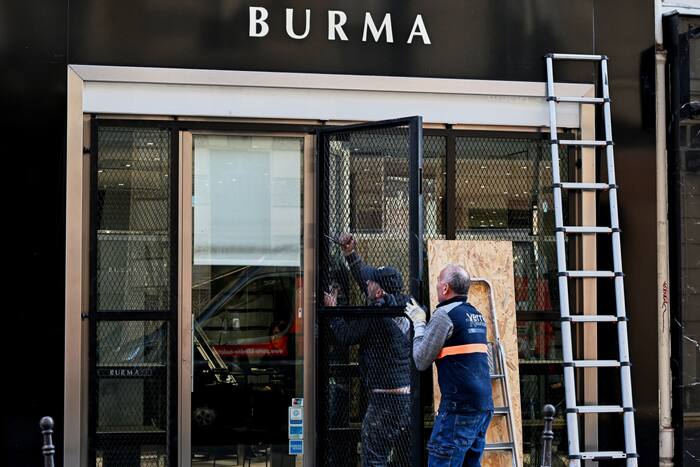
Business associations and tourism boards are already sounding the alarm about what a third weekend of disruption means for Europe's economy. Storefronts along major Parisian avenues stay boarded up on Saturdays. Rail networks experience rolling bottlenecks. Foreign tourists cancel weekend city breaks when they see viral videos of smoke billowing near iconic landmarks.
Critics argue these protests are self-defeating. Why damage local businesses and disrupt public transit when the economy is already sluggish? It's a fair question, and plenty of older taxpayers—even those sympathetic to young people's struggles—lose patience when they can't get to work or their neighborhood shop gets vandalized.
Yet look at the political track record in Europe over the last decade. Polite petitions don't stop unpopular laws. Quiet letter-writing campaigns don't force emergency cabinet meetings. When the French government scrapped the proposed First Employment Contract (CPE) back in 2006, it wasn't because of a well-reasoned op-ed in Le Monde. It was because millions of students and workers shut down universities and streets for weeks until the political cost of passing the bill outweighed the cost of backing down.
Young Europeans know this history. They've watched peaceful climate marches get applauded by politicians who then went right back to approving new pipeline infrastructure. Disruption isn't an accidental byproduct of their protests—it's the leverage. If business as usual is locking them out of a stable future, stopping business as usual feels like the only rational move left.
How to Read the Next Phase of European Unrest
If you're trying to follow where this goes over the coming weeks—whether you're traveling in Europe, watching European markets, or just trying to make sense of the headlines—stop looking at raw crowd size estimates. Police prefectures and protest organizers always argue over numbers anyway, with police claiming 50,000 and unions claiming 300,000. Both numbers are political theater.
Instead, watch three specific indicators that actually signal whether a movement is dying out or about to force real government concessions:
- Cross-Sector Union Convergence: Youth rallies generate energy and headlines, while traditional labor unions hold the keys to the economic choke points—refineries, ports, power grids, and rail lines. Watch whether major federations decide to call coordinated general strikes alongside the weekend youth marches. When students and refinery workers block the same roundabouts, governments start sweating.
- University and High School Blockades: Weekend marches are easy for a government to wait out; people go back to class on Monday. When students begin occupying campuses and high schools (lycées) mid-week, forcing administrators to cancel exams and disrupting daily routines for working parents, the political pressure multiplies overnight.
- Cracks in the Ruling Coalition: Pay attention to backbench lawmakers in France, Germany, and neighboring capitals. Prime ministers can ignore protesters outside their windows for weeks, yet the moment centrist MPs start worrying about losing their seats in local elections, compromises suddenly appear on the table.
Keep an eye on municipal transit alerts and local prefecture announcements before booking weekend travel through major French or European city centers, as sudden route changes and station closures often happen with less than two hours' notice. Beyond the immediate travel headaches, pay attention to the demands coming out of these assemblies—because the economic frustrations fueling Europe's youth today rarely stay confined to one continent for long.