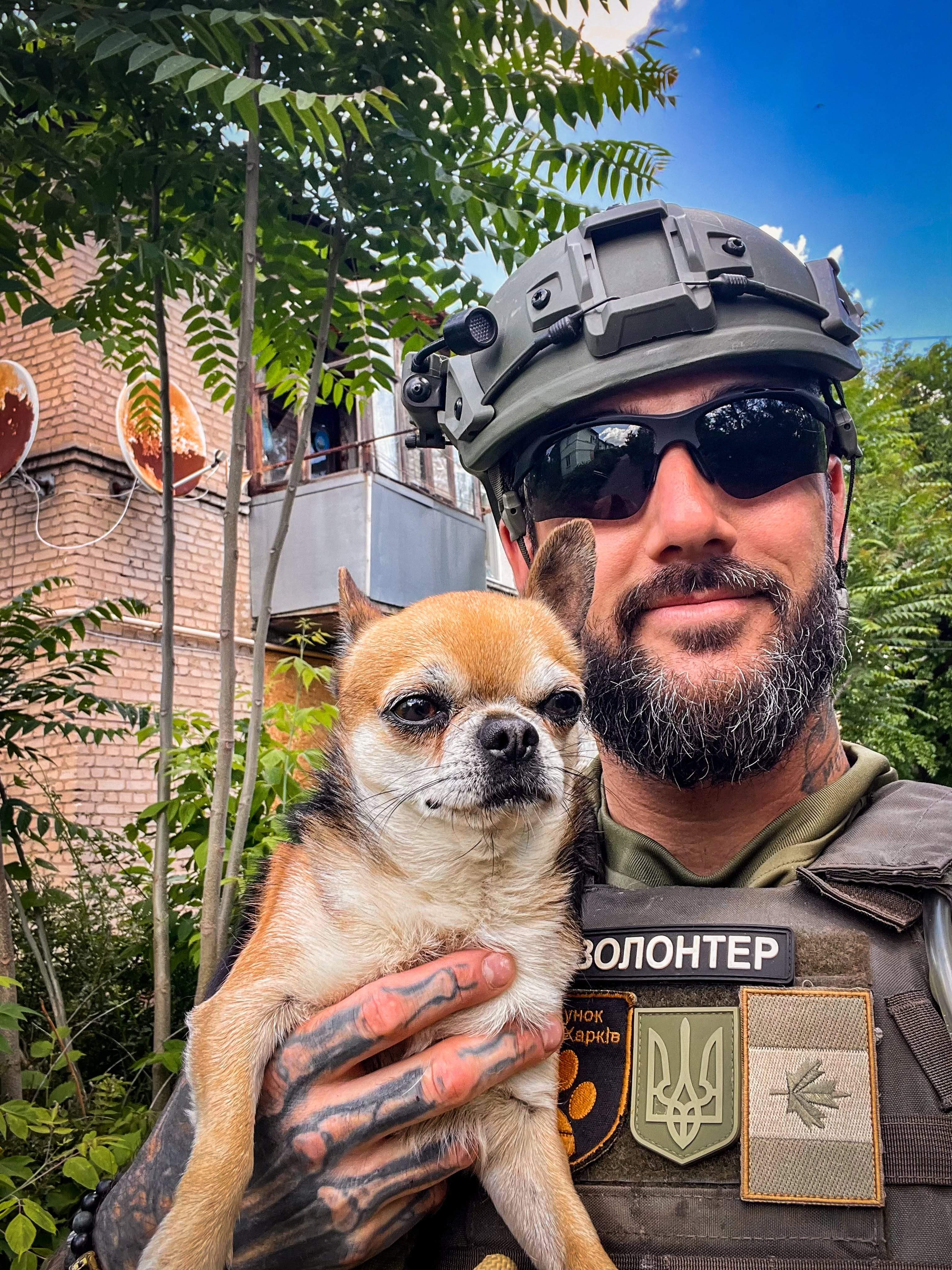
Jesse Adams didn't die in a trench with a rifle. He died behind a shattered windshield in eastern Ukraine, trying to haul abandoned pets and farm animals out of a drone zone.
If you only read the quick headlines from late October 2026, you might think the Sooke, B.C. resident was just another well-meaning volunteer who wandered into a war zone unprepared. That couldn't be further from the truth. Adams, who founded the RainCoast Dog Rescue Society back in 2014, spent more than a decade running toward situations most animal welfare organizations won't touch.
On Sunday, October 25, 2026, while volunteering alongside Animal Rescue Kharkiv (ARK) near Kramatorsk in the Donbas region, an FPV drone slammed into the windshield of his vehicle. Doctors at a nearby hospital fought to keep him alive through resuscitation and emergency surgery. They couldn't.
Why a Vancouver Island Rescuer Kept Returning to the Front Lines
People always ask the same question when a civilian humanitarian dies in a conflict zone. Why go back?
Adams had already completed at least four separate missions to Ukraine since Russia launched its full-scale invasion in February 2022. He wasn't there for social media clout or a weekend photo op. According to the Ukrainian-Canadian Cultural Centre of Vancouver Island, his own Ukrainian heritage played a huge role in pulling him toward the region.
More than heritage, though, it was his wiring. Longtime friend Luisa Skolik told reporters that Adams always said he'd rather die doing what he believed in than live a quiet life doing nothing. Honestly, if you look at his track record, that wasn't empty bravado.
Before Ukraine, Adams worked with UK-based charity War Paws to help a local veterinary clinic evacuate hundreds of dogs and cats out of Kabul, Afghanistan in 2021. Back in 2013, when SPCA International's Lori Kalef needed someone to take on a severely traumatized, aggressive rescue dog pulled out of Iraq, she was given Jesse's name. He showed up two hours later, said "no problem," and adopted the dog himself.
He didn't see a line between helping people and helping animals. In war zones, those two things are tangled together. Elderly residents in towns like Kramatorsk and Druzhkivka routinely refuse to evacuate shelling zones because rescue buses won't take their dogs, cats, or livestock. By extracting the animals, teams like ARK and volunteers like Adams actually make it possible for stubborn, terrified civilians to leave.
The Reality of Evacuating Animals Under Drone Fire
Most people picture animal rescue in a disaster zone as scooping a stray terrier off a quiet street. The reality in eastern Ukraine in 2026 is brutal, loud, and mechanically unforgiving.
Just two days before he was killed, on October 23, Adams posted an update from a mission near Kramatorsk—one of the hottest combat axes in the entire war. He had never evacuated livestock before. Yet there he was, loading two cows, three calves, a pig, two dogs, and six cats for a family fleeing the front, while ducks and chickens rode inside the car.
Mid-mission, an explosion shook the area. A drone struck a house just down the road from his crew, and a second drone buzzed directly overhead while they scrambled for cover.
"Thankfully, we were not chosen as a target in this moment," Adams wrote in what became one of his final public posts. "We were able to survive another day in this war."
Forty-eight hours later, his luck ran out.
Modern warfare has completely altered the math for humanitarian workers. According to the Aid Worker Security Database, 907 aid workers were killed, injured, or kidnapped globally in 2025—a grim record the United Nations attributed largely to the proliferation of armed drones. Of those 907 casualties, 350 died. FPV drones don't distinguish between an armored troop carrier and a beat-up van hauling crates of terrified cats.
The Work He Built on Vancouver Island
To understand why the B.C. rescue community is so rattled, you have to look at what Adams was doing when he wasn't dodging shrapnel halfway across the globe.
On Vancouver Island, Adams wasn't sitting in a cushy administrative office. He was the guy driving into rural and remote Indigenous communities to run spay-and-neuter clinics, deliver supplies, and build trust where larger, bureaucratic shelters struggled to gain traction. Emma Hamill, a regional manager with the B.C. SPCA, pointed out that his real superpower was reaching vulnerable people alongside their pets.
Even while actively working front-line extractions in Ukraine, Adams was still fielding phone calls and coordinating adoptions for RainCoast Dog Rescue back home.
Penny Stone, executive director of the Victoria Humane Society, called him a "force of nature" and the "go-to guy" whenever an animal was too big, too scared, or too aggressive for standard shelters. And when he placed a dog, he didn't just hand over a leash and walk away. Langford resident Chadalee Howie, who adopted her dog Winston from Adams in 2024, recalled that he personally paid for her first bag of puppy food and handed her a grocery gift certificate to help her out.
Across his career in B.C., Ukraine, Afghanistan, and beyond, friends and colleagues estimate Adams helped evacuate roughly 1,000 animals from Ukraine alone, alongside thousands more saved at home—including an astonishing extraction of nine lions from an abandoned zoo in Odesa.
What Happens When Independent Volunteers Operate Without a Safety Net
There's a hard truth buried inside this tragedy that few people want to talk about. Independent rescuers operate almost entirely outside institutional safety nets.
When Adams traveled to Ukraine, he did so against official Global Affairs Canada advisories, which warn against all travel to the country and explicitly state that consular assistance in active combat zones is severely limited. More importantly, volunteers heading abroad rarely have the insurance, evacuation guarantees, or workers' compensation protections that staff at massive international NGOs rely on. In British Columbia, for instance, unpaid volunteers generally fall outside WorkSafeBC coverage.
That independence is exactly why grassroots rescuers like Adams can move fast. They don't wait six months for a board committee to approve a risk assessment while animals starve in bombed-out basements. They pack a bag, buy a plane ticket, and show up.
The flip side is devastating. When something goes wrong, there is no massive corporate endowment to absorb the shock. Savannah Eanes, a friend who adopted through RainCoast, summed up the fear ripple-effect hitting Vancouver Island right now—losing Adams means losing the "beating heart" of the organization's fundraising, advocacy, and daily grit.
How You Can Actually Support His Legacy Right Now
Grief on social media fades fast, usually right around the next news cycle. If you want Jesse Adams' work to outlive him, skip the empty platitudes and put practical support behind the infrastructure he left behind.
- Back Animal Rescue Kharkiv (ARK) directly. Front-line extraction teams in eastern Ukraine burn through vehicles, fuel, veterinary trauma kits, and reinforced transport crates at an alarming rate. Small donations keep their vans moving into cities like Kramatorsk and Kharkiv where residents are still waiting to get out.
- Step up for RainCoast Dog Rescue Society. Grassroots rescues survive on foster homes, not just cash. If you live on Vancouver Island or the B.C. Lower Mainland, applying to foster a high-needs dog or donating toward rural spay-and-neuter supplies directly lightens the load on a team that just lost its founder.
- Adopt the "unadoptable" dogs. Adams built his reputation taking on the difficult cases—the aggressive, traumatized, and overlooked animals that sit in kennels for months. Next time you're looking for a pet, ask your local shelter about the dog everyone else walks past.
Jesse Adams proved that one stubborn person with a truck and a refusal to look away can save thousands of lives. The hardest part now is making sure the work doesn't stop with him.
For a closer look at how friends and colleagues are remembering his work on the front lines, watch B.C. animal rescuer killed on the frontlines in Ukraine.


