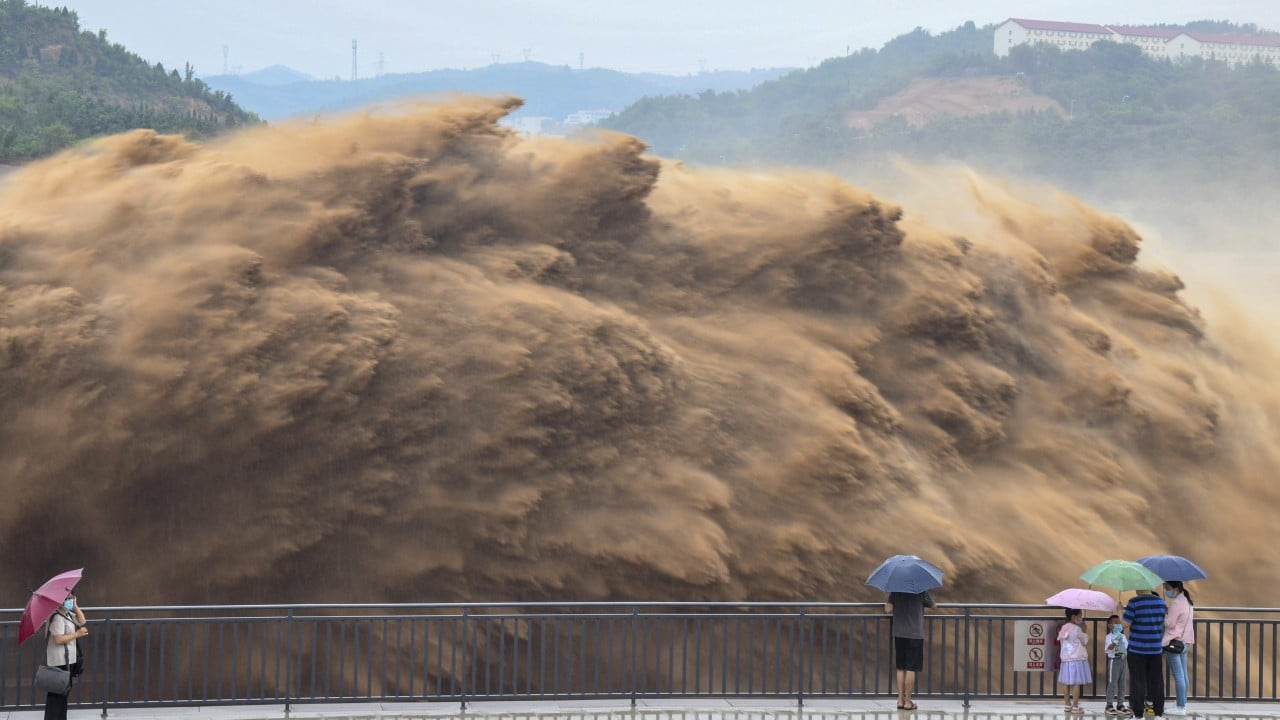
Subsea fiber-optic cables carry up to 99 percent of intercontinental digital traffic, making them the literal nervous system of global commerce. Yet this multi-billion dollar infrastructure rests entirely unprotected on the ocean floor, exposed to catastrophic kinetic failures driven by submarine landslides and self-accelerating gravity flows. Historically, maritime engineers treated these massive, mud-laden supercurrents—known as turbidity currents—as rare, high-energy anomalies triggered exclusively by major seismic events or extreme coastal storms along steep continental shelves.
A foundational mechanics study led by researchers at Tsinghua University and published in the Proceedings of the National Academy of Sciences completely upends this safety paradigm. The research proves that self-accelerating turbidity currents do not require extreme slopes or catastrophic triggers to ignite. Instead, they can form, gain momentum, and sustain erosive velocity in low-gradient, gentle environments previously classified as zero-risk zones. By deriving a universal hydrodynamic threshold based on sediment settling speed, fluid velocity, and boundary layer shear stress, the study demonstrates that the physical conditions required for cable-wrecking flows are fundamentally more common than industrial infrastructure models assume.
The Triad of Turbidity Dynamics
To quantify the structural risk to underwater infrastructure, the behavior of a turbidity current must be broken down into three distinct operational phases. The danger lies not in the initial movement of water, but in the transition from a passive mudflow into a self-sustaining kinetic weapon.
- Phase 1: Initiation (The Sediment Inversion): A local disturbance—such as deltaic deposition, localized slope failure, or hydraulic discharge—suspends a critical mass of fine-grained sediment into the water column. This sediment increases the bulk density of the localized fluid relative to the surrounding ambient water.
- Phase 2: Ignition (The Autocatalytic Loop): As gravity pulls this denser, turbid fluid down even a minimal incline, the fluid exerts shear stress on the seabed. If this shear stress exceeds the threshold required to erode the underlying bed material, the flow entrains more sediment. This added mass increases the fluid density difference, which in turn drives higher downslope velocity, creating a runaway feedback loop known as ignition.
- Phase 3: Runaway Propagation: Once ignited, the current transforms into a high-density underflow that travels hundreds of kilometers across abyssal plains. It acts as an underwater bulldozer, exerting extreme hydrodynamic drag and abrasive wear on any physical structures in its path.
The historical benchmark for this phenomenon occurred during the 1929 Grand Banks earthquake off Newfoundland, where a seismically induced turbidity current traveled at speeds exceeding 20 meters per second, systematically snapping 12 transatlantic telegraph cables in sequential order. The Tsinghua-led research demonstrates that this exact same mechanical destruction can occur without an earthquake trigger, developing silently in seemingly stable maritime environments.
The Mathematical Breakdown of Self-Acceleration
The core breakthrough of the new framework is the mathematical formulation of the ignition boundary. The model replaces vague qualitative risk assessments with a rigorous physics-based limit. The stability of a sediment-laden gravity flow depends on a delicate balance between two opposing force vectors: the downward gravitational force driving the fluid along an incline and the friction-induced turbulent energy keeping particles suspended.
The structural breakdown of this balance is governed by a dimensionless cost function. If the rate of sediment entrainment ($E_s$) exceeds the deposition rate ($D_s$), the flow ignites. The deposition rate is functionally defined by the equation:
$$D_s = C_b \cdot w_s$$
Where $C_b$ represents the near-bed sediment concentration and $w_s$ is the particle settling velocity.
Conversely, sediment entrainment is a non-linear function of the friction velocity ($u_*$) and the fluid's turbulent kinetic energy:
$$E_s = f\left(\frac{u_*}{w_s}\right)$$
In traditional engineering models, reaching a high enough friction velocity ($u_*$) to exceed the settling velocity ($w_s$) required a steep slope angle ($\theta > 3^\circ$). The Tsinghua framework proves that the boundary layer physics are far more sensitive. On ultra-shallow slopes ($\theta < 0.5^\circ$), fine-grained sediments with exceptionally low settling velocities lower the overall kinetic energy threshold required for ignition.
Once the velocity ratio crosses this universal physical threshold, the net sediment flux becomes positive. The current gains density, accelerates, and maintains structural integrity across vast distances.
Industrial Implications for Global Routing and Redundancy
The discovery that turbidity currents ignite in low-energy environments directly challenges the current risk mitigation strategies deployed by telecommunications consortia, state-owned enterprises, and cloud infrastructure providers. Subsea cable routing has historically prioritized bypassing steep submarine canyons and active seismic fracture zones. The reality that flat, sedimentary basins can host self-accelerating flows introduces a critical blind spot in asset protection.
This vulnerability creates a compounding economic bottleneck due to three systemic constraints within the maritime industry.
The Repair Capacity Deficit
The global fleet of dedicated cable repair ships is small and highly specialized. If a single regional turbidity event across a sedimentary basin causes simultaneous multi-cable faults, the repair queue quickly stretches from days into months. This structural lag forces nations into prolonged periods of digital isolation or severe bandwidth throttling.
The Licensing and Geopolitical Bottleneck
Repair operations do not occur in a regulatory vacuum. When a cable breaks within disputed maritime boundaries—such as the South China Sea—the deployment of a repair vessel requires complex security clearances and administrative permits from coastal states. Historical precedents show that states frequently weaponize these bureaucratic requirements, delaying foreign repair vessels for weeks under the guise of maritime safety regulations, which compounds the financial losses of an outage.
The Alternative Infrastructure Deficit
While low-Earth orbit (LEO) satellite constellations and terrestrial microwave relays are frequently highlighted as redundant systems, they lack the physical capacity to replace subsea fiber optics. A standard fiber pair carries tens of terabits of data per second; a satellite network operates in gigabits. Consequently, any prolonged cable outage forces a severe prioritization of data, paralyzing financial markets and cloud operations.
Engineering the Next Generation of Subsea Networks
To survive a maritime environment now recognized as dynamically hostile, the subsea telecommunications industry must abandon static layout paradigms and adopt an active, structural defense strategy.
- Dynamic Hydrodynamic Route Modeling: Cable routing algorithms must be re-engineered to ingest real-time bathymetric data, localized sediment core analysis, and the new universal ignition threshold equations. Cable paths must be mapped away from areas where the combination of loose silt and ambient currents approach the critical fluid velocity ratio, regardless of whether the slope is flat.
- Acoustic and Fiber-Optic Early Warning Systems: Modern subsea cables must utilize Distributed Acoustic Sensing (DAS) technologies. By repurposing dark fibers within the cable jacket to detect the specific, high-frequency acoustic signatures of an approaching turbidity current, operators can gain advance warning. While this cannot stop physical impact, it allows automated network protocols to reroute critical data traffic through unaffected ocean basins before the physical link snaps.
- Mechanical Armoring and Variable Burial Depths: The standard practice of burying cables only in shallow coastal waters to protect against fishing anchors must be expanded. In deep-water basins identified as susceptible to low-slope ignition, cables must be double-armored with high-tensile steel sheathing and buried deep within the bedrock rather than resting loosely on the seabed surface.
The strategic play for network operators is no longer about finding the shortest path between two landmasses; it is about securing network centrality through calculated physical survival. Operators that continue to rely on obsolete slope-based risk models face catastrophic, unpredictable infrastructure losses. The future of global data sovereignty belongs to those who design networks to withstand the fundamental, hyper-common physics of the deep ocean floor.