We have grown dangerously casual about miracles.
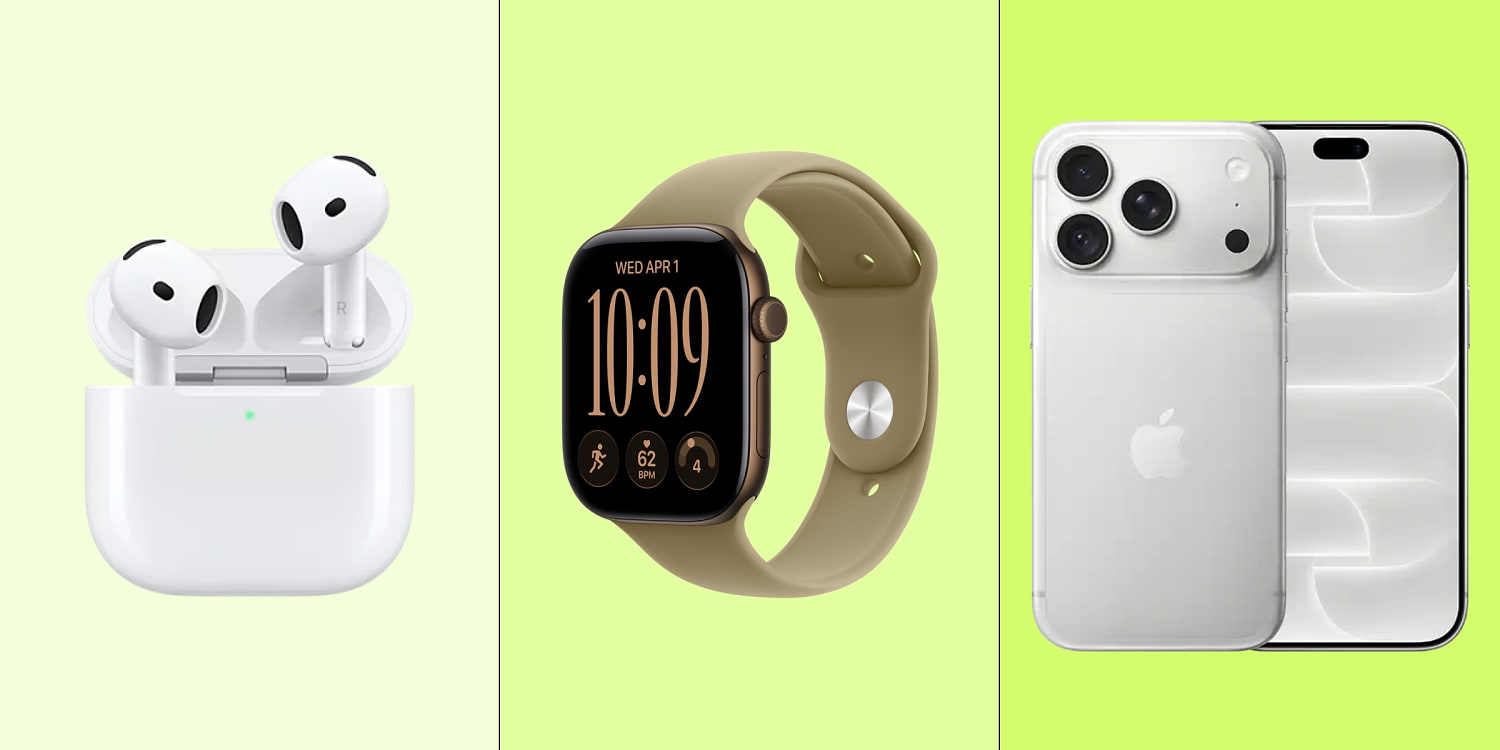
Think about the metal slab resting on your desk, tucked into your coat pocket, or glowing faintly beside your coffee cup right now. It knows your face. It measures your heartbeat. It holds the photographs of people who have left this earth, the voice messages of children who now speak in bass instead of treble, and the accumulated panic of every deadline you ever missed. It is a vessel of ghosts and GPS coordinates. And yet, when Apple releases a fresh batch of them—a new iPhone, an updated pair of AirPods, a watch that hums against the wrist—we respond with the collective fatigue of people watching a rerun.
Another year. Another keynote. Another set of incremental numbers.
Except beneath the marketing gloss and the predictable cycle of skepticism lies a quieter, more profound truth about what these objects are actually trying to achieve. They are trying to disappear. The best technology does not demand our awe; it demands less and less of our friction.
Consider a hypothetical woman named Elena. She is thirty-four, an architect living in a city where the construction noise never quite stops, and she carries a low-grade, perpetual anxiety about missing something important. Her phone is her tether to a demanding firm, her elderly father across the country, and a chaotic schedule that requires three calendars to reconcile. When she drops her previous-generation phone, cracking its screen into a spiderweb of unusable glass, she is forced to upgrade. She is not looking for a revolution. She just wants her life back without interruption.
What she finds when she unboxes the new iPhone is not a sci-fi prop. It is a refinement of weight and light.
The immediate physical change is subtle, almost deceptive. The titanium frame feels different against the palm—cooler, lighter, less like a weapon and more like a tool. For years, we chased bigness. We wanted larger screens to consume more content, more video, more noise. But human hands have not evolved to accommodate the ambitions of silicon valley. The engineers finally relented. They trimmed the borders, shaved millimeters off the edges, and gave the display room to breathe without turning the device into a brick.
Elena notices this first in the dark. She checks the time at three in the morning. The screen does not flood the bedroom with a blinding, sun-like glare; it whispers the numbers in a deep, OLED black that respects the darkness. That is not a specification sheet bullet point. That is an accommodation of human frailty.
Then there is the camera, which has long been marketed as a playground for professional filmmakers who shoot blockbuster movies on a lark. But for Elena, the camera's true evolution is psychological. It is the abolition of hesitation.
We have all experienced the hollow ache of missing a fleeting moment because our phone took two seconds to process HDR or struggled to focus in a dim restaurant. The new sensor stack processes light differently, capturing shadow and highlight simultaneously with zero shutter lag. When Elena visits her father the following weekend and he laughs at a joke she makes—a rare, full-bellied sound she hasn't heard in months—she lifts the phone and presses the glass. The image is crisp, unblurred, and emotionally accurate. It caught the crinkle at the corner of his eye before grief or age could flatten it.
We talk about megapixels as if they are abstract math. They are not. They are memory insurance.
Stitched into this ecosystem are the AirPods. For a long time, wireless earbuds felt like fragile accessories destined to be lost down subway grates or chewed by dogs. They were status symbols that required constant charging anxiety.
The update here is less about audio fidelity—though the drivers are remarkably clean—and more about biological integration. The acoustic architecture has shifted to accommodate more ear shapes comfortably, sealing out the pneumatic hiss of the subway without resorting to the vacuum-pressure discomfort of older silicone tips. But the real magic happens in the software background, where adaptive audio shifts between active noise cancellation and transparency mode based on environmental hazards.
Elena walks through the city with them in. When a cyclist runs a red light behind her, the earbuds instantly let the warning shout through. They do not isolate her from the world; they curate her survival within it. They create a pocket of stillness in a city designed to wear down her nervous system.
And then rests the watch. The aluminum or titanium circle on the wrist.
Historically, smartwatches suffered from an identity crisis. They wanted to be tiny smartphones, bombarding the wearer with emails, Slack pings, and news alerts, effectively doubling the digital leash. Wearing one felt like having an anxious assistant tapping your shoulder every ninety seconds.
The philosophy has changed. The new watch does not want your attention. It wants your health.
The internal sensors have grown more sensitive, capable of tracking subtle shifts in blood oxygen, resting heart rate variability, and sleep architecture with clinical precision. For Elena, who ignores her body until it forces her to stop with a migraine, the watch becomes a silent mirror. It notices the creeping elevation in her resting heart rate during the three days before a major project deadline. It sends a gentle haptic pulse—not an alarm, but a tap that feels like a finger touching the wrist—suggesting a breathing cycle.
She pauses. She takes two minutes to breathe. The numbers on the screen stabilize.
This is the invisible stakes of modern consumer hardware. We are not buying status anymore. We are buying regulation. We are buying small, engineered boundaries against a world that wants to consume every waking second of our focus.
Critics will point out, correctly, that these upgrades are iterative. They are not the leap from the rotary phone to the smartphone. They are the tenth coat of lacquer on an already polished piece of furniture. The battery life is slightly better. The processor handles local machine learning tasks without needing to bounce data to a distant server, preserving privacy. The materials are recycled.
These are dry, standard facts. But humanity does not live in spreadsheets. Humanity lives in the spaces between the charges.
When Elena puts her phone down on the charger at night, she is not thinking about neural engines or transistor widths. She is thinking about the fact that her phone survived a day of heavy navigation, captured a genuine smile from her father, kept her safe from a traffic collision through intelligent audio pass-through, and reminded her to breathe when her body was screaming for rest.
The upgrades matter because our lives are heavy, and the tools we carry must become lighter to compensate.
We live downstream from centuries of human ingenuity, holding devices that possess more computational power than the systems that guided Apollo 11, yet we use them to look at photographs of cats and argue about transit schedules. That dissonance can make us cynical. It can make us dismissive of the annual ritual of announcement events.
Yet every so often, the engineers get it right. They remove a gram of weight. They clear up a muddy frequency. They make the battery last through the red-eye flight. They build a moat around our personal data so privacy is the default, not an opt-in luxury.
We do not need to rewrite the laws of physics every twelve months to make progress meaningful. Sometimes, progress is just making the things we love a little less intrusive, a little more reliable, and a little more capable of holding the fragile weight of our days.
The metal slab in your pocket is not just a gadget. It is the diary of your modern life. And it just learned how to listen a little closer.