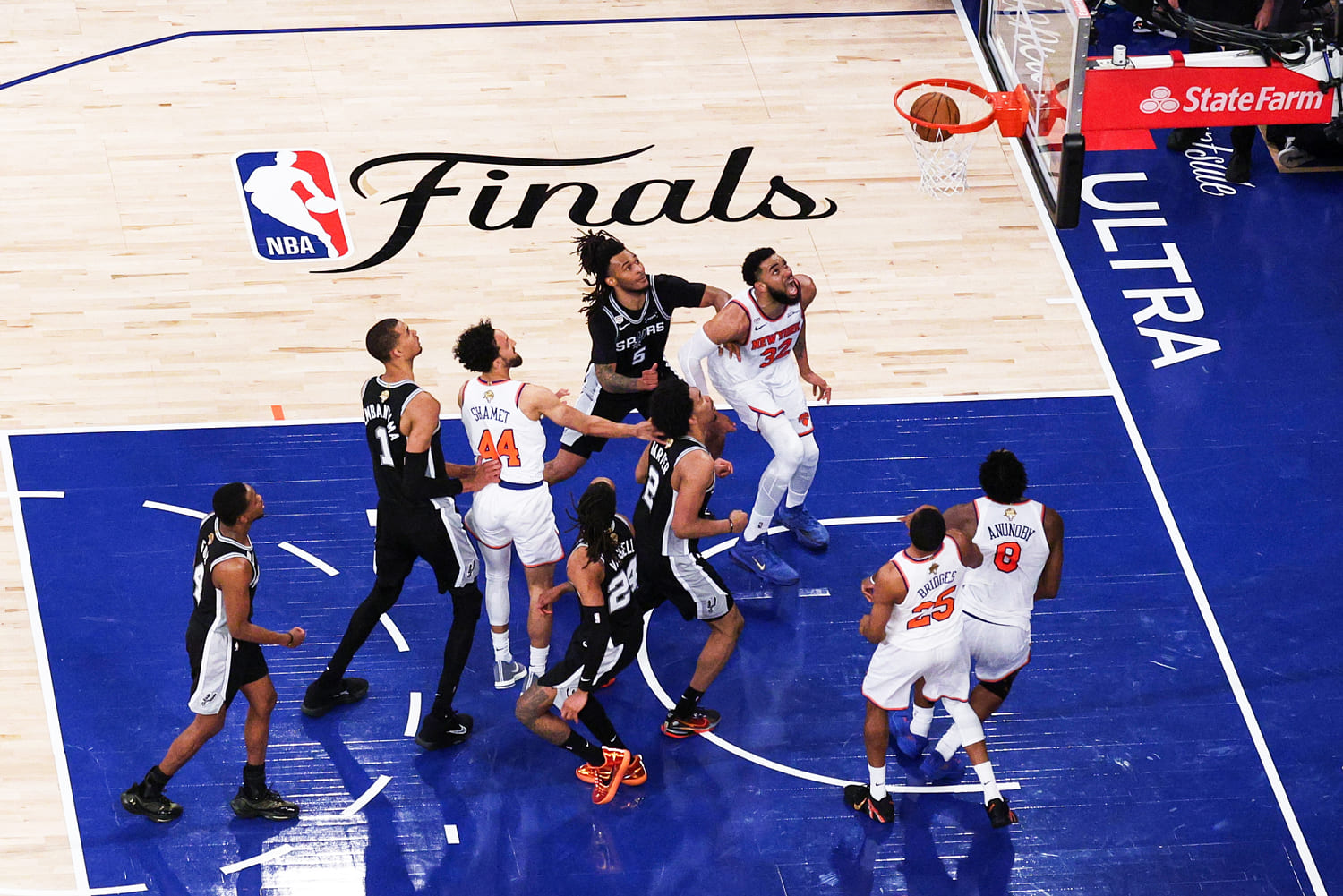
Box scores are lazy. If you only look at the final score of a basketball game, you miss the actual story of how that game felt to watch. This is especially true right now, as the New York Knicks and San Antonio Spurs battle it out on the sport's biggest stage.
If you just glance at the raw statistics or the point differentials, you might think some of these games were comfortable wins. You'd be entirely wrong. The numbers on the surface are lying to you, hiding a brutal, possession-by-possession chess match where a single bounced pass or a missed box-out completely shifts the momentum.
To understand what's actually happening out there, we have to look past the final buzzer and dissect how these games are won in the dirt.
The Mirage of the Final Margin
We've grown obsessed with point differential. It's a great regular-season metric to filter out the pretenders from the contenders. For example, the Oklahoma City Thunder put up a historic +11.15 margin of victory during the regular season, proving their baseline dominance before falling to the Spurs in the Western Conference Finals.
But in a seven-game series at the highest level, final margins become a complete mirage.
Think about how an NBA game actually ends. Team A is up by three points with forty seconds left. Team B is forced to foul to prolong the game. Team A hits their free throws. Team B rushes down the floor, forces up a contested, desperate three-pointer, misses, and has to foul again. By the time the final whistle blows, Team A wins by eight or nine points.
On paper, an eight-point win looks solid. It feels like control. In reality, that game was an absolute dogfight that could have swung on a single whistle with two minutes left on the clock. The final margin doesn't reflect the baseline anxiety of the fans or the sheer exhaustion of the players.
Clutch Time Tells the Real Story
If you want the truth, look at the data from the fourth quarter, specifically when the game is within five points in the final five minutes. That's what the league defines as clutch time.
During these high-stakes stretches, the game changes entirely. The fast-paced, high-flying offense we see in November vanishes. Teams stop running their secondary options. The game slows down to a crawl, turning into an isolated battle of wills.
Take Jalen Brunson, who earned Eastern Conference MVP status by carrying the Knicks through a dominant postseason run. His ability to navigate tight spaces in the paint becomes the entire New York offense when the game tightens up. On the other side, Victor Wembanyama presents a defensive problem that alters every single tactical decision in the closing minutes.
When you look at the percentage of possessions that end in a contested shot or a turnover in the final minutes of these games, it skyrockets compared to the first three quarters. Teams aren't getting clean looks. Every single point is a massive chore.
The Late Game Adjustments You Miss
When games are this close, coaching isn't about the grand philosophy you installed during training camp. It's about tiny, immediate tweaks made on a dry-erase board during a twenty-second timeout.
- Defensive Switching: Teams are completely abandoning their standard drop coverages. They're forcing star players to beat them over the top, daring role players to make career-defining shots.
- Hunting Weakness: If a player has a slight defensive deficiency or is carrying four fouls, they will be brought into every single pick-and-roll action until the coach is forced to sub them out.
- The Possession Game: In a blowout, a live-ball turnover is annoying. In a one-point game in June, a live-ball turnover is a death sentence. The team that wins the offensive rebounding battle and limits their own mistakes takes the series.
The 2026 playoffs have already shown a massive shift back toward physical, paint-centric basketball. Three-point attempts are slightly down across the league, and the physical battle on the glass has taken over. When the perimeter shots stop falling under the pressure of the Finals, the team that can generate second-chance points wins the night.
How to Watch the Rest of the Series
Stop looking at the scoreboard during the second quarter and assuming you know how the night will end. Instead, watch the specific tactical battles that dictate whether a game stays close or blows open.
Track how many times a team gets a stop but fails to secure the defensive rebound. Watch how fatigue impacts free-throw shooting in the final four minutes. Monitor how coaches use their remaining timeouts to advance the ball or stall an opponent's momentum.
The data tells us these teams are historically evenly matched when it matters most. The final scores might mask the tension, but if you're paying attention to the details, you know every single game is balanced on a knife-edge.