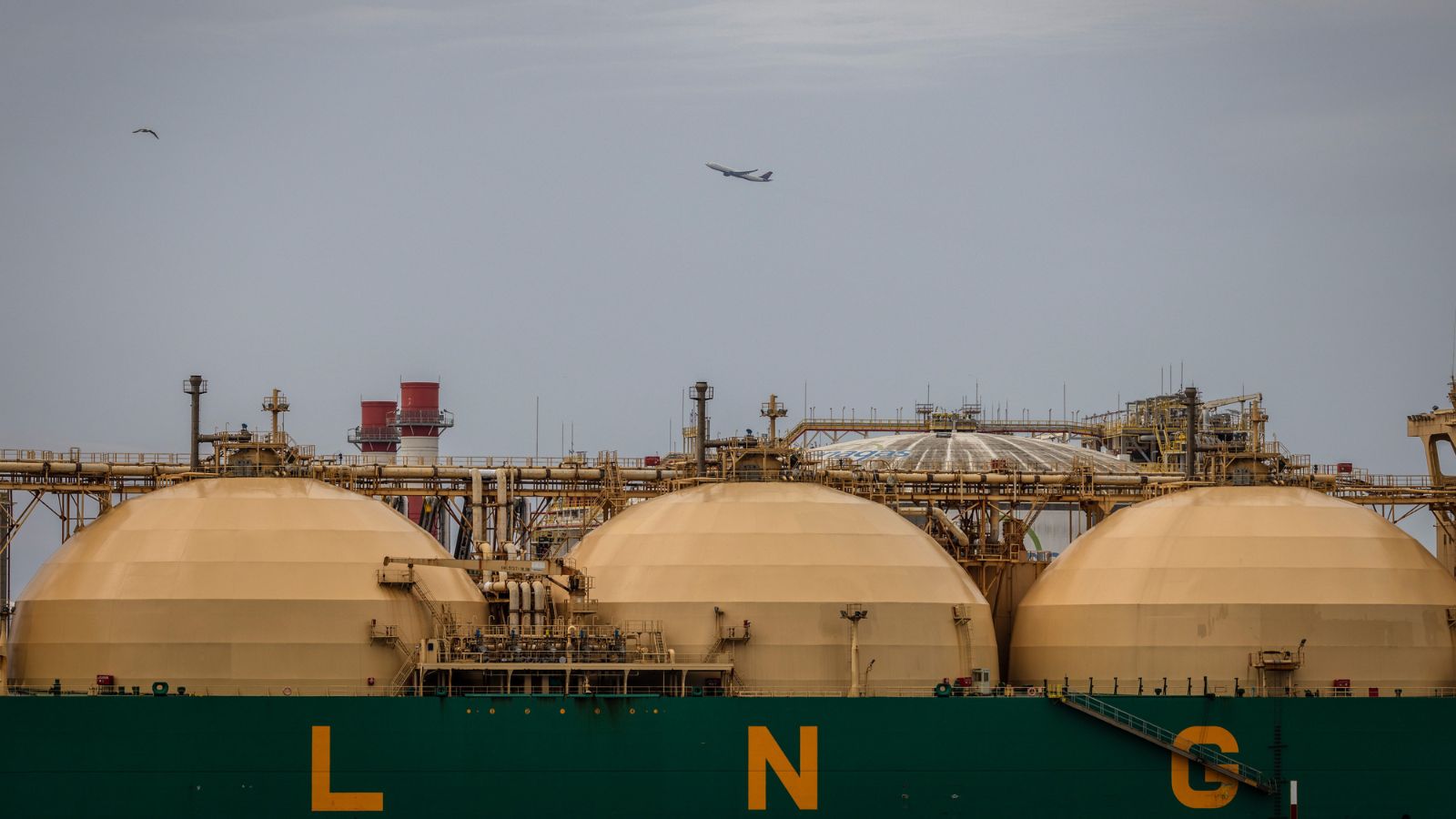
Everyone in European energy media is applauding Poland's Orlen right now. They see a state-backed champion flexing its muscles, slapping a Force Majeure claim on QatarEnergy, and walking away from a long-term liquefied natural gas contract because ships failed to dock on schedule.
That narrative is pure fiction.
If you believe Orlen terminated this deal simply because Qatar missed a few delivery windows, you do not understand how physical gas markets work. You are falling for corporate public relations dressed up as supply chain discipline. In reality, walking away from a sovereign Middle Eastern gas supplier in the middle of a multi-year structural tightening of global LNG capacity is not a victory. It is a high-stakes gamble that trades long-term price insulation for short-term legal theater.
The Lazy Consensus Around Delivery Failures
Standard trade press coverage treats LNG contracts like Amazon Prime deliveries. The box did not show up on Tuesday, so the buyer cancels the subscription and demands a refund.
Physical cargo logistics do not work that way.
Long-term Sale and Purchase Agreements (SPAs) in the LNG sector are built on thick layers of commercial shock absorbers. When geopolitical chaos—like Red Sea shipping disruptions or terminal maintenance bottlenecks—hits the water, suppliers rarely just throw up their hands and default. They invoke diversion clauses. They swap cargoes in the Atlantic basin. They buy replacement volumes on the spot market to fulfill their contractual obligations, eating the financial spread themselves rather than handing the buyer a legal termination trigger.
When a buyer actually pulls the trigger on contract termination over non-delivery, two things are happening behind closed doors. First, the contractual price formula has drifted out of the money compared to the buyer's alternative portfolio options. Second, the buyer believes they have better leverage in a different procurement channel—usually American Henry Hub-linked volumes or pipeline imports via the Baltic Pipe.
I have sat across the table during multi-billion-dollar gas arbitration disputes in London and Geneva. Companies rarely blow up a 20-year supply relationship over operational hiccups unless the underlying economics of the deal have already soured for one of the parties. Calling it a "delivery failure" is the polite, legally sanitized excuse. It is the corporate equivalent of saying "irreconcilable differences" in a divorce filing when the real issue is the bank account.
What the Market Actually Sees
To understand why Orlen's move is so risky, you have to look at the structural reality of European gas security.
For years, Central and Eastern Europe fought tooth and nail to break free from Gazprom's pipeline monopoly. Poland led that charge. They built the Świnoujście LNG terminal. They constructed the Baltic Pipe to tap Norwegian continental shelf gas. They signed massive, multi-decade off-take agreements with US exporters like Venture Global and Cheniere, alongside their foundational Qatari contracts.
That diversification strategy worked brilliantly—until it created an over-contracted portfolio problem.
Let us look at the mechanics of Poland's gas balance:
- Domestic Demand Destruction: High energy prices across Europe between 2022 and 2024 permanently shaved industrial gas consumption. Chemical plants, fertilizer producers, and heavy manufacturers curtailed output, and much of that demand never came back.
- The US LNG Wave: Massive liquefaction capacity along the US Gulf Coast is ramping up, flooding global markets with flexible, destination-free cargoes priced against Henry Hub rather than oil-indexed formulas.
- Storage Saturation: European underground gas storage facilities have repeatedly hit capacity ceilings ahead of winter heating seasons, leaving utilities scrambling to park excess molecules.
When your storage caverns are full and your industrial base is burning less gas, a rigid, oil-indexed take-or-pay contract from the Persian Gulf stops looking like energy security. It starts looking like a financial anchor.
By using QatarEnergy's delivery failures as a legal exit ramp, Orlen cleared expensive, inflexible volume off its books without paying massive cancellation penalties. On a quarterly balance sheet, that looks like genius.
On a ten-year risk horizon, it is playing Russian roulette with your grid.
The Myth of Endless American Supply
The prevailing wisdom in Warsaw and Brussels is that US LNG will always be there to backstop European demand. That assumption ignores three brutal realities of the American energy sector.
First, US LNG projects are not sovereign utilities; they are debt-financed infrastructure plays run by private equity and public corporations. When construction costs spike or regulatory hurdles delay commissioning—a chronic issue across Gulf Coast terminals—developers routinely delay commercial operation dates. Buyers expecting cheap, reliable US molecules often find themselves waiting years while buying expensive spot cargoes in the interim.
Second, US cargoes are destination-flexible. That is a double-edged sword. While Orlen enjoys the ability to resell excess US cargoes into Asia when European prices drop, those exact same US producers have zero loyalty to European buyers when Asian utilities bid up the Japan-Korea Marker (JKM) during a brutal winter cold snap. Gas follows the highest netback. Always.
Third, relying heavily on a single export corridor—the US Gulf Coast—exposes European buyers to concentrated weather and regulatory risks. One Category 5 hurricane sweeping through Sabine Pass or Cameron Parish can knock out a massive chunk of global liquefaction capacity overnight. Qatari production, sitting safely in the Persian Gulf with the lowest upstream lifting costs on planet Earth, operates on an entirely different risk profile.
By severing ties with Doha, Orlen traded away geographic and pricing diversity for heavier exposure to North American Henry Hub dynamics and Gulf Coast hurricane seasons.
Dismantling the "Spot Market Is Cheaper" Fallacy
If you talk to junior traders or read mainstream financial commentary, you will hear a common refrain: "Why lock into rigid long-term contracts when spot LNG is trading at a discount?"
That question reveals a complete amnesia regarding commodity supercycles.
Spot markets are wonderful when supply exceeds demand. They are an absolute slaughterhouse when a single major export facility trips offline or a polar vortex parks over Northern Europe and Northeast Asia simultaneously.
Imagine a scenario where a cold winter in 2027 coincides with an unplanned outage at a major Australian or American liquefaction train. Within 72 hours, European TTF prices and Asian JKM prices enter a bidding war. Utilities without rock-solid, priority long-term contracts get pushed to the back of the queue. They are forced to buy marginal cargoes at ruinous prices, blowing through their working capital and triggering government bailouts.
QatarEnergy is expanding its North Field production to push capacity toward 142 million tonnes per annum by the end of the decade. They possess the scale, the balance sheet, and the sovereign backing to dominate global LNG pricing for the next thirty years. Burning bridges with the world's lowest-cost producer over near-term shipping friction is the exact opposite of strategic foresight.
The Arbitration Trap Nobody Mentions
Terminating a long-term LNG SPA does not mean the two parties shake hands and walk away. It triggers years of grueling, multi-million-dollar international arbitration.
Contractual disputes over Force Majeure and non-delivery are legal minefields. QatarEnergy will argue that shipping disruptions, security threats in maritime chokepoints, or force majeure events upstream excused their delayed arrivals. Orlen will argue that QatarEnergy failed to exercise reasonable endeavors to source alternative cargoes to meet its delivery schedule.
Here is the ugly truth about LNG arbitration that corporate press releases never mention:
- Legal Costs Are Astronomical: Specialized energy arbitration teams in London charge upwards of $1,500 an hour. A full merits hearing with expert witnesses, maritime logistics analysts, and quantum economists easily burns $15 million to $30 million in legal fees alone.
- Commercial Paralysis: While two energy giants are locked in arbitration, every other commercial touchpoint freezes. Joint ventures, short-term swap agreements, and future tender participation vanish. Orlen is effectively blacklisted from Doha's future expansion rounds until the legal dust settles.
- Unpredictable Outcomes: Tribunals rarely award a total knockout victory. More often than not, arbitrators split the baby—finding that some missed cargoes were excused by Force Majeure while others constituted a breach, resulting in a messy financial offset that satisfies nobody.
Even if Orlen wins a damages award three years from now, they have permanently lost a tier-one physical supplier in exchange for a one-time legal settlement. You cannot burn cash in a combined-cycle gas turbine to keep the lights on in Warsaw during January.
How Real Portfolio Managers Handle Supplier Defaults
When a major supplier misses deliveries, amateur procurement teams reach for the termination notice. Seasoned portfolio operators reach for the restructuring agreement.
If I were running risk management for a national utility facing missed Qatari cargoes, termination would be the absolute last tool in the box. Instead, smart commercial teams weaponize non-delivery to extract massive, permanent concessions without destroying the underlying supply line:
- Re-index the Price Formula: Use the supplier's breach as leverage to strip out punitive oil-indexation slopes and introduce hybrid TTF or Henry Hub links into the remaining contract term.
- Drop Take-or-Pay Thresholds: Force the supplier to reduce minimum annual contract quantities from 90% down to 70%, giving your utility free volume flexibility during mild winters.
- Extract Diversion Rights: Demand the right to divert scheduled cargoes to third-party buyers in Asia or South America without sharing the profit upside with the producer.
- Secure Make-Up Gas Credits: Lock in discounted future cargoes to be delivered at your exact seasonal peak rather than accepting cash liquidated damages that get swallowed by corporate taxes.
That is how you turn a supplier's operational failure into a multi-decade commercial advantage. You keep the steel in the water, you keep the molecules flowing to your terminal, and you force the producer to subsidize your portfolio flexibility.
The Hidden Downside of My Own Argument
To be entirely transparent, my critique of Orlen's move carries one massive caveat: political survival in Warsaw operates on an election cycle, not a 20-year infrastructure amortization schedule.
State-controlled energy companies do not have the luxury of pure commercial optimization. Executives at Orlen answer to government ministers who face voters every four years. If a state-backed utility keeps paying above-market rates to a foreign supplier that repeatedly misses delivery windows, political opponents will crucify the leadership for incompetence or worse.
In a politically charged environment, tearing up the contract makes for an unbeatable press conference. It projects strength, sovereignty, and zero tolerance for broken promises.
Furthermore, if global LNG markets genuinely enter a prolonged period of structural oversupply between 2027 and 2030—driven by simultaneous capacity waves from Qatar, the US, Canada, and Mozambique—Orlen's exit will look remarkably prescient. In an oversupplied buyer's market, nobody cares about burned bridges; producers will beg European utilities to take their gas at rock-bottom prices regardless of past lawsuits.
Stop Confusing Legal Wins With Energy Security
Energy markets punish arrogance. Every time a European buyer declares that they have solved their supply vulnerability through clever contracting or aggressive litigation, physical reality finds a way to humble them.
Orlen's termination of its QatarEnergy agreement is a textbook example of optimizing for today's headlines while ignoring tomorrow's physical bottlenecks. Walking away from the world's most reliable, lowest-cost LNG basin because of short-term delivery friction is not a masterstroke of commercial discipline.
It is a bet that the weather will stay mild, American export terminals will never break, and global gas markets will remain loose forever. Good luck heating a country with a court judgment when the next supply shock hits.