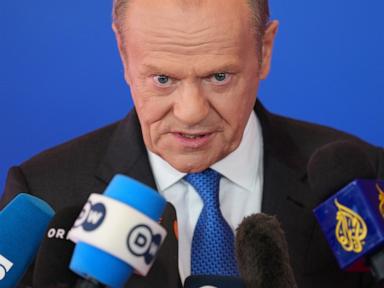
Everyone is popping champagne in Warsaw. Prime Minister Donald Tusk steps up to a microphone, announces that Polish border guards and military units thwarted an overnight provocation along the Kaliningrad frontier, and the entire Western press corps nods along in dutiful applause.
The headline writes itself. Strongman deterrence works. The eastern flank holds firm. Moscow blinks.
Except it didn't blink. It just got exactly what it paid for, and Warsaw willingly picked up the tab.
If you treat a border incident in the Baltic region as a standalone tactical victory, you are reading the scoreboard upside down. The lazy consensus dominating European security commentary right now frames every stopped incursion, every jammed drone, and every intercepted reconnaissance team along the 210-kilometer Polish-Russian border as proof that NATO’s "Shield East" doctrine is working as intended. That narrative is comforting. It is politically useful for domestic consumption in Poland. And it is dangerously incomplete.
Having spent the better part of fifteen years analyzing asymmetric border operations and hybrid pressure campaigns across Eastern Europe, I have watched state apparatuses burn billions of euros building concrete walls against adversaries who do not intend to climb them. When a prime minister publicly celebrates "thwarting" a vague, overnight provocation without detailing the mechanics of the event, you aren't witnessing the defeat of a Russian operation. You are witnessing the execution of its second phase.
The Anatomy of a Manufactured Victory
To understand why publicizing a thwarted provocation plays directly into Moscow’s hands, you first have to strip away the Cold War nostalgia that infects modern border reporting.
Most analysts still view Kaliningrad—Russia’s heavily militarized exclave sandwiched between Poland and Lithuania—through a conventional kinetic lens. They count Iskander missile batteries. They track Baltic Fleet hulls in Baltiysk. They measure the width of the Suwałki Gap on a map and draw red arrows pointing toward the sea. Because they are looking for tanks, they misinterpret friction.
In modern hybrid warfare—specifically the doctrine articulated by Russian Chief of the General Staff Valery Gerasimov and refined through a decade of grey-zone operations—the objective of a border probe is rarely territorial penetration. It is cognitive and economic exhaustion.
Think about the asymmetry of the transaction:
- The Cost to Moscow: A handful of expendable operatives, a few commercial-grade reconnaissance quadcopters, some electronic warfare spoofing equipment, or a small batch of undocumented migrants pushed toward a fence line in the dark. Total financial outlay: negligible. Political risk: zero, because plausible deniability is baked into the operation from inception.
- The Cost to Warsaw: Full mobilization of rapid-reaction border battalions, heightened air defense readiness, emergency cabinet briefings, and immediate public announcements from the Prime Minister’s office.
When Tusk takes the podium to declare that a provocation was stopped overnight, he validates the threat at the highest level of the Polish state. He elevates a localized, low-cost tactical nuisance into a national security event. Moscow doesn't need to breach the fence to win that exchange. By forcing the Polish government to publicly react, deploy, and announce, the Kremlin successfully dictates Warsaw's news cycle, drains operational readiness budgets, and keeps the Polish electorate in a perpetual state of low-grade siege mentality.
Why "Deterrence" Is the Wrong Metric
The fundamental flaw in how mainstream media covers the Kaliningrad frontier lies in a basic misunderstanding of deterrence theory.
True deterrence, as defined by strategists like Thomas Schelling during the nuclear age, relies on convincing an adversary that the cost of an action will catastrophically outweigh any conceivable benefit. You deter an invasion by massing armored divisions and establishing clear tripwires.
You cannot deter a mosquito with a sledgehammer. And you certainly cannot deter grey-zone probing by bragging that you swatted one away at 3:00 AM.
In grey-zone conflict, the provocation is the product. If the probe is detected and stopped, the adversary maps your response times, identifies your electronic signature, and watches how your political leadership communicates under stress. If the probe slips through undetected, they gather intelligence or establish a covert foothold. In both scenarios, the initiator gathers high-value operational data at bargain-basement prices.
I have seen defense ministries across Europe fall into this exact trap. They confuse activity with efficacy. They pour concrete, string razor wire, erect thermal camera towers, and boast about interception rates. Meanwhile, the adversary simply shifts vectors—moving from physical border crossings to GPS jamming over the Baltic Sea, subsea cable tampering, or domestic political subversion inside Polish social media ecosystems.
What People Get Wrong About the Kaliningrad Frontier
Whenever a headline drops about Polish-Russian border tensions, search engines light up with the same predictable anxieties. Let’s dismantle the three most common misconceptions driving the public panic.
Is Russia preparing to invade Poland from Kaliningrad?
No. Suggesting otherwise ignores basic military geography and force ratios. Kaliningrad is an isolated exclave completely surrounded by NATO territory and international waters. Since the full-scale invasion of Ukraine in 2022, Moscow has stripped the 11th Army Corps stationed in Kaliningrad of massive amounts of its heavy armor, artillery, and experienced manpower to feed the meat grinder in the Donbas.
The Russian forces remaining in the exclave are configured for area denial—specifically Anti-Access/Area Denial (A2/AD) bubbles designed to complicate NATO air and naval operations in the Baltic—not for launching a ground offensive into a heavily armed Polish state of 38 million people. An armored push out of Kaliningrad would be a logistical suicide mission within forty-eight hours. The overnight "provocation" wasn't the vanguard of an invasion; it was standard peacetime harassment dressed up in wartime rhetoric.
Does Poland’s "Shield East" fortification program actually stop hybrid threats?
Partially, and at an exorbitant price tag. Warsaw has committed roughly 10 billion zlotys (over $2.5 billion) to "Shield East" (Tarcza Wschód), a massive network of physical barriers, anti-tank ditches, electronic surveillance systems, and fortified bunkers along its borders with Belarus and Kaliningrad.
Against a conventional mechanized assault, physical obstacles buy critical time for artillery and airpower to engage. Against hybrid operations, however, static fortifications suffer from severe diminishing returns. A concrete dragon's tooth does nothing to stop a fiber-optic drone flying fifty meters above it. A barbed-wire fence cannot block cross-border electronic warfare interference that disrupts civilian aviation across northern Poland. Worse, massive infrastructure projects create a psychological Maginot Line—convincing politicians and voters that security can be poured out of a cement mixer rather than won through offensive intelligence and asymmetric counter-pressure.
Why did Donald Tusk announce the incident publicly instead of keeping it quiet?
Domestic politics. Every national leader operates on two chessboards simultaneously: the international board and the domestic electoral board. Tusk’s civic coalition faces relentless pressure from the right-wing opposition, which constantly accuses his government of being softer on national security and border integrity than its predecessors.
By stepping out early and framing an overnight border incident as a thwarted Russian provocation, Tusk inoculates himself against domestic criticism. He projects strength, decisive leadership, and vigilance. It is smart domestic statecraft. Unfortunately, what plays well on evening television in Warsaw often constitutes poor operational security. Publicly confirming that an adversary got your attention—and forced the Prime Minister to address the nation before lunch—signals to Moscow that their calibration is spot-on.
The Strategic Blind Spot in Warsaw’s Playbook
To be fair to the Polish leadership, they are operating in an impossible bind. If they say nothing and leaks emerge later about strange activity near the Kaliningrad border, opposition media will crucify them for covering up a security breach. If they speak up immediately, they amplify Russian psychological operations.
Admitting this trade-off is crucial. Silence carries severe political risk in a hyper-polarized democracy. Yet, by defaulting to public announcements every time a border guard spots an anomaly in the dark, Warsaw is training its adversary to pull the string whenever Moscow wants a reaction.
Imagine a scenario where a regional intelligence directorate in Kaliningrad has a quarterly budget to disrupt Polish political discourse. They don't need to assassinate anyone. They don't need to blow up a rail line. All they have to do is stage a series of ambiguous, low-level border anomalies—unmarked drones hovering near electronic monitoring posts, small groups testing sensor perimeters at 2:00 AM, or localized signal jamming—knowing full well that Warsaw’s political class will feel compelled to hold press conferences about each one.
Within six months, the Polish public is exhausted, border troops are burned out from perpetual high-alert rotations, and international investors start quietly pricing "border instability" into their risk assessments for Central Europe. That is how you bleed a rival without firing a single artillery shell.
How to Actually Break the Cycle
If publicizing thwarted provocations is a losing game, what does winning look like along the Kaliningrad border? It requires abandoning the reactive posture of a security guard and adopting the proactive mindset of an intelligence operator.
Enforce Operational Silence on Routine Friction
Stop giving tactical border incidents prime-time airtime. Unless an event involves confirmed kinetic damage, loss of life, or an overt violation of sovereign airspace by manned military aircraft, it should be handled at the battalion or regional border guard level—not the Prime Minister’s podium. Deny the adversary the psychological amplification they crave. Make them wonder whether their probe even registered on Warsaw’s radar.Shift Capital from Concrete to Counter-Electronic Dominance
Instead of pouring another billion zlotys into static trench lines along a border that won't see a tank battle, redirect defense procurement toward automated autonomous interceptor swarms, mobile direction-finding arrays, and offensive electronic warfare units. If Russian transmitters in Kaliningrad jam GPS signals over Gdańsk, Polish units should immediately degrade Russian communications across Baltiysk in kind. Deterrence in the grey zone requires symmetric pain, not thicker walls.Impose Unattributable Friction in Reverse
The West’s greatest self-imposed handicap in hybrid conflict is its obsession with fighting defensively inside its own borders. Kaliningrad is an isolated logistical island entirely dependent on fragile supply corridors and maritime links. Instead of passively waiting for the next overnight provocation along the fence, NATO intelligence services should ensure that Moscow faces persistent, unattributable administrative, cyber, and logistical headaches inside the exclave itself. Keep the Kremlin’s regional commanders busy securing their own backyard so they don't have the bandwidth to test Poland’s.Decouple Border Security from Partisan Theater
Poland’s major political parties need an unspoken truce on national security communications. Treating every border anomaly as a partisan litmus test forces sitting prime ministers to over-index on public signaling. Establish a classified, cross-party parliamentary briefing mechanism for grey-zone incidents so the government doesn't have to burn operational secrecy just to prove to voters that it is awake at the wheel.
Stop celebrating every time a border guard stops a shadow in the dark. Real security isn't measured by how loudly a prime minister announces that a provocation was thwarted—it is measured by how terrified the adversary is of trying again tomorrow night.