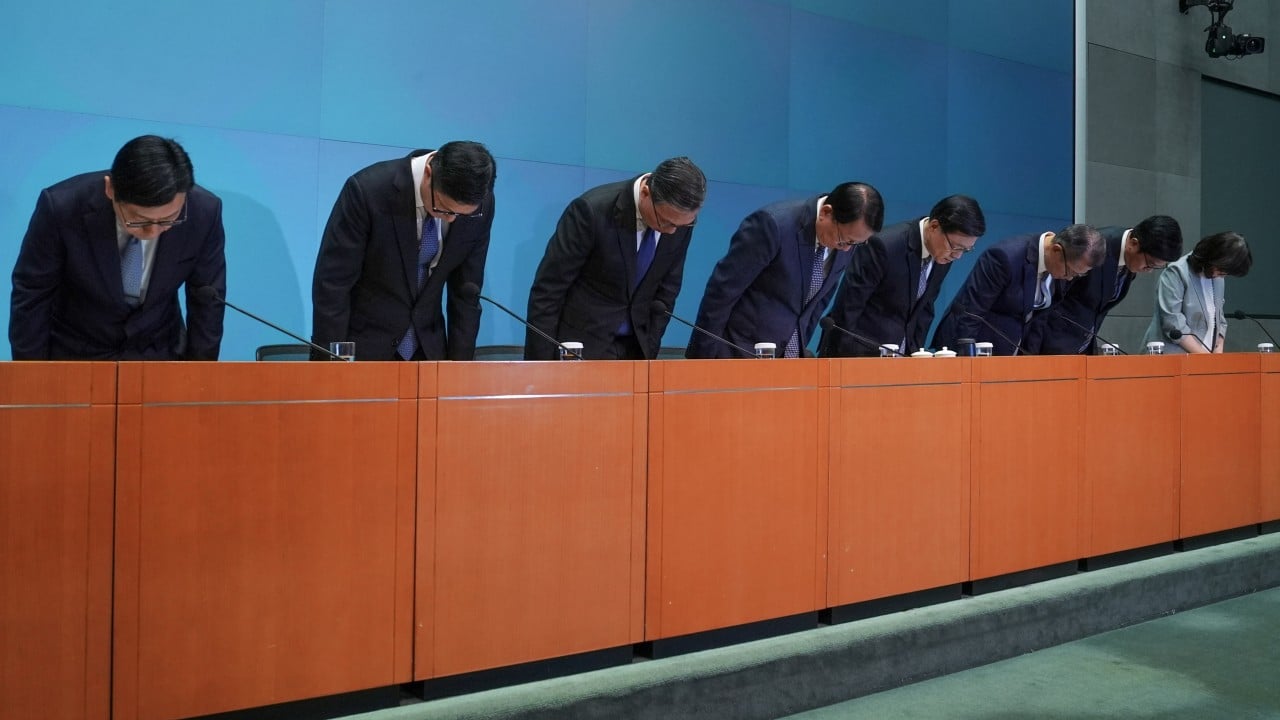
When Beijing formally removes a senior Hong Kong cabinet official following a tendered resignation—specifically the exit of Housing Secretary Winnie Ho after a fatal fire in Tai Po—the event represents far more than an isolated personnel adjustment. It demonstrates the operational mechanics of the Political Appointment System (PAS), the constitutional authority of the Central People’s Government under the Basic Law, and the strict calibration of political accountability following localized municipal crises. Understanding this transition requires dissecting the legal triggers of executive removal, the institutional vulnerabilities inherent in Hong Kong's public housing apparatus, and the risk-management calculus governing administrative stability.
The Constitutional Mechanics of Executive Removal
Under Article 48(5) of the Hong Kong Basic Law, the Chief Executive does not possess unilateral authority to appoint or remove Principal Officials. While the Chief Executive nominates candidates and recommends their removal, the formal legal act of appointment and dismissal rests exclusively with the Central People’s Government (the State Council in Beijing).
This two-tier mechanism creates a distinct operational dynamic during a political crisis:
- The Resignation Trigger: A Principal Official tenders a resignation to the Chief Executive to absorb political pressure and halt the erosion of public trust.
- Executive Endorsement: The Chief Executive evaluates whether the official's continued tenure creates an untenable liability for the broader administration. If the political cost exceeds the administrative disruption of a leadership vacuum, the Chief Executive transmits the recommendation upward.
- Central Ratification: Beijing reviews the recommendation through the lens of regional stability and governance legitimacy. Formal removal by the State Council signals that the central authorities concur with the necessity of a clean break.
In standard corporate governance, an executive exit is often negotiated quietly to preserve institutional continuity. In Hong Kong's administrative framework, the formal announcement from Beijing serves a deliberate signaling function. It draws a hard boundary around the crisis, isolating the failure to a specific portfolio rather than allowing systemic dissatisfaction to spread across the entire executive branch.
Institutional Exposure in the Housing Portfolio
The Secretary for Housing occupies one of the most structurally exposed positions in the Hong Kong Special Administrative Region (HKSAR) government. Unlike policy bureaus focused on financial regulation or trade, the Housing Bureau oversees vast physical infrastructure, aging building stock, and complex multi-layered management structures. This creates an asymmetric risk profile where operational failures carry immediate, visible human consequences.
The structural vulnerabilities of this portfolio break down into three primary friction points:
- Regulatory Fragmentation: Building safety, fire prevention, and structural maintenance in districts like Tai Po involve overlapping jurisdictions. While the Housing Bureau sets broad policy and oversees public housing estates via the Housing Authority, enforcement of fire safety codes and building ordinances involves the Buildings Department (under the Development Bureau) and the Fire Services Department (under the Security Bureau). When a severe incident occurs, the public and media rarely distinguish between these bureaucratic silos; accountability concentrates on the most visible cabinet-level figure associated with residential safety.
- The Maintenance Backlog: Hong Kong’s housing stock is bifurcated between modern high-density developments and aging walk-up tenements or older public estates. Enforcing mandatory building inspection schemes and fire safety directions across thousands of older structures encounters persistent bottlenecks, including shortages of qualified contractors, fragmented ownership in private buildings, and protracted tendering processes.
- The Principal-Agent Problem in Property Management: Even within public and subsidized housing frameworks, day-to-day maintenance and safety compliance are frequently delegated to third-party property management contractors. The Housing Bureau acts as the principal, setting standards, while private contractors act as agents. Information asymmetry—where central administrators lack real-time visibility into ground-level safety lapses until an audit or disaster occurs—leaves the Secretary perpetually exposed to operational failures executed at the lowest rungs of the supply chain.
The Cost Function of Retaining vs. Replacing Leadership
When a localized tragedy such as a major residential fire intersects with public scrutiny over regulatory oversight, leadership faces a binary optimization problem: absorb the reputational damage while keeping the incumbent in place to manage the recovery, or execute a leadership change to reset the political narrative.
Retaining an official under intense fire imposes a compounding reputational tax on the administration. Every subsequent policy announcement from that bureau becomes filtered through the lens of the unresolved crisis. Legislative Council scrutiny intensifies, shifting from constructive policy review to adversarial questioning over administrative negligence. In this environment, the incumbent's political capital drops to zero, rendering them incapable of pushing through complex, long-term reforms—such as public housing supply targets or transitional housing initiatives.
Conversely, accepting a resignation and securing Beijing’s formal removal carries distinct operational costs:
- Institutional Memory Loss: Replacing a cabinet secretary mid-term disrupts ongoing negotiations with developers, contractors, and district councils.
- Risk Aversion Paralysis: Senior civil servants beneath the departing official inevitably adopt defensive postures. Rather than accelerating housing production or streamlining building approvals, middle management prioritizes strict procedural compliance to insulate themselves from future inquiries.
- Succession Friction: Identifying a replacement who possesses both the technical background (such as architectural or surveying expertise) and the political resilience to step into a compromised portfolio narrows the talent pool considerably.
Despite these operational drawbacks, the political calculus heavily favors removal once a crisis crosses a specific threshold of public visibility. The immediate restoration of perceived accountability outweighs the medium-term drag on administrative efficiency.
Systemic Limitations of Personnel-Based Accountability
Treating the removal of a cabinet official as the definitive resolution to a municipal safety failure misdiagnoses the underlying problem. Personnel changes address political optics, not structural engineering or regulatory enforcement deficits.
The Political Appointment System was originally designed to inject political responsiveness into a bureaucracy historically dominated by career civil servants. Under this model, Principal Officials assume responsibility for policy failures within their remit, theoretically shielding the permanent civil service from political blame so the administrative machine can continue functioning smoothly.
In practice, this separation creates a moral hazard. If top-level political appointees absorb the totality of the blame through resignation, the underlying bureaucratic procedures—such as how inspection schedules are prioritized, how contractor non-compliance is penalized, and how cross-departmental data is shared—often remain untouched. Replacing the figurehead without re-engineering the audit and enforcement workflows guarantees that the next officeholder inherits the exact same structural exposure.
Furthermore, strict accountability mechanisms can inadvertently degrade governance quality over time. When cabinet positions are perceived as high-risk posts where decades-long professional reputations can be dismantled by an unforeseeable ground-level incident, top-tier private-sector professionals become reluctant to enter public service. The administration is then forced to rely increasingly on internal promotions from the career civil service, potentially reducing the diversity of operational experience at the cabinet table.
Operational Restructuring for Incoming Leadership
To prevent a repeat of this accountability cycle, the incoming leadership of the Housing Bureau—and the broader HKSAR executive branch—must shift from reactive crisis management to structural risk mitigation. Relying on traditional bureaucratic assurances of compliance is no longer viable.
- Consolidate Cross-Bureau Safety Audits: Establish a unified, real-time data protocol linking the Housing Authority, the Buildings Department, and the Fire Services Department. High-risk residential blocks—specifically those with outstanding fire safety directions or aging electrical infrastructure—must be flagged in a single dashboard accessible to senior leadership, eliminating the blind spots created by departmental silos.
- Restructure Contractor Penalty Frameworks: Transition property management and maintenance contracts away from lowest-bid procurement models toward performance-weighted structures. Introduce automatic financial clawbacks and immediate contract termination triggers for verified safety lapses, shifting the financial cost of non-compliance directly onto the agents executing the work.
- Institute Pre-Emptive Transparency: Publish granular, building-by-building safety inspection statuses and remediation timelines on public portals. By exposing maintenance backlogs proactively rather than defensively after an incident, the bureau transfers the urgency of compliance onto building owners, management corporations, and contractors while establishing a clear public record of administrative diligence.