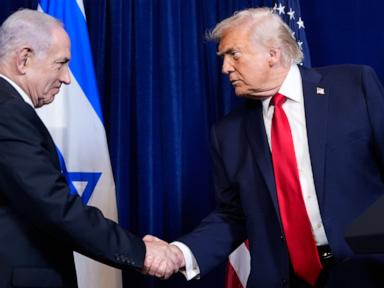
The endorsement of Israeli Prime Minister Benjamin Netanyahu by former U.S. President Donald Trump represents a distinct transactional mechanism in international relations: the external legitimacy injection. When a prominent foreign political figure enters a domestic election cycle, the intervention operates not as a mere statement of preference, but as an exertion of leverage designed to alter specific domestic incentives, coalition structures, and voter turnout dynamics.
Evaluating foreign endorsements through a structured political economy framework reveals how cross-border political alignment functions, the structural limitations of such intervention, and the strategic calculus governing bilateral electoral signals. For a more detailed analysis into similar topics, we recommend: this related article.
The Tri-Factor Architecture of Cross-Border Political Alignment
An external political endorsement operates across three distinct operational layers. Its effectiveness relies on the precise alignment of domestic vulnerabilities with foreign executive capital.
1. Base Consolidation and Electoral Mobilization
Foreign endorsements rarely convert swing voters across opposing political blocs. Instead, they act as high-potency mobilization tools for a candidate's existing base. In parliamentary systems with strict electoral thresholds, marginal shifts in voter turnout within partisan factions significantly alter seat distribution. A foreign endorsement serves as a structural signal to hesitant partisans that the candidate maintains foreign support necessary to project power internationally. For further context on the matter, in-depth reporting is available on The Guardian.
2. Strategic Narrative Validation
Incumbents facing domestic challenges, whether legislative opposition or legal scrutiny, construct campaign narratives around unique capability and international stature. A foreign endorsement provides external validation for this claim. It shifts the primary campaign axis from domestic performance metrics—such as economic indicators or regulatory policy—toward security postures and international standing, areas where incumbents typically hold structural advantages.
3. Diplomatic Leverage Signal to Coalition Partners
In parliamentary democracies requiring multi-party coalitions, smaller faction leaders calculate their participation based on a candidate's expected longevity and international leverage. A public endorsement from a major foreign power signals to prospective coalition partners that aligning with the candidate yields direct access to international diplomatic channels, altering the payoff matrix during post-election coalition negotiations.
The Cost Function and Risk Profile of External Intervention
While external endorsements offer immediate strategic utility, they introduce structural risks that recalibrate long-term diplomatic relations.
       [ External Endorsement ]
                 |
        +--------+--------+
        |                 |
 [ Short-Term ]    [ Long-Term ]
  Utility Boost     Risks Created
        |                 |
  +-----+-----+     +-----+-----+
  |           |     |           |
 Base      Narrative Party    Systemic
 Mobilize  Validate  Asymmetry Friction
Systemic Asymmetry and Partisan Polarization
When a foreign figure explicitly aligns with a specific candidate, the foreign relationship becomes a partisan issue in both nations. This dynamics risks destabilizing long-standing bilateral consensus. The endorsing entity risks alienating opposing domestic factions, creating severe friction if alternative leadership takes power.
Foreign Electoral Counter-Mobilization
An endorsement by a polarising foreign actor can trigger a counter-mobilization effect among opposition voters. Opposition strategists utilize foreign intervention to frame the election as a defense of national sovereignty against external influence, neutralizing the incumbent's advantage among centrist voters.
Discounting Future Foreign Policy Flexibility
Public political endorsements restrict future diplomatic optionality. By binding strategic alignment to a specific individual rather than state-to-state institutional channels, both the endorser and the candidate reduce their room for tactical compromise in future bilateral negotiations.
Coalition Formation Dynamics in Parliamentary Frameworks
To understand the practical impact of an endorsement in a parliamentary democracy, consider the mechanics of legislative majority formation.
- Threshold Dynamics: Small shifts in vote distribution determine whether fringe parties clear the electoral threshold, directly impacting the pool of available coalition partners.
- Factional Leverage: Small parties exploit the incumbent's reliance on external validation to extract higher policy or cabinet concessions during coalition building.
- Institutional Durability: Coalitions built primarily on external diplomatic alignment face structural fragility when domestic economic or social tensions conflict with foreign policy commitments.
Strategic Execution for Diplomatic Engagements
To navigate the risks associated with foreign electoral dynamics, international policy teams and strategic advisors should execute the following operational framework:
- Conduct Friction Audits: Map out opposition counter-mobilization risks prior to issuing high-visibility strategic statements.
- Prioritize Institutional Channels: Emphasize state-to-state agreements and broad security cooperation frameworks over individual political endorsements to preserve long-term diplomatic flexibility.
- Diversify Strategic Contacts: Maintain structured, continuous engagement with cross-party opposition leadership to mitigate institutional risk during unexpected electoral shifts.