Germany used to pride itself on dry, boring, consensus-driven politics. It was predictable. Safe.
Not anymore.
German democracy is facing an aggressive wave of physical hostility that looks less like a Western European parliament and more like a street fight. Fresh government data reveals a grim reality. It doesn't matter where you sit on the political spectrum, standing for public office in Germany now requires serious guts—and maybe a security detail.
The numbers are alarming. According to internal data released by the German government, police recorded 5,140 politically motivated offenses against party representatives or members nationwide over the past year. That's a massive leap from 3,690 cases the year before, and nearly double the 2,790 incidents tracked just two years prior.
This isn't just about mean tweets or angry letters. It's about arson, bricks flying through office windows, and politicians getting beaten unconscious while hanging campaign posters.
The Disproportionate Target on the AfD
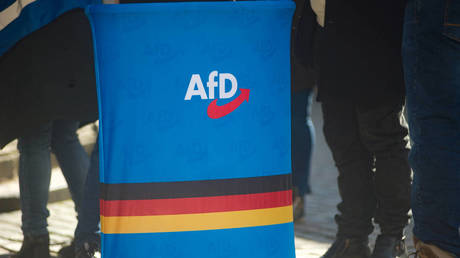
If you look closely at the numbers, one party stands out as the primary target for these physical and verbal assaults. The nationalist, right-wing Alternative for Germany (AfD) accounted for 1,852 of those total cases. It's the highest number recorded against any single party in the country.
This spike happens to coincide directly with the party's historic surge in the polls. Recent surveys place the AfD at 27% national support, making it Germany's strongest political force ahead of Chancellor Friedrich Merz's conservative CDU-CSU coalition.
It's a bizarre paradox. As the party wins over a massive chunk of the electorate, its members face the brunt of political violence. Left-wing radicals and anti-fascist networks frequently target AfD officials, campaign events, and local offices. For the AfD, this data is proof that the mainstream establishment has vilified them to the point of legitimizing violence against their members.
The Rest of the Political Spectrum Under Siege
Don't assume this is exclusively a right-wing problem. The political violence hitting Germany cuts both ways, and the centrist or left-leaning establishment is paying a heavy price too.
The Green Party sits right alongside the AfD at the top of the victim list. Green politicians face intense fury, particularly in rural areas and former East German states, where anger over aggressive climate regulations, heating laws, and agricultural subsidy cuts has boiled over. Last year, campaign events were swarmed by angry crowds, and local offices were vandalized.
Mainstream parties have also felt the physical backlash. Think back to the brutal attack on Social Democrat (SPD) European Parliament member Matthias Ecke. He was hospitalized with broken facial bones after four teenagers beat him while he was putting up campaign posters in Dresden.
A breakdown of the broader statistics shows exactly where the threats are coming from:
- Far-Right Extremism: Represents the largest overall block of politically motivated crimes, responsible for over 42,000 general offenses. Federal police and the Amadeu Antonio Foundation continuously label right-wing extremism as the single greatest threat to internal security, noting that 45% of all injured victims of political violence were attacked by right-wing actors.
- Far-Left Extremism: Accounts for a massive chunk of the direct attacks against the AfD, including property damage, arson, and targeted ambushes on politicians outside cafes or meetings.
- Foreign Ideology and Geopolitical Spillovers: Rising antisemitism and tensions surrounding the Middle East conflict have poured fuel on the fire. Over 6,800 crimes were linked to foreign ideological motives, showing that global crises instantly reverberate on German streets.
Why the Streets are Boiling Over
Talk to any seasoned political analyst in Berlin, and they'll tell you the same thing: the center isn't holding. Germany's traditional political model depended on a broad consensus. The rise of the AfD shattered that cozy arrangement.
The language used in daily political discourse has turned toxic. When mainstream leaders label a party an existential threat to democracy, some individuals on the fringes interpret that as an active green light to use physical force. Conversely, when populist rhetoric labels the ruling government as traitors destroying the nation, it breeds a dangerous, radicalized subset of people who feel violence is the only way to save the country.
The continuous cycle of state and federal elections has basically turned the country into a permanent campaign zone. Elections used to be about debates over tax rates and infrastructure. Now, they are cultural battlegrounds.
Where Germany Goes From Here
You can't run a functioning democracy when local volunteers are terrified to hand out flyers. If the country wants to stop this slide into political street warfare, a few things need to change immediately.
First, the rhetoric from all sides needs a hard reset. Taking a firm stance against a rival's policy is fine. Painting them as a literal monster that must be eliminated at all costs is a recipe for disaster.
Second, local law enforcement must step up protection around local campaign events and political offices, treating intimidation tactics with zero tolerance. Mainstream political leaders cannot only condemn violence when it happens to their own allies. A brick thrown through an AfD office window deserves the exact same swift, public condemnation as a punch thrown at an SPD representative.
If Germany continues to treat political violence as a selective outrage tool, the polarization will only deepen. The numbers don't lie. The democratic fabric of Europe's largest economy is fraying, and fixing it requires acknowledging the threat across the entire political landscape.