Picture a Tuesday night in late October. A congressional candidate sits alone at a kitchen table lit only by the blue glow of a laptop screen, refreshing a financial exchange. Not a stock ticker. Not a commodities chart. An election contract.
Each "Yes" share costs forty-two cents. If she wins her race next week, each share pays out a dollar. She knows something the market doesn't—an internal poll conducted forty-eight hours ago that hasn't leaked to the press, a quiet endorsement dropping at dawn, a sudden shift in early ballot returns in a swing county. Her thumb hovers over the trackpad.
Stop. Step back from that hypothetical kitchen table.
That scenario is no longer a thought experiment for ethics professors or late-night political junkies. It is the exact fault line running straight through Washington right now, sparked by a real-world collision between modern financial innovation and old-fashioned political self-dealing. When a sitting House Democrat moved to ban political candidates from trading on prediction markets after an opponent was hit with a penalty on the regulated exchange Kalshi, the headlines treated it like another routine Capitol Hill skirmish. A dry regulatory tweak. A footnote in the financial news.
They missed the real story entirely.
The Architecture of a Modern Wager
To understand why a penalty on a prediction market triggered a legislative alarm bell, you first have to understand what these platforms actually are. Forget the smoky backrooms of nineteenth-century election betting, where ward bosses stacked cash on saloon bars. Today’s prediction markets look like Wall Street trading floors compressed into a smartphone app.
Platforms like Kalshi operate as federally regulated financial exchanges under the oversight of the Commodity Futures Trading Commission. Instead of trading shares of Apple or barrels of crude oil, participants buy and sell event contracts—binary options tied to real-world outcomes. Will the Federal Reserve cut interest rates in December? Will inflation exceed three percent? Will a specific candidate win a congressional seat?
The mechanics are deceptively simple. Every contract settles at either one dollar or zero. If a contract asking whether Candidate A will win her district trades at sixty-five cents, the market is collectively estimating a sixty-five percent probability of victory.
Economists love these markets because money strips away performative punditry. Talking heads on cable news face zero penalty for being wildly wrong; traders lose their shirts. When thousands of people put real capital behind their convictions, the resulting price often aggregates dispersed information faster and more accurately than traditional polling.
I remember the first time I watched an election market move in real time during a primary night a few years back. While television anchors were still stalling for time, waiting for county clerks to upload spreadsheets, the contract price on my screen spiked twelve cents in ninety seconds. Someone, somewhere, saw precinct numbers before the rest of us did, and they bought aggressively. Watching that green line shoot upward felt less like watching an election and more like watching an algorithmic heartbeat.
Exhilarating? Absolutely.
Terrifying? Only when you ask who has their hand on the pulse.
When the Referee Buys a Ticket
In every legitimate market, there is a bright, uncrossable line between participants and insiders. A pharmaceutical executive cannot short her own company’s stock the night before a failed clinical trial is announced. An NFL quarterback cannot place a parlay on his own passing yards.
Yet when political event contracts moved into the regulated financial mainstream following fierce courtroom battles over the legality of election betting, the rules governing who could trade—and what constituted unfair insider advantage—suddenly looked dangerously blurry.
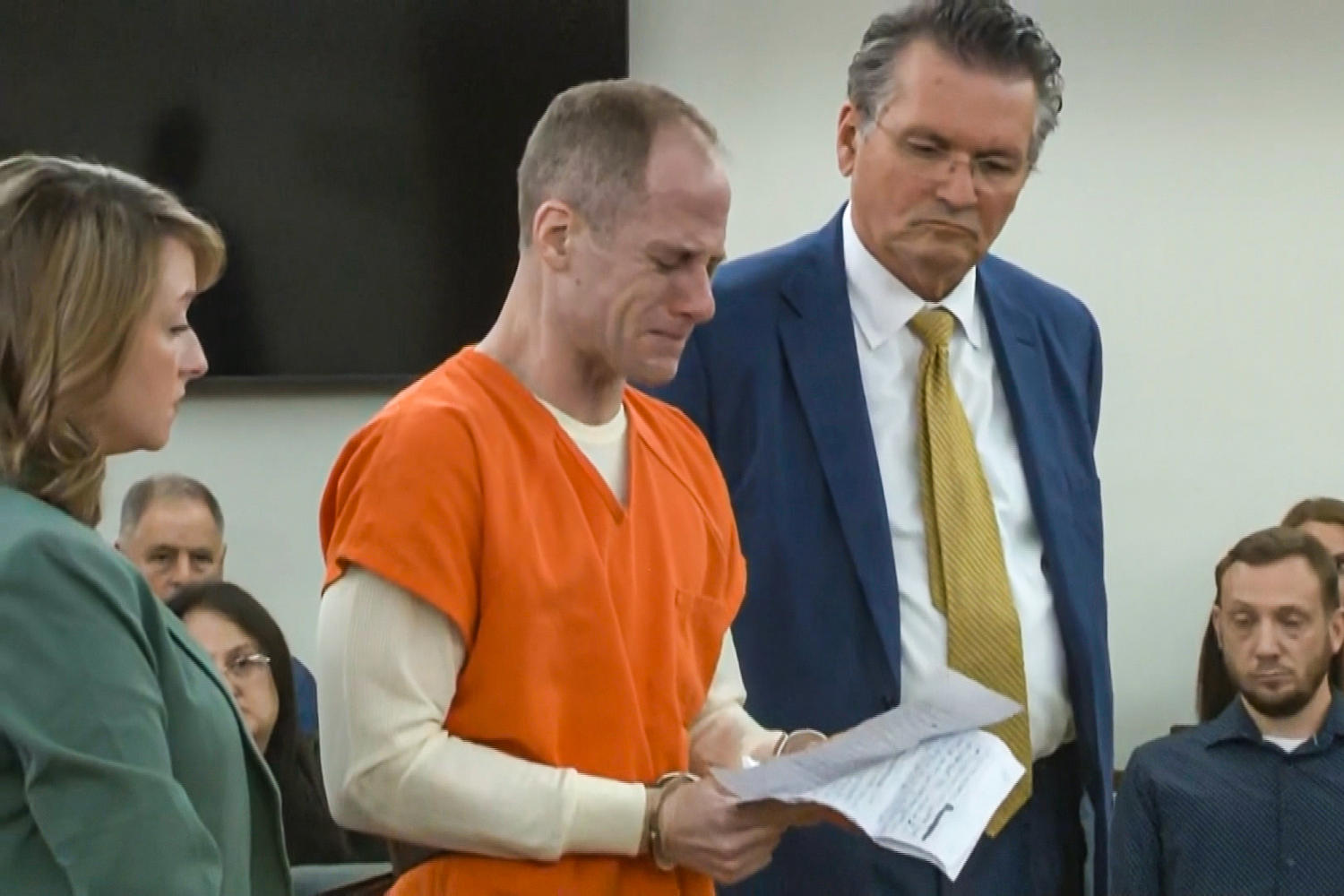
Then came the flashpoint. An opponent in a federal race was penalized by Kalshi for trading on contracts tied to his own candidacy, violating the exchange's rules against market manipulation and conflicts of interest. The penalty itself proved that the exchange’s surveillance team was watching. Compliance systems flagged the activity, enforcement kicked in, and a punishment was handed down.
For a House Democrat watching this unfold in his own backyard, however, exchange-level enforcement wasn't nearly enough. Relying on a private platform’s terms of service to police the integrity of democratic elections felt like asking a casino pit boss to guard the Federal Reserve.
So he drafted legislation to draw a hard statutory line: candidates for federal office should be flatly prohibited from trading on prediction markets tied to elections.
The Invisible Stakes of Insider Politics
Why does a few thousand dollars traded on a contract matter in an era when super PACs burn through hundreds of millions on television ads?
Follow the incentives.
Consider a hypothetical candidate—let’s call him Marcus—running in a tight suburban district. Marcus isn't rich. His campaign is scraping by, and he has personally loaned his committee fifty thousand dollars he can barely afford to lose. Two weeks before Election Day, Marcus realizes his internal numbers are collapsing. His path to victory is gone.
In a world without strict statutory bars, Marcus holds the ultimate piece of material nonpublic information: his own impending defeat. Before the public catches on, before the narrative shifts, Marcus could quietly buy "No" contracts on his own candidacy. He could hedge his political funeral, turning a devastating loss at the ballot box into a guaranteed payout on an exchange.
Now flip the coin. What if a candidate isn't betting on losing, but manipulating the signal?
Prediction market odds are no longer niche trivia. Journalists cite them in morning newsletters. Donors check them before writing checks. A surge in a candidate's contract price creates an aura of inevitability—momentum in pure, liquid form.
Imagine a wealthy candidate or a coordinated circle of allies pouring money into "Yes" contracts on a thinly traded race, artificially driving the price from thirty cents to fifty-five cents. The next morning, friendly commentators point to the surge as proof that the race is tightening. Small-dollar donors wake up, see the headline, and open their wallets. The market price wasn't reflecting reality; it was being used as a lever to manufacture reality.
Even when an exchange like Kalshi catches the violation and issues a penalty, the damage to public trust lingers like smoke in a closed room. Voters already suspect that the system is rigged in favor of the connected and the well-informed. Confirming that candidates are literally gambling on the outcomes they help shape pours gasoline on that cynicism.
The Pushback and the Gray Zones
Not everyone in Washington or on Wall Street agrees that sweeping congressional bans are the right medicine.
Defenders of prediction markets argue that existing frameworks already handle this problem without heavy-handed new laws. Regulated exchanges operate under strict CFTC mandates requiring them to prevent manipulation, maintain audit trails, and prohibit trading by individuals with direct control or nonpublic insider access to an event's outcome. Kalshi’s own penalty against the candidate proves, they say, that self-regulation backed by federal oversight works as intended. The system caught the violation and punished it.
There is also the messy question of enforcement and definitions. Where do you draw the circle of insiders?
Banning the candidate is easy. What about the campaign manager? The junior field organizer in Ohio? The pollster who conducts the survey? The candidate’s spouse, brother-in-law, or college roommate?
Write the law too narrowly, and a candidate simply texts a trusted friend over an encrypted app, passing along the internal polling data so the friend can place the trade. Write the law too broadly, and you risk criminalizing ordinary citizens who happen to work in politics and want to participate in a legal financial market, creating a compliance nightmare for exchanges trying to verify every user's LinkedIn history.
I have wrestled with this tension myself. Part of me admires the radical honesty of prediction markets. Traditional political commentary is cheap talk; putting money on the line forces intellectual humility. When you have to back up your prediction with cash, your partisan blinders tend to fall off very quickly. I want more of that truth-seeking mechanism in public life, not less.
Yet every time I look closely at the intersection of money and democracy, history whispers the same warning: wherever a loophole exists between public office and private profit, someone will eventually walk through it.
Lessons from the Stock Act
We have seen this exact movie before, just on a different screen.
For decades, members of Congress quietly traded stocks in companies whose fortunes rose and fell based on the very legislation and committee hearings those lawmakers oversaw. They argued it was fine. They claimed existing insider trading laws applied, or that disclosure was enough. It took years of public outrage and investigative reporting before Congress finally passed the STOCK Act in 2012, explicitly affirming that lawmakers are not exempt from insider trading rules.
And even then, enforcement remained notoriously weak, plagued by tiny late-filing penalties and endless excuses about blind trusts and spousal accounts.
The battle over candidate trading on Kalshi and other prediction markets is the STOCK Act debate updated for the algorithmic age. The financial instruments are faster. The settlement is instant. The connection between political action and market payout is no longer indirect—it isn't buying defense contractors before a Pentagon budget vote; it is trading directly on the election itself.
When a House Democrat steps forward to ban candidate trades after seeing an opponent penalized, he isn't attacking financial innovation. He is trying to build a guardrail before the car goes off the cliff. If prediction markets want to survive and thrive as legitimate forecasting tools—respected by economists, cited by journalists, and trusted by the public—they cannot afford to become playgrounds for political insiders.
A market only works when the players trust that the deck isn't stacked. Democracy works the exact same way.
Think back to that candidate sitting at the kitchen table in the glow of a laptop screen, forty-two-cent contracts blinking back at her. Right now, the rules separating her public duty from her private portfolio are being written in real time—in exchange compliance offices, in CFTC hearing rooms, and in the halls of Congress.
Because the moment voters start believing that their representatives are trading on the outcome rather than fighting for the constituency, the price of a contract won't matter anymore. The whole market will already be bankrupt.