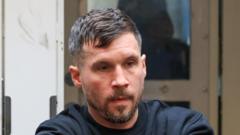
Did you have an American pope casting an absentee ballot in the 2026 midterm elections on your bingo card? Probably not. Yet here we are, watching Pope Leo XIV—formerly Cardinal Robert Francis Prevost of Chicago—exercise his constitutional right as a United States citizen while sitting on the Chair of Saint Peter.
Let's be completely honest about how wild this is. For two millennia, popes have been Italian, German, Polish, Argentine, or from various corners of the Mediterranean, never holding American citizenship while wearing the white cassock. When the conclave elected Prevost in May 2025, canon lawyers and political pundits immediately started asking what would happen to his Chicago voter registration. Now we have our answer, and it's sparking a massive debate across both Washington and the Vatican.
How a Sitting Pontiff Ended Up on the Illinois Voter Rolls
To understand how Pope Leo votes in US midterms, you have to look at the intersection of American citizenship law and Vatican bureaucracy. Unlike some countries that automatically strip citizenship when a citizen becomes a foreign head of state, the United States doesn't take away your passport just because you get elected pope.
Under the Immigration and Nationality Act, losing US citizenship requires a voluntary and intentional act of expatriation. Accepting a religious leadership role—even one that comes with sovereign authority over Vatican City State—doesn't automatically trigger expatriation unless the individual formally renounces their citizenship at a US embassy or consulate.
Pope Leo never did that. Born in Chicago in 1955, he spent decades working as an Augustinian missionary in Peru before returning to Rome to lead the Dicastery for Bishops under Pope Francis. Throughout all those moves, he kept his US citizenship active. Under the Uniformed and Overseas Citizens Absentee Voting Act (UOCAVA), any American citizen living abroad can request an absentee ballot from their last place of US residence. For Leo, that's Illinois.
The Mechanics of a Papal Ballot
You might picture Swiss Guards escorting a ballot box through St. Peter's Square, but the reality is much more mundane. Overseas voters in Illinois request their ballots through the Federal Post Card Application system. The local election authority—in this case, the Chicago Board of Election Commissioners or Cook County Clerk, depending on his last registered precinct—verifies the registration and sends the ballot electronically or by mail.
Once marked, the ballot goes back via diplomatic pouch or international courier, postmarked before Election Day. No fanfare. Just a standard absentee envelope arriving alongside thousands of others from American expats, missionaries, and military personnel stationed in Europe.
Why No Pope Has Ever Done This Before
History buffs will tell you that popes have meddled in secular politics since the fall of the Roman Empire, so why is this the first known political ballot for any pontiff?
Timing and geography tell most of the story. Modern democratic voting didn't exist for the vast majority of papal history. When universal suffrage finally took hold in the nineteenth and twentieth centuries, the papacy was almost exclusively Italian. After the Kingdom of Italy annexed Rome in 1870, Pope Pius IX declared himself a "prisoner in the Vatican" and issued the Non Expedit decree, which explicitly forbade Italian Catholics from participating in national elections. That ban lasted until 1919.
Even after the 1929 Lateran Treaty created the modern Vatican City State, Italian popes like Pius XII, John XXIII, and Paul VI avoided voting in Italian elections to preserve strict political neutrality. When non-Italian popes finally arrived—John Paul II from Poland, Benedict XVI from Germany, and Francis from Argentina—none of them cast ballots in their home countries' elections.
John Paul II couldn't vote in free Polish elections for the first decade of his papacy because Poland was under communist rule, and by the time democracy returned in 1989, he stayed above partisan politics. Benedict XVI and Francis both held Vatican passports alongside their birth citizenships, yet both quietly refrained from participating in German or Argentine ballot boxes.
Pope Leo broke that unwritten rule. And honestly, it fits his whole approach to the papacy. Having spent years navigating grassroots parishes in South America and administrative halls in Rome, he doesn't treat American civic duty as something incompatible with spiritual leadership.
The Legal and Diplomatic Headache Nobody Saw Coming
While canon law doesn't forbid a pope from voting in a secular election, international diplomacy gets messy fast. Pope Leo isn't just the spiritual leader of 1.3 billion Catholics. He is also the absolute monarch of Vatican City State, a sovereign entity recognized under international law.
Think about the precedent here. A sitting foreign head of state just voted in a United States congressional election.
If the Prime Minister of the United Kingdom or the President of France somehow held dual US citizenship and cast a ballot in a contested House race, Washington would have a meltdown over foreign interference. The State Department normally scrutinizes any situation where a foreign sovereign exercises domestic political rights. Yet because the Vatican operates under unique sui generis status in international law—and because the First Amendment makes any government restriction on a religious leader's voting rights a constitutional minefield—Washington officials have kept their mouths shut.
Dual Sovereignty vs. Individual Rights
Legal scholars who specialize in constitutional and international law point out a glaring contradiction. Under US law, Pope Leo is simply John Q. Public from Chicago exercising a fundamental right protected by the Fourteenth and Fifteenth Amendments. You can't strip an American citizen of their vote without due process, and holding a religious office doesn't disqualify you.
At the same time, the Holy See maintains permanent observer status at the United Nations and exchanges ambassadors with over 180 countries, including the United States. The US Ambassador to the Holy See negotiates directly with Pope Leo's Secretariat of State on everything from migration policy to religious freedom. When the head of that diplomatic partner is simultaneously a constituent of a US Senator and House Representative from Illinois, the lines between domestic politics and foreign policy blur completely.
What This Means for American Catholics and Partisan Politics
Nobody knows who Pope Leo voted for, and we never will. Secret ballots are secret for a reason, and the Holy See Press Office isn't about to publish a voter guide. Still, that hasn't stopped every partisan pundit on cable news from claiming the Pope's vote as a moral victory for their side.
American Catholics are notoriously split down the middle politically. Roughly half lean Democratic, focusing on Catholic social teaching around immigration, poverty, and environmental stewardship. The other half lean Republican, prioritizing abortion restrictions, religious liberty, and traditional family structures.
During the 2026 midterm cycle, both parties fought aggressively for Catholic swing voters in battleground states like Pennsylvania, Michigan, and Wisconsin. By casting a ballot, Pope Leo inadvertently sent a loud signal: participating in democracy matters, even when the choices are imperfect.
Catholic bishops in the United States have published Forming Consciences for Faithful Citizenship every four years for decades, urging parishioners to vote their conscience without endorsing specific candidates. Pope Leo just turned that teaching from an abstract pastoral letter into a personal example. If the Bishop of Rome can bother to fill out an overseas absentee ballot and mail it back to Illinois, American Catholics have zero excuse for staying home on Election Day.
The Vatican Neutrality Problem
Inside the Roman Curia, reaction has been noticeably quieter—and a bit tense. Vatican diplomacy relies heavily on strict impartiality. For centuries, the Holy See has positioned itself as an honest broker in global conflicts precisely because it doesn't align itself with any nation-state's domestic political machinery.
Critics inside Rome worry that voting in US midterms compromises that neutrality. If the Pope participates in American democracy, does he also have a moral obligation to vote if he holds Peruvian citizenship from his missionary years? What happens if a future pope holds citizenship in a country with sham elections or authoritarian regimes? By stepping into the American voting booth, Leo set a precedent that future conclaves will have to factor in when weighing candidates from democratic nations.
How to Verify Facts Around Papal Voting and Overseas Ballots
Because viral social media posts love twisting religious news into partisan clickbait, you're going to see plenty of fake claims about who Pope Leo endorsed or what his ballot looked like. Don't fall for it.
If you want to track actual facts about overseas voting rules or official Vatican statements, stick to primary sources:
- Check the Federal Voting Assistance Program (FVAP): If you're an American living abroad or just want to understand how overseas absentee ballots work, FVAP.gov breaks down the exact legal requirements for every state, including Illinois.
- Read official Vatican Press Office bulletins: Any genuine statement from Pope Leo regarding civic duty or politics will appear in the daily bulletin on press.vatican.va, not on a random partisan blog.
- Understand Illinois voter privacy laws: Under the Illinois Election Code, whether a registered voter cast a ballot in a given election is public record, while the actual choices marked on that ballot remain strictly confidential and untraceable.
Verify those records yourself next time someone claims to know how the Pope voted, and keep an eye on how the US State Department handles dual-citizen religious leaders going forward.