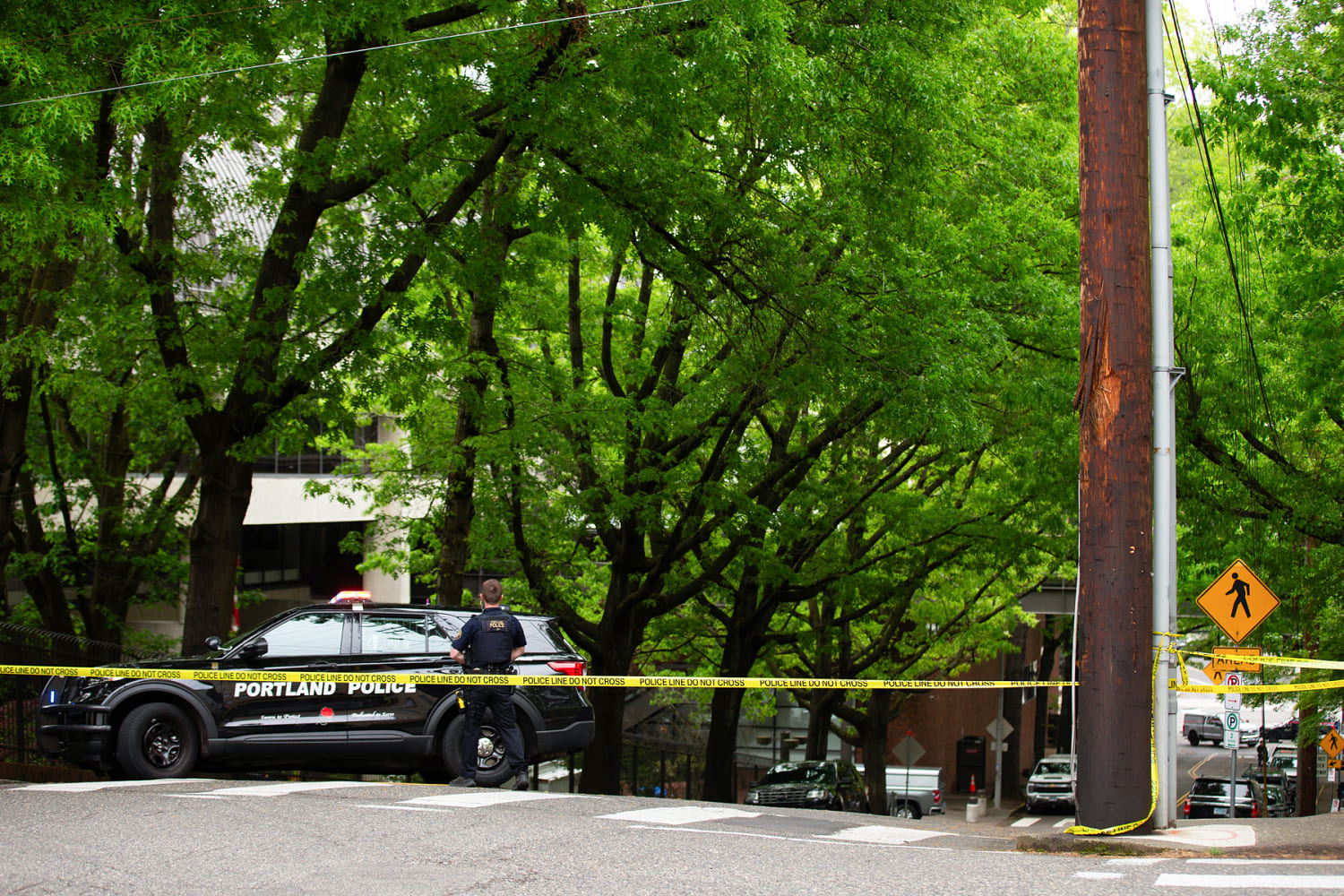
The headlines are predictable. They focus on the smoke, the shattered glass, and the frantic police radio chatter. They paint a picture of a random act of insanity—a man driving a vehicle packed with explosives into a Portland athletic club as a freak occurrence, an outlier in an otherwise orderly society. They want you to believe this is a "tragedy" we couldn't have seen coming.
They are lying to you.
This wasn't a glitch in the system. It was a feature. When a man decides to turn a sedan into a kinetic weapon against a high-end fitness center, the media immediately hunts for a manifesto or a specific grievance. They want a neat little box to put him in. Radicalized? Mentally ill? Disgruntled ex-member? By focusing on the "why" of the individual, we ignore the "how" of the environment. We treat security as a series of gates and badges when, in reality, we have built a society that is structurally indefensible because we prioritize aesthetic "openness" over hard physical reality.
The Illusion of Soft Target Security
Most athletic clubs, even the elite ones in Portland, operate on a philosophy of "frictionless entry." They want the transition from the sidewalk to the treadmill to be as invisible as possible. This is a business decision disguised as hospitality.
I have spent fifteen years auditing physical security for high-net-worth facilities. I can tell you exactly what happens in these boardrooms. They look at a set of heavy-duty bollards—the kind that can actually stop a five-ton vehicle traveling at fifty miles per hour—and they reject them because they look "unwelcoming." They choose glass facades because they want to "bring the outside in."
Well, the outside just came in. It brought a trunk full of ammonium nitrate with it.
We need to stop pretending that a guy with a clipboard at a front desk or a barcode scanner is "security." That is clerical work. Security is the physical management of energy and mass. If your building cannot withstand a ramming maneuver, it isn't secure. Period. The competitor articles will tell you we need more "community outreach" or "mental health resources." While those are noble social goals, they do nothing to stop a bumper from meeting a lobby.
The Logistics of the Amateur IED
Let’s talk about the explosives. The media loves the word "sophisticated." It adds a layer of Bond-villain mystique to a guy who probably watched a three-minute video on a fringe forum.
There is nothing sophisticated about car bombs. We are living in an era where the democratization of destruction is complete. The chemicals required to level a small building are available at any hardware store or agricultural supply center. You don't need a PhD; you need a credit card and a lack of empathy.
The "lazy consensus" says we need tighter regulations on precursors. Good luck. You cannot regulate the entire industrial supply chain of the United States without grinding the economy to a halt. The contrarian truth is that the threat is permanent. The variable isn't the availability of the explosives; it's the vulnerability of the target.
The Math of Kinetic Impact
If you want to understand why the Portland incident was so devastating, look at the physics, not the psychology.
$$F = ma$$
When a vehicle—let's say a standard 4,000-pound sedan—hits a building at 40 mph, the force is astronomical. Most commercial architecture is designed to hold up a roof, not to repel a horizontal projectile. The secondary effect, the explosion, is just the finishing touch. The initial breach is what kills the most people in the immediate vicinity because it turns the building itself into shrapnel.
The Failure of the "See Something, Say Something" Doctrine
We’ve been conditioned to believe that if we just keep our eyes peeled, we can spot the monster. This is a comforting lie.
The Portland attacker didn't walk around in a cape. He likely looked like every other guy in the parking lot until the moment he floored the accelerator. The "See Something, Say Something" campaign is a psychological sedative designed to make the public feel like they have agency in a situation where they are fundamentally powerless.
Real security experts know that human observation is the least reliable link in the chain. Humans are biased. They are distracted. They are afraid of being wrong or looking "judgmental." A concrete barrier, however, has no bias. A bollard doesn't care about your political affiliations or your mental state. It just stops the car.
Stop Blaming the Portland Police
Every time an event like this happens, the armchair generals come out to play. They ask why the police didn't have a perimeter. They ask why there wasn't a faster response.
This is a fundamental misunderstanding of the role of law enforcement. Police are reactive by design. Unless we want a literal tank on every street corner, the police cannot prevent a vehicle ramming. Their job is to clean up the mess and hunt the survivor.
If you are looking to the state to prevent a man from driving his car into a building, you are living in a fantasy world. Security is a localized responsibility. If the Portland athletic club didn't have hardened ingress points, that is a failure of the property owners, not the precinct.
The Cost of "Vibe" Over Valor
We are obsessed with the "vibe" of our spaces. We want them to be "light," "airy," and "transparent." In the security world, those words are synonyms for "vulnerable," "flimsy," and "lethal."
I once consulted for a tech campus that refused to install crash-rated planters because the CEO thought they looked "too corporate-authoritarian." Six months later, a disgruntled contractor drove a truck through their glass lobby. They didn't lose any lives, but they lost millions in hardware and even more in brand trust.
The Portland attack is the natural result of a culture that prioritizes the feeling of safety over the mechanics of it. We would rather feel comfortable in a glass box than be safe behind a concrete wall.
The Dangerous Myth of "Healing"
Watch the news cycle over the next week. You will see vigils. You will see flowers. You will see politicians talking about how "Portland is strong" and how the community will "heal."
This language is an anesthetic. It’s designed to move us past the event without actually addressing the structural failures that allowed it to happen. "Healing" doesn't fix a porous perimeter. "Strength" doesn't stop a blast wave.
If we actually cared about preventing the next one, we wouldn't be lighting candles. We would be jackhammering the sidewalks to install steel-reinforced barriers. We would be redesigning our public spaces to account for the fact that a car is a weapon of mass destruction in the wrong hands.
Why it Will Happen Again
The reason the Portland incident won't be the last is because we refuse to learn the right lessons. We will spend months debating the guy's internet history. We will argue about gun control, even though he used a car. We will talk about "toxic masculinity" or "political polarization."
None of that matters when the engine is revving.
The attacker exploited a gap between our perception of safety and the reality of our environment. He knew that an athletic club—a place where people are at their most vulnerable, physically exhausted and focused on their pulse rates—would be a soft target. He knew the glass would shatter. He knew the response would be slow.
We have created a "target-rich environment" by assuming that the social contract is enough to keep us safe. It isn't. The social contract is a piece of paper; a car is two tons of steel.
The Brutal Reality of Modern Infrastructure
The hard truth nobody wants to admit is that we cannot protect everything. But we can protect the places where we gather in large numbers if we are willing to sacrifice the "open" aesthetic that we've grown so fond of.
You cannot have it both ways. You cannot have a "seamless" urban experience and a "secure" one. Every entrance is a vulnerability. Every window is a potential projectile.
The "competitors" in the media will give you five tips on how to "cope" with the news. I’m telling you to stop coping and start demanding that the people who own the spaces where you live and work actually invest in the physical infrastructure of survival.
If your gym doesn't have bollards, you're not a member; you're a target.
Stop looking for the "why" in the driver's seat. Start looking at the "how" in the floor plan. The man with the explosives was the catalyst, but the building's design was the accomplice.
The next time you walk into a building with a beautiful, unshielded glass front, don't admire the view. Look at the street. Look at the traffic. And realize how little stands between you and a man who has nothing left to lose.
Build a wall or get out of the way.