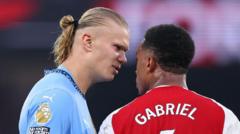
The media is collectively clutching its pearls because Erling Haaland told Mikel Arteta to "stay humble" after a breathless 2-2 draw, framing it as a dark stain on the sport that threatens to ruin football’s global image.
They have it completely backward.
The lazy consensus among pundits is that football needs more respect, more handshakes, and more sanitized, PR-vetted post-match press conferences. They look at the brewing animosity between Manchester City and Arsenal and see a problem that needs fixing before it reaches the global stage.
I see the only thing keeping modern football alive.
We are currently drowning in an era of corporate, over-sanitized sport. Players are handled by armies of media trainers who drill every ounce of personality out of them. We have been conditioned to accept bland platitudes: "The boys gave 110 percent," "We take it one game at a time," "Credit to the opposition." It is mind-numbing.
When a genuine, unfiltered spark of animosity ignites between two elite teams, the football establishment panics. They demand humility. But humility never built a legendary sporting rivalry. Humility does not sell out stadiums, and it certainly does not create iconic moments that define generations.
The truth is simple. Football does not need more humility. It needs more arrogance.
The Myth of the Classy Rivalry
Let’s dismantle the biggest lie in modern sports journalism: the idea that the greatest eras of football were built on mutual respect.
People look back at the late 1990s and early 2000s rivalries with rose-tinted glasses, forgetting that the peak of the Premier League was fueled by pure, unadulterated hatred. Roy Keane and Patrick Vieira were not exchanging pleasantries in the tunnel at Highbury. They were actively trying to intimidate each other. Sir Alex Ferguson and Arsène Wenger spent years trading psychological barbs that bordered on deeply personal insults.
That was not a flaw in the product. That was the product.
When Manchester City and Arsenal square off now, we are finally seeing the return of that edge. Arsenal has stopped being the polite, aesthetically pleasing side that finishes fourth and thanks the fans for their support. They have become cynical, defensive, and intentionally disruptive. They waste time. They crowd the referee. They use dark arts.
And Manchester City hates them for it.
Good. They should hate them. When Bernardo Silva openly criticizes Arsenal's tactical approach or Haaland throws a ball at Gabriel Magalhães' head, it signals that the stakes actually matter. It proves that these teams care about winning more than they care about their brand perception on TikTok.
To demand that these players tone it down for the "world stage" is to ask for a theater performance instead of a blood sport. Elite competition requires a level of psychopathy that regular society rejects. You do not become the best striker or manager in the world by possessing a balanced, humble worldview. You get there through an delusional belief that you are superior to everyone else.
The Broken Premise of "People Also Ask"
If you look at what fans are searching online, you see the exact narrative the media has successfully pushed. The questions are inherently flawed because they assume conflict is a defect in the system.
Does tribalism ruin football's global appeal?
No. It creates it. The global audience does not tune in to watch twenty-two multi-millionaires demonstrate flawless sportsmanship. They tune in for the drama. They tune in because they want to see a villain defeated or a hero vindicated. When you strip away the tribal animosity, you are left with an expensive exhibition match. The reason the Premier League dominates global broadcast markets isn't just the tactical quality; it's the raw soap opera energy that keeps people talking for days after the final whistle.
Should managers face harsher punishments for touchline antics?
Absolutely not. The moment we start banning managers for showing genuine emotion or trading barbs with opposition benches is the day the sport completely dies. Mikel Arteta’s tactical theatrics and Pep Guardiola’s sarcastic tirades are exactly what make their tactical chess match compelling. Forcing them into a rigid box of corporate compliance satisfies nobody except the bureaucratic suits at the FA.
The High Cost of the Sanitized Safe Zone
I have spent years watching sports properties try to maximize global revenue by cleaning up their image. They want the drama of sport, but they want it packaged nicely with a bow, completely safe for family-friendly sponsors.
It never works. Look at what happened to international cricket or certain American sports leagues when they cracked down too hard on trash-talking and celebrations. The product becomes sterile. It turns into background noise.
The downside to my argument is obvious: sometimes it spills over. Sometimes fans take it too far, or players cross a line into genuine misconduct. That is a risk you have to accept if you want elite entertainment. You cannot have the highs of a last-minute equalizer in a toxic atmosphere without accepting the raw, ugly emotion that comes with it.
When Manchester City faces Arsenal on the world stage, whether in European competition or expanded international tournaments, the animosity shouldn't be managed or suppressed. It should be amplified.
Stop asking these players to be role models of humility. They are modern gladiators playing a high-stakes game where millions of pounds and legacies are on the line. If Erling Haaland wants to tell an opposing manager to stay humble, or if Gabriel wants to promise revenge in the reverse fixture, we should be cheering.
The corporate suits want a clean, predictable entertainment product. The fans deserve a war.
Stop apologizing for the toxicity. Embrace it. It is the only real thing left in the game.